
Antarctica Explore the Great White Continent
Start Planning


The White Desert
Take a look at the globe. Now turn it upside down. That’s where you’re going. The most remote place on earth.

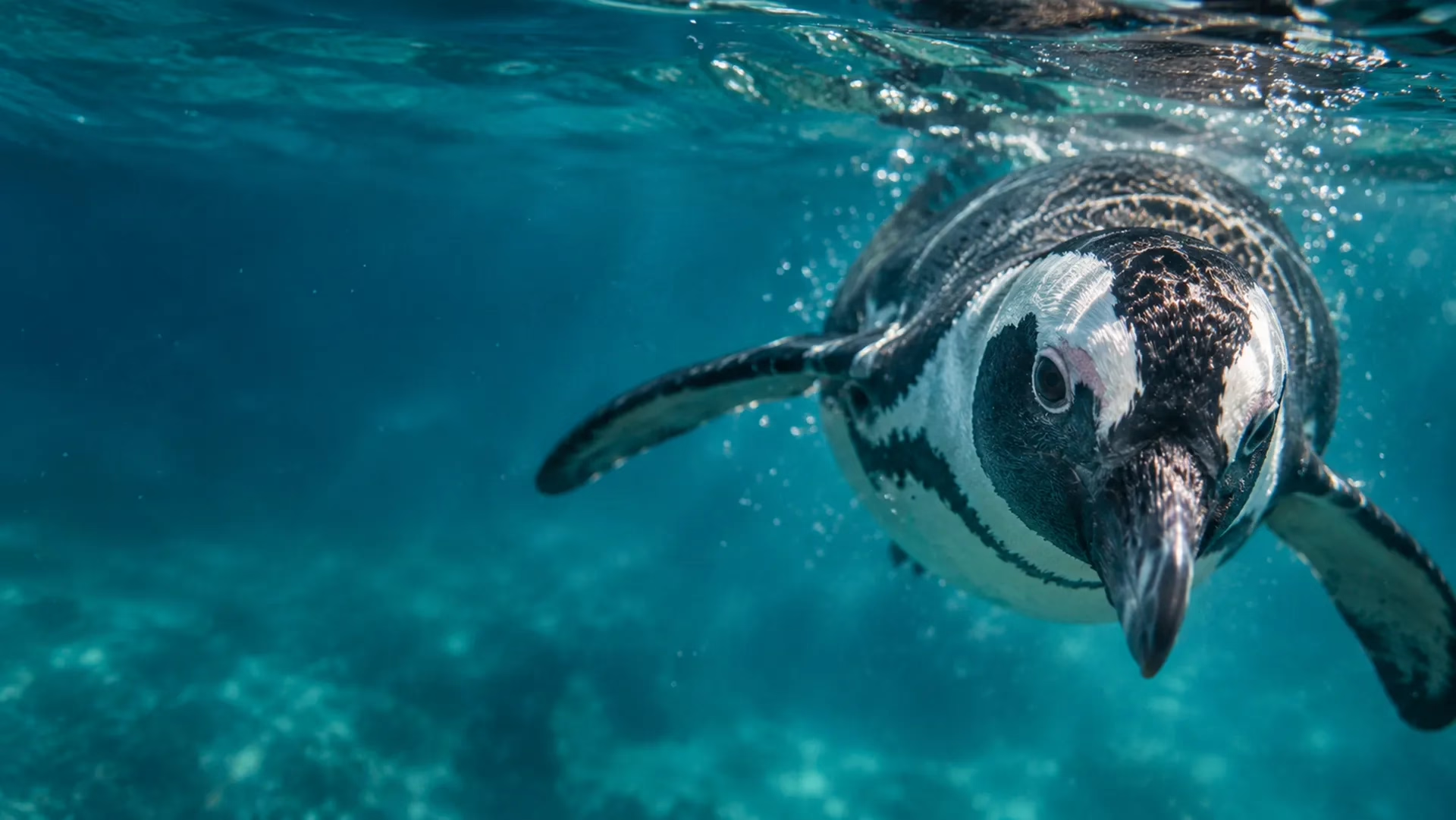
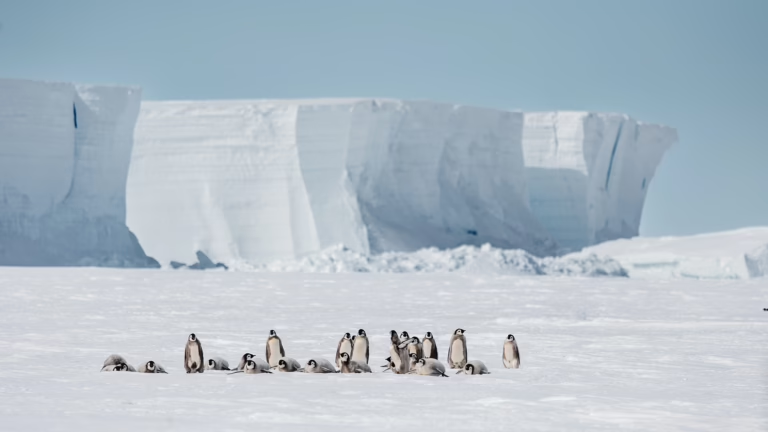
Antarctica. An enormous continent wrapped around the southernmost part of the planet, this vast, icy white expanse of wind-whipped mountains and deep, blue crevasses is the world’s largest desert. It’s so inhospitable that humans have never lived here permanently. And, ding ding ding – there are no bugs! But other species have thrived: emperor penguins have learnt to huddle to survive the bitter dark winters (beats a SAD lamp), while around the coast, humpback whales raid the continent’s krill pantry, and orcas hunt chubby seals.
But all this hangs in a delicate balance, one threatened by climate change and human impact. So we aim to tiptoe travel, treading lightly to cause as little damage as possible. Bucking the trend for cruises, we prefer land-based itineraries that take in the most remote, barely seen corners of the white continent (including the South Pole).
WHERE YOU'LL BE GOING
Map of Antarctica

WHEN YOU'LL GO
When to Go to Antarctica
The Best Time to Visit Antarctica for a Land Expedition
Before we get into it, a small reality check: you don’t have much say in the matter. The Antarctic summer is your only option. From November to February the ice relaxes its grip, wildlife floods back to the coast, and expedition teams can finally reach this frozen corner of the world. The rest of the year, Antarctica goes back to being gloriously inaccessible.
January
Peak Season
It’s Antarctica’s late season. High summer with endless daylight, the weather is at its most settled and warmest. Visibility is superb, and winds are generally calmer, making it a favourite for mountaineers and summit attempts on Queen Maud Land’s nunataks. At Atka Bay, penguin chicks are fledging, losing their down, and preparing for their first journey to sea. The colony begins to disperse in late January. The South Pole remains accessible. Blue rivers and ice features continue to impress.
February
Green Season
Camps are closed for the Antarctic winter.
March
Green Season
Camps are closed for the Antarctic winter.
April
Green Season
Camps are closed for the Antarctic winter.
May
Green Season
Camps are closed for the Antarctic winter.
June
Green Season
Camps are closed for the Antarctic winter and polar night.
July
Green Season
Camps are closed for the Antarctic winter and polar night.
August
Green Season
Camps are closed for the Antarctic winter and polar night.
September
Green Season
Camps are closed for the Antarctic winter.
October
Green Season
Camps are closed for the Antarctic winter.
November
Peak Season
Antarctica wakes up! 24-hour daylight returns and conditions stabilise enough for flights to land at Wolf’s Fang runway. Snow is firm, and conditions are good for glacier hikes and nunatak scrambles. At Atka Bay, the colony is at its most spectacular: up to 28,000 emperor penguins at peak, with freshly hatched chicks huddled close to parents. This is the early season to visit Emperor penguins. Fewer guests, slightly lower rates, and penguins at their most dramatic. The South Pole is not yet accessible this early in the season.
December
Peak Season
It’s the sweet spot. Skies are brilliantly clear, and 24-hour sunlight means unlimited activity. Blue rivers and ice caves around Echo Camp are at their most photogenic. Nunatak hiking and ice climbing are in full stride, with long stable weather windows. At Atka Bay, chicks grow fast — fluffy, vocal, and adventurous. December is the only month to combine emperor penguins and the South Pole in one trip. Photography is extraordinary, with never-ending golden hours.
WHAT YOU'LL SEE
Main Habitats
A continent of extremes.
At first glance, Antarctica appears to have overcommitted to the colour white — a vast frozen desert of towering glaciers, drifting sea ice, and snowfields stretching forever. Look closer, though, and the landscape reveals surprising variety. Along the coast, ice loosens its grip just enough for life to gather: rocky outcrops become noisy penguin cities, ice floes double as seal lounges, and the Southern Ocean forms one of the most productive marine habitats on Earth, sustaining everything from diving seabirds to the planet’s largest animals. Venture inland, and it’s back to endless ice sheets, frozen valleys, and buried mountain ranges, a reminder of just how extreme this place is.





Our Safari Experts
Chat to an Expert
Get advice and suggestions to make this your perfect trip. We’re just a bunch of Africa-obsessed travellers ourselves, so you can rest assured that we’re trying to give you the best experience possible.
Start your journey
Nothing beats the magic of the Delta. Wild waterways, unbelievable wildlife, and that feeling that you’ve completely disappeared into nature.
Contact
For me, safari is all about the small things. The quiet sunrise drives, the stories around the fire, and the feeling that Africa gets under your skin.
ContactWHERE YOU'LL STAY
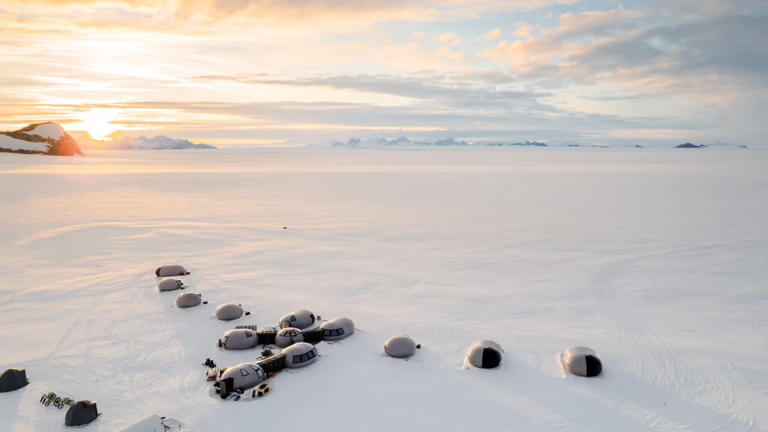
Antarctica's Luxury Camps
Sub-zero Hideaways


Frequently Asked Questions
White Desert operates its own private flights to Antarctica, departing from Cape Town, South Africa. The flight takes approximately five to six hours, landing on Wolf’s Fang runway near the camp. It’s the fastest and most comfortable way to reach the continent, and the dramatic descent over the ice shelf is an experience in itself.
The Antarctic season runs from November through January, when 24-hour daylight, milder temperatures, and accessible terrain make travel possible. November brings a sense of raw, pristine arrival — the ice largely untouched. December and January are slightly warmer and offer the best chance of clear skies.
Most of our itineraries run between four and eight days, which is enough time to feel genuinely immersed in the continent. But, if you are passing through for “The Greatest Day”, a day will also suffice! For those adding a South Pole visit or multi-camp experience, longer stays are possible. Given the journey involved, the longer the better.
Activities range from hiking across the polar plateau to visiting emperor penguin colonies, ice climbing, fat biking, exploring ice caves, and making the iconic trip to the Geographic South Pole.
Yes — White Desert is one of the very few operators in the world with the logistical capability to take guests to the Geographic South Pole at 90° South. It can be included as part of a broader Antarctic itinerary and is one of the most extraordinary things a traveller can do anywhere on the planet.
You don’t need to be an athlete, but a reasonable level of fitness helps you get the most from the experience. Activities like hiking and climbing on uneven ice, and cold-weather excursions are all optional and can be tailored to ability.
What makes this operation genuinely different is where it starts: the flights into Antarctica are first and foremost part of a logistics operation supporting scientific research stations and service crews — they’re going regardless. The extraordinary camp experience we offer our guests exists off the back of that existing operation, meaning no additional flights are being put into the sky on your behalf. That’s a meaningful distinction.
The camps themselves operate under strict Antarctic Treaty guidelines and are held to some of the highest environmental standards of any operator on the continent. All waste (every last bit of it) is flown back off the ice. Renewable energy powers the camps. And group sizes are deliberately kept small, not just for exclusivity but to minimise the human footprint.
No. Polar bears live exclusively in the Arctic, at the top of the world, where they depend on sea ice and the ecosystem around the North Pole. The two ends of the Earth have never been connected, and no polar bear has ever set foot on Antarctic ice.
What Antarctica does have is arguably just as thrilling: vast penguin colonies, Weddell seals lounging on the ice, leopard seals prowling the water’s edge, and if you’re lucky, humpback and minke whales breaking the surface. It’s a wildlife experience completely unlike anywhere else on Earth.
Our Reviews
People are talking about us.
The most famous safari co. you've (probably) never heard of.

Simply amazing. We have had 2 trips of a lifetime with Hidden Africa now, and plan on many more. Their … read more

Geraldine worked with my friend Cheryl to arrange the most amazing Southern Africa trip. Geraldine even worked around some of … read more

I cannot recommend Hidden Africa and Chad highly enough! From the very first conversation, Chad was attentive, knowledgeable, and genuinely … read more

How do you write a review for a travel agency that is above perfect? It's not hard! Hidden Africa listened … read more
HOW IT WORKS
Take a look around for a bit of inspiration.
Tell us what your dream safari looks like.
Next, your Personal Travel Planner will schedule a call to plan the perfect adventure.
Confirm your trip and get packing.
LET’S GET THIS SAFARI STARTED
Ready to go? Give us a shout and let’s start planning your next adventure. We’re almost as excited as you are.