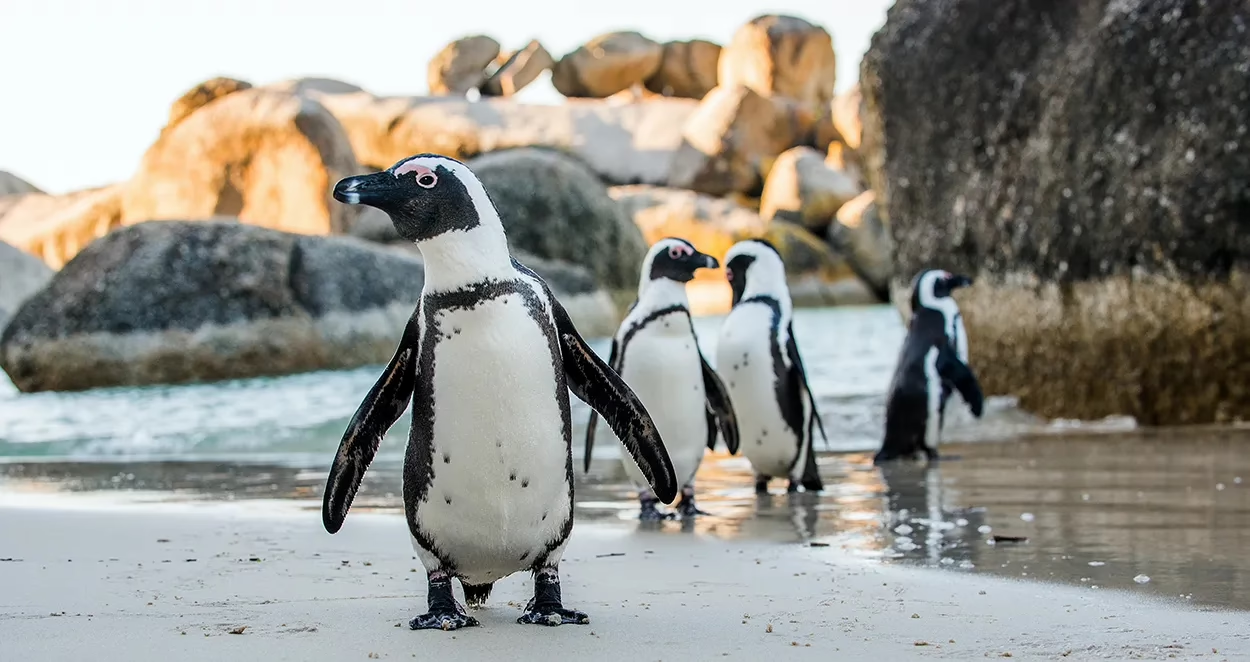
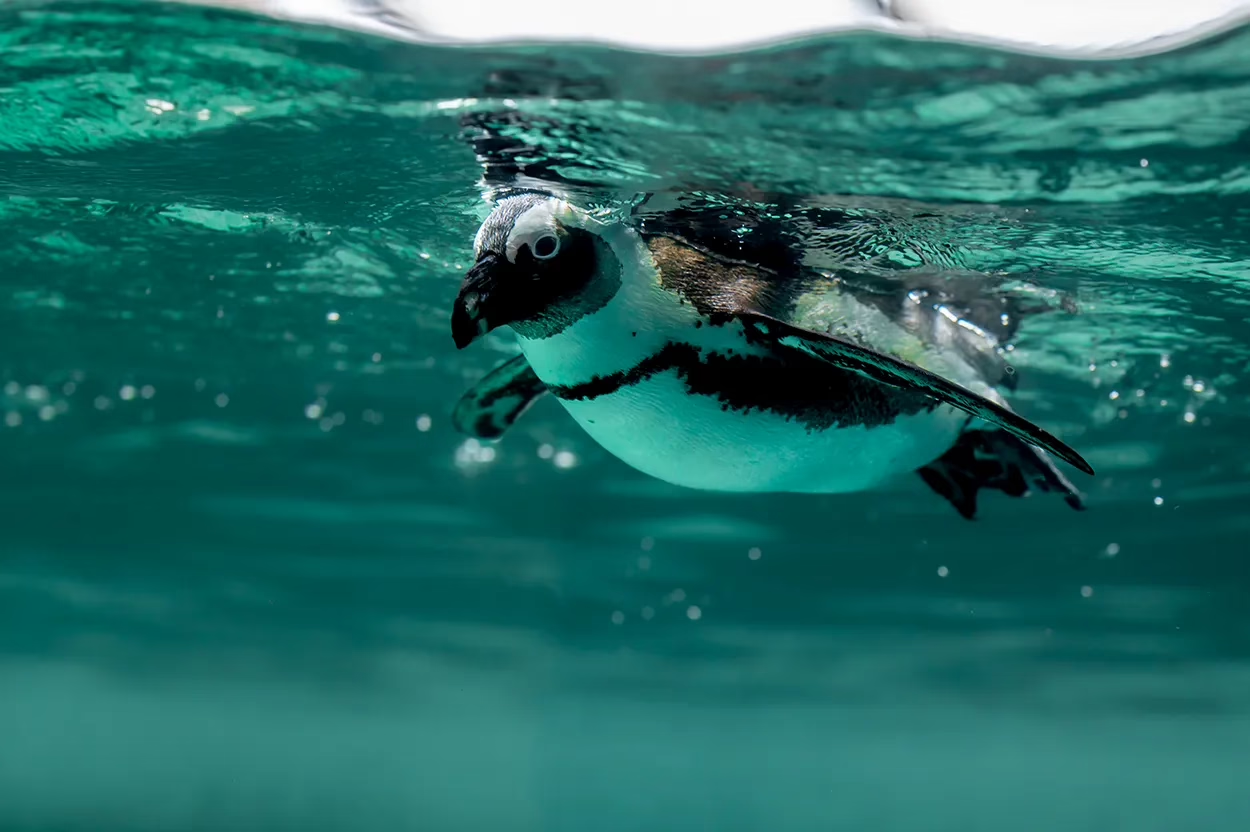
An under water up of an African Penguins staring at the camera,

Our (nearly famous) African Penguin Safari The Cape Town colonies and islands they call home. Follow our secret map to the hidden ones.

Start Planning

Meet the main character. She’s not okay

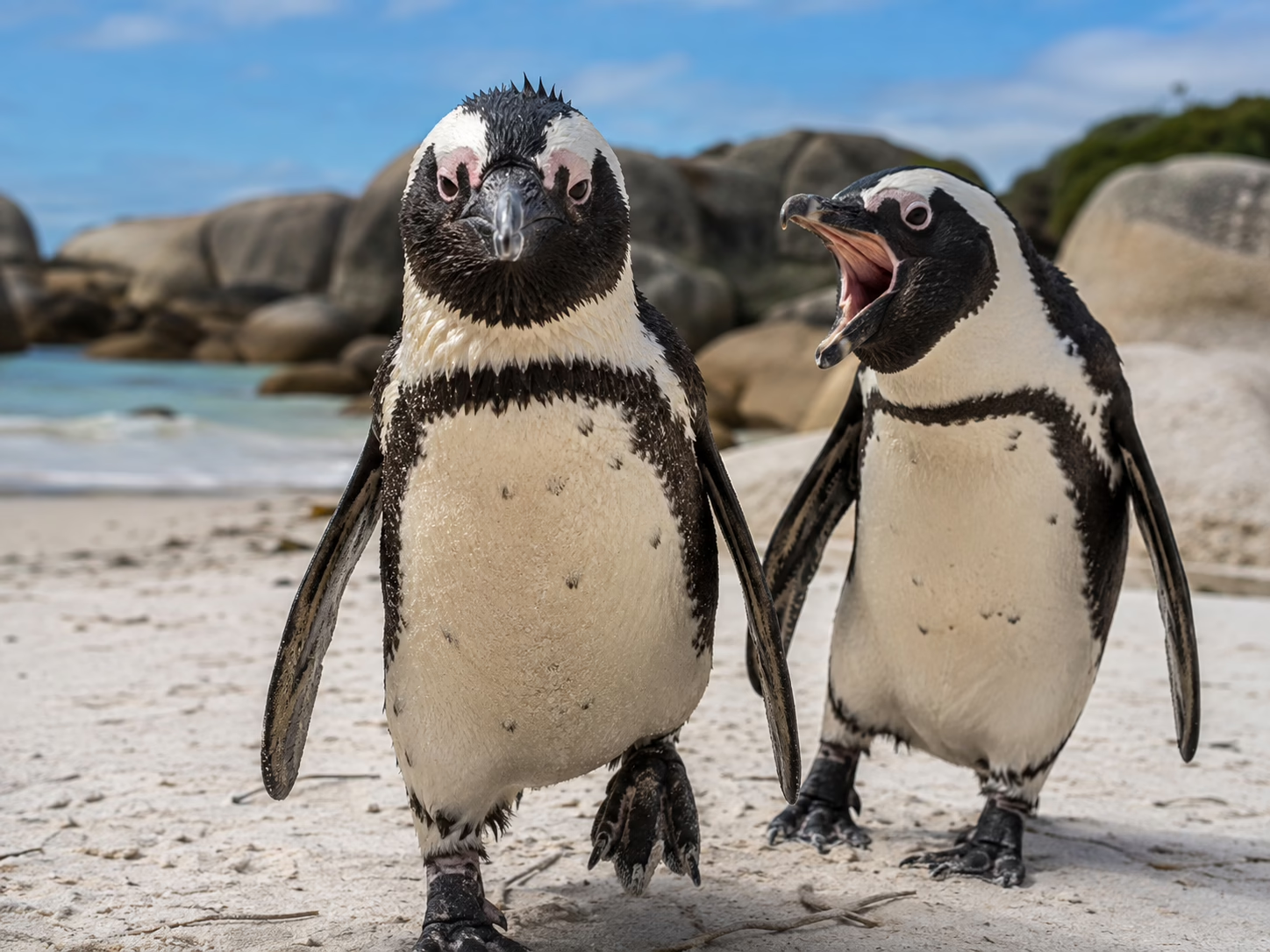
They honk like donkeys having an emotional breakdown, partner for life and spend their days lounging on the beach.

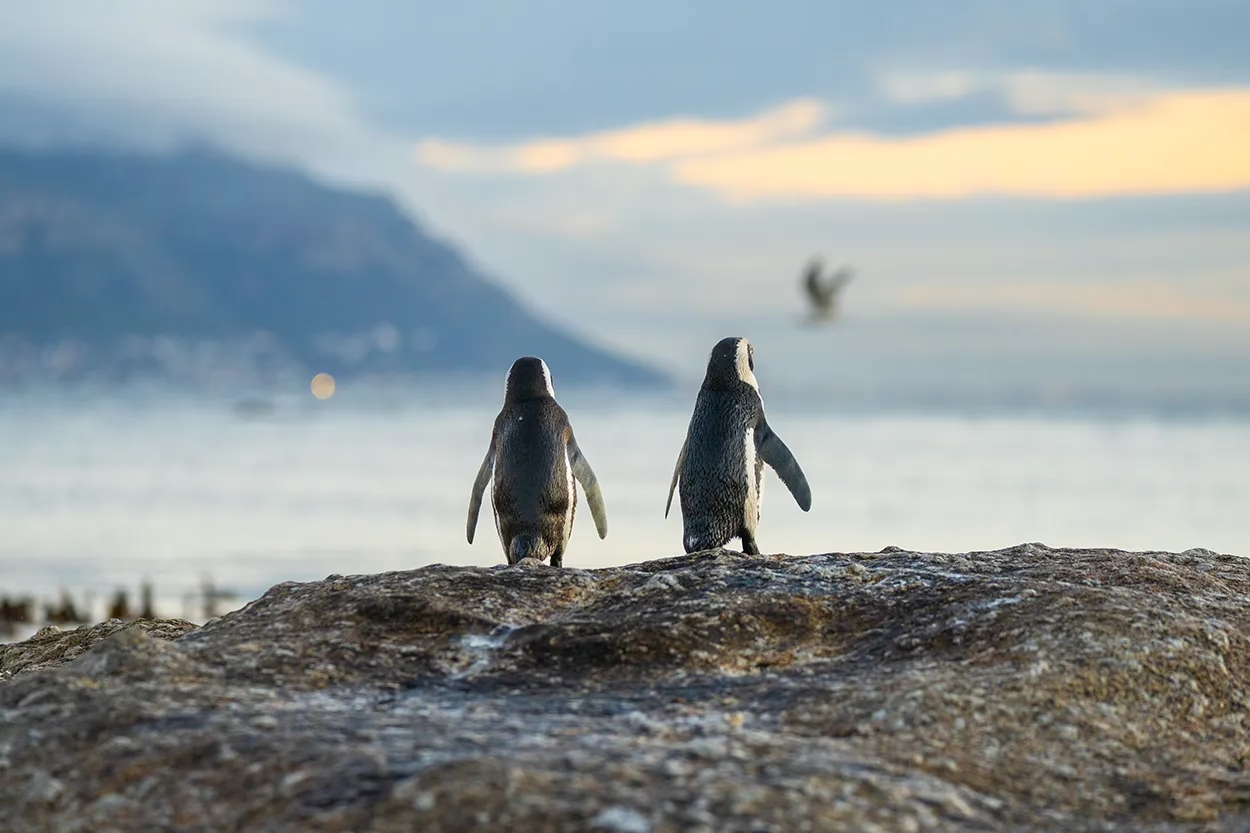
Meet Cape Town’s African penguin.

A beach, though? Yes. A beach.

Penguins. No snow. Take a moment. Cape Town is not exactly the Antarctic.

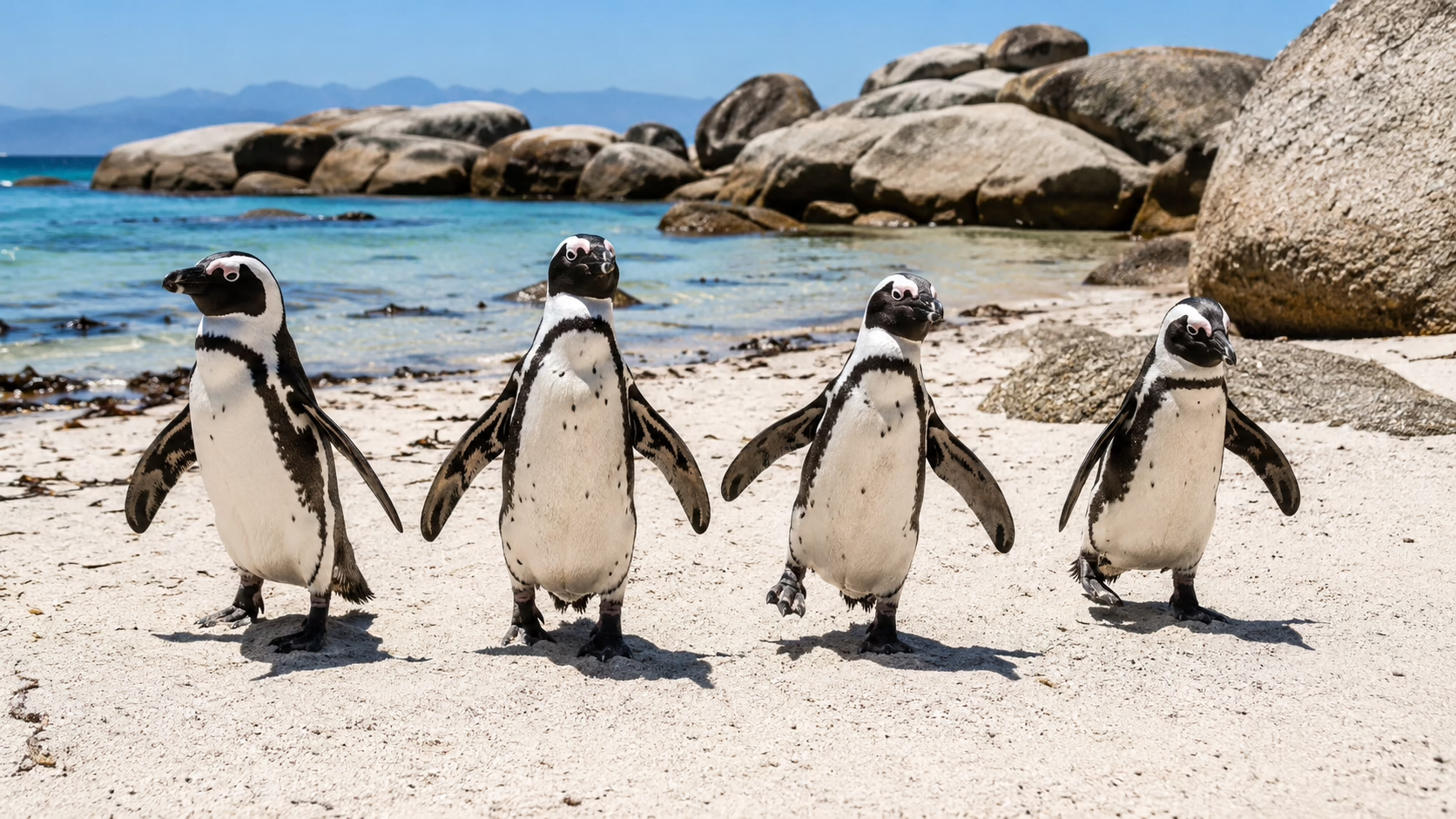
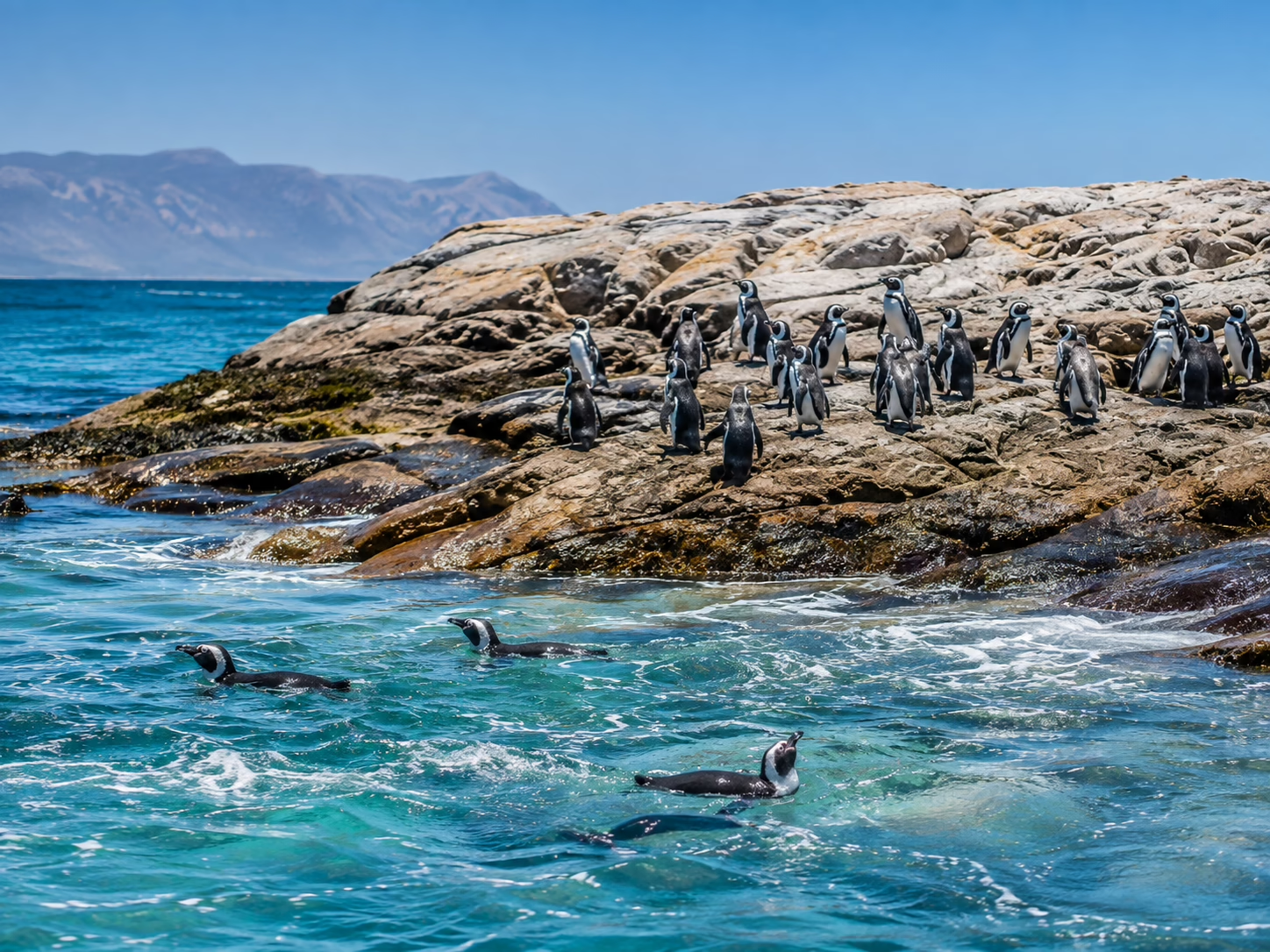
They’ve swapped it for powder-white sand — tucked into sandy coves between giant granite boulders.

The penguins think this is the most beautiful beach in the world.

Just beyond the sand lies the Great African Sea Forest — rich in nutrients, thick with kelp.

The Cape’s Mediterranean climate is, frankly, better suited to making wine than raising penguins. And yet here they are, livin’ la vida loca, in our backyard.

Scruffy, busy and having a really big day

They are not, objectively speaking, the most beautiful penguins. Nor the biggest. So you may need a little convincing.

Let me explain.

These cheeky, dramatic little characters are the best-dressed on the peninsula. Even if they’re frequently covered in their own poop.

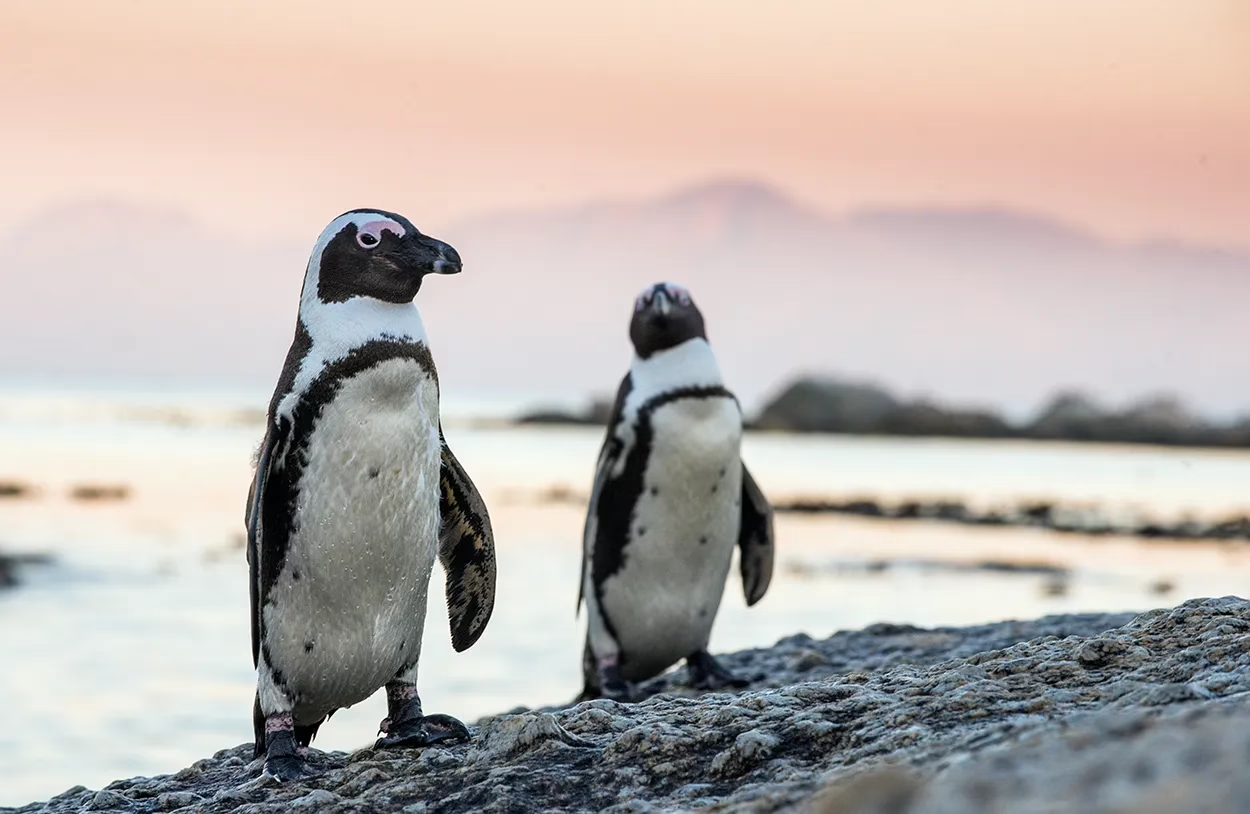
They walk with a self-assured waddle that makes you think they think rather highly of themselves.

Cute? Extremely. Quiet? Not so much.

Their call sounds remarkably like an ass — the equine type — which is why they were originally named the jackass penguin. Until someone with almost no imagination renamed them the African penguin.

That honk isn’t just for show, though. It’s how they find each other.

They’ve honked their way into our lives. You’ll soon see why.

Life beyond the beach

They don’t just live on the beach.

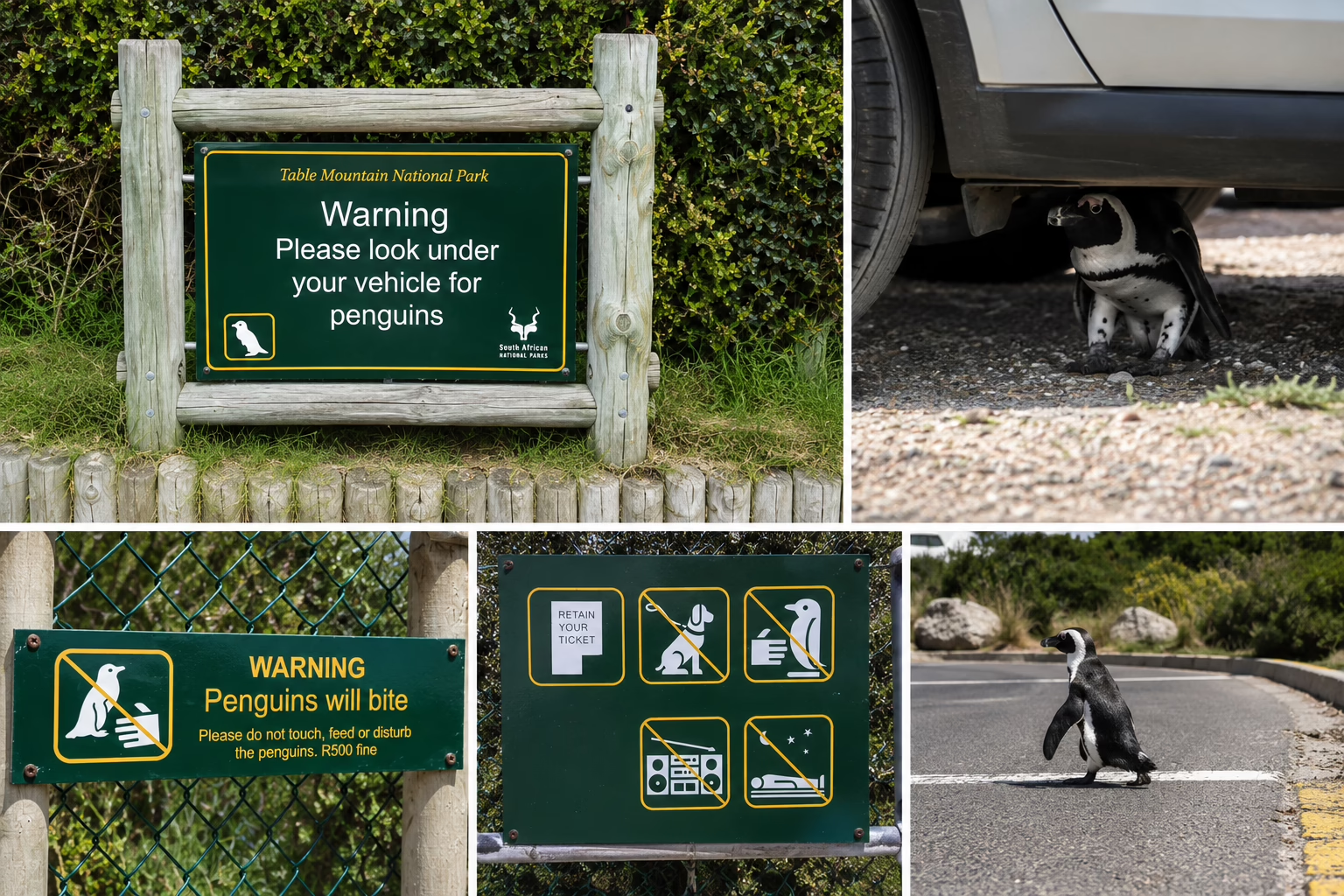
They nest in gardens, cross the road (to get to the other side, presumably) and chill in the shade under parked cars. This is a penguin hood too.

Which means there are rules to observe — and, helpfully, signs to guide the unsuspecting.

Though some of the signs could be read a few ways. One appears to prohibit shaking hands with a penguin. Or possibly closing any new penguin-related deals.

Another bans eighties ghetto blasters.

And then there’s the one that asks you to check underneath your car for penguins before pulling off.

Where else in the world?

Welcome to the neighbourhood.

Our (world-famous) Cape Town penguin safari

Cape Town has a national park on one side — Table Mountain — and the Great African Sea Forest on the other. A city wedged between a mountain wilderness and an underwater one.

And somewhere on the edge of all of it lives one of our most famous locals: Africanus penguiness dramaticus.

So. You want to meet her.

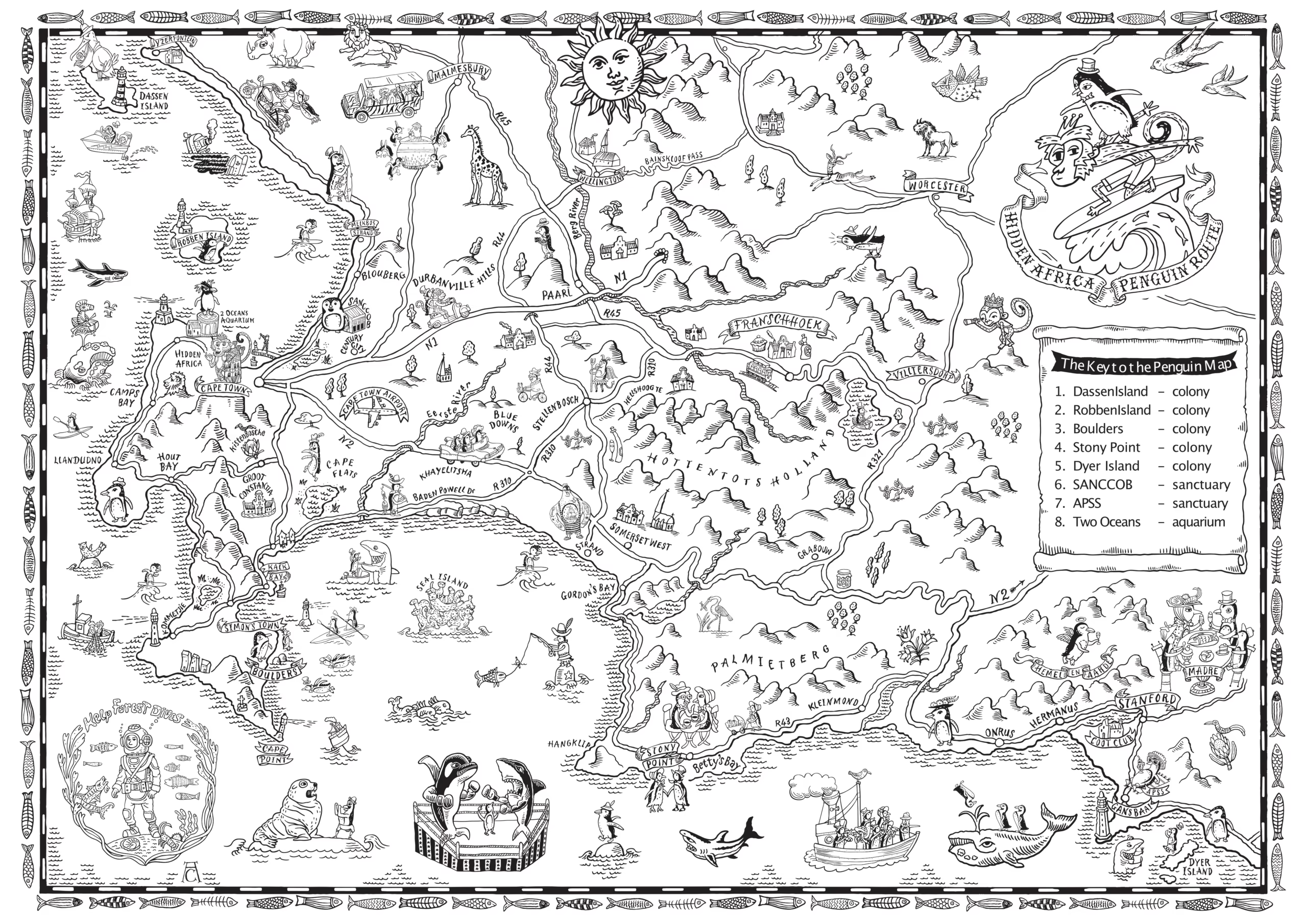
We built the world’s first penguin safari route to make that easy — every colony, mapped. Here’s where to go, and how to actually see them.

Every colony, mapped — it’s all on the penguin page ↗.

The classic: Boulders Beach

Cape Town’s Boulders Beach colony sits in Simon’s Town, at the far south of the city.

From raised boardwalks — designed mainly to stop clumsy humans trampling nests — you can watch penguins belly-surf onto Foxy Beach, give themselves a little shake and waddle off to find their mate.

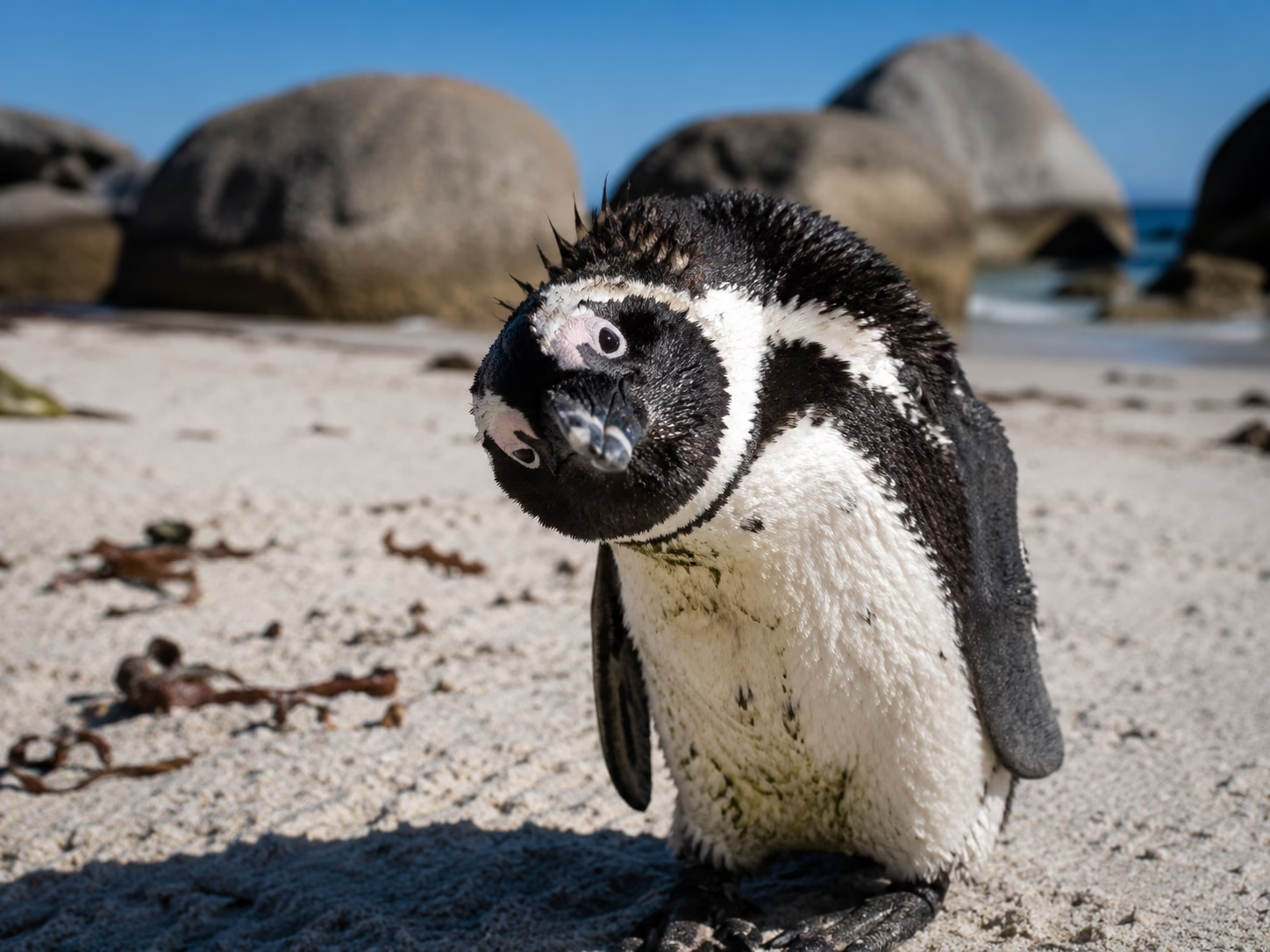
Sometimes they’ll just stand there staring into space.

Dissociation?

We’ve all been there.

Other times they honk at another penguin — because apparently what happens at sea doesn’t always stay at sea.

Next door at Boulders Beach, you can actually swim with them. Or, more accurately, they may decide to swim with you.

Keep your distance, though. That cute little beak is essentially a hunting knife.

The full Cape: Peninsula Penguin Safari

A full day, and the best way to see the peninsula end to end.

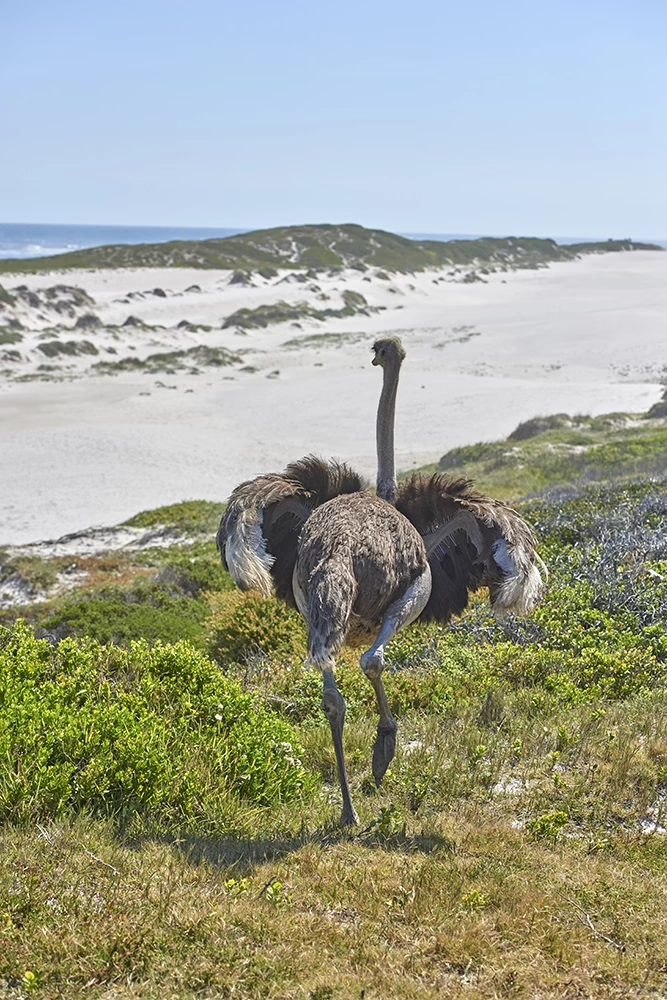
You might spot caracal. You’ll definitely see baboons, zebras, eland and our other famous bird — ostrich. And, of course, we stop at Boulders for the penguins. (And an entirely optional swim.)

You’ll drive to the southern tip and along Chapman’s Peak, a coastal mountain pass with a serious flair for drama. And yes, there’s food. Glorious food.

Go to sea: The Marine Big Five

By Marine Big Five, we don’t mean Cajun kingklip, seared tuna or fresh crayfish, etc — though, happily, those can be on the menu too.

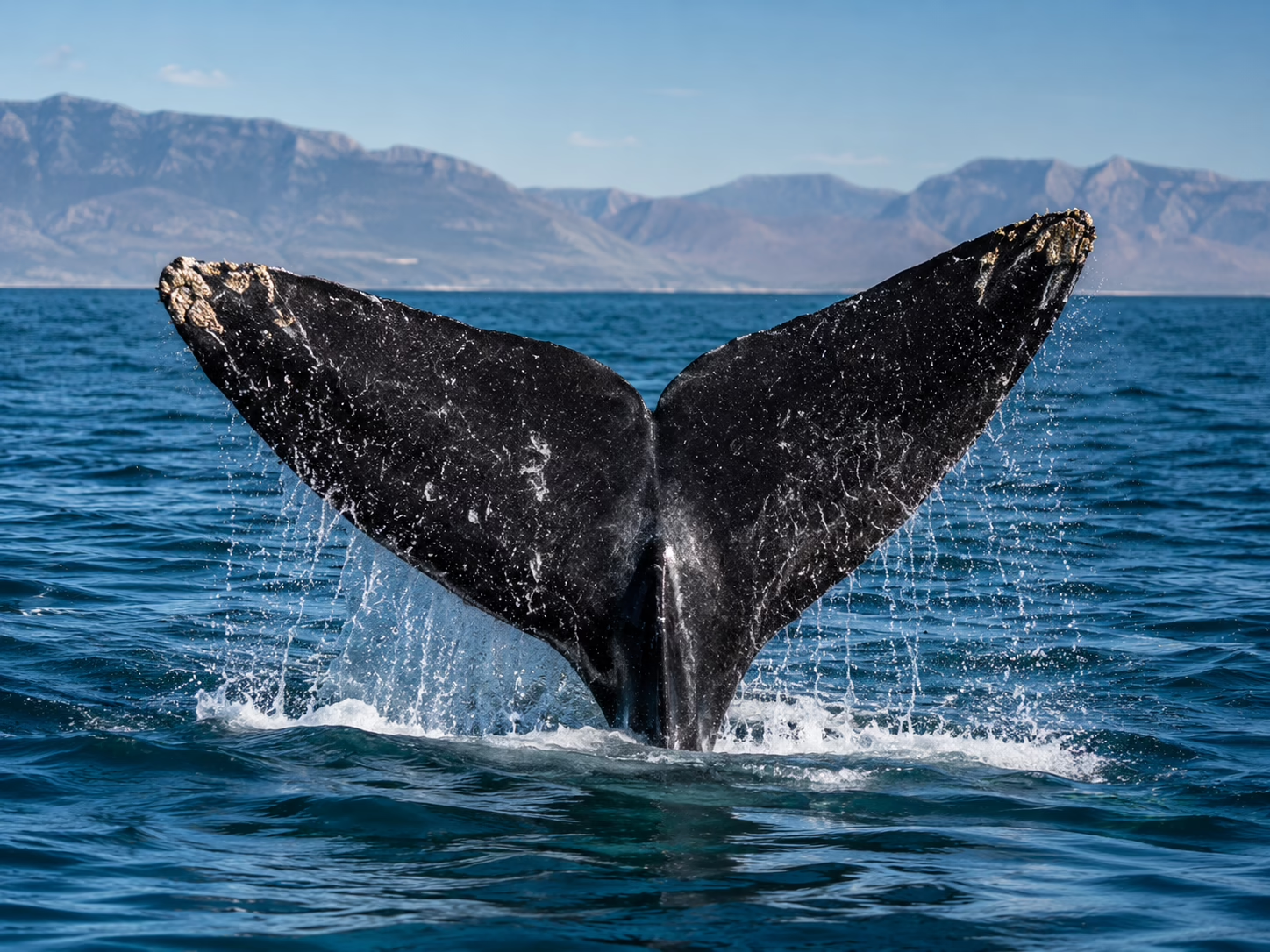
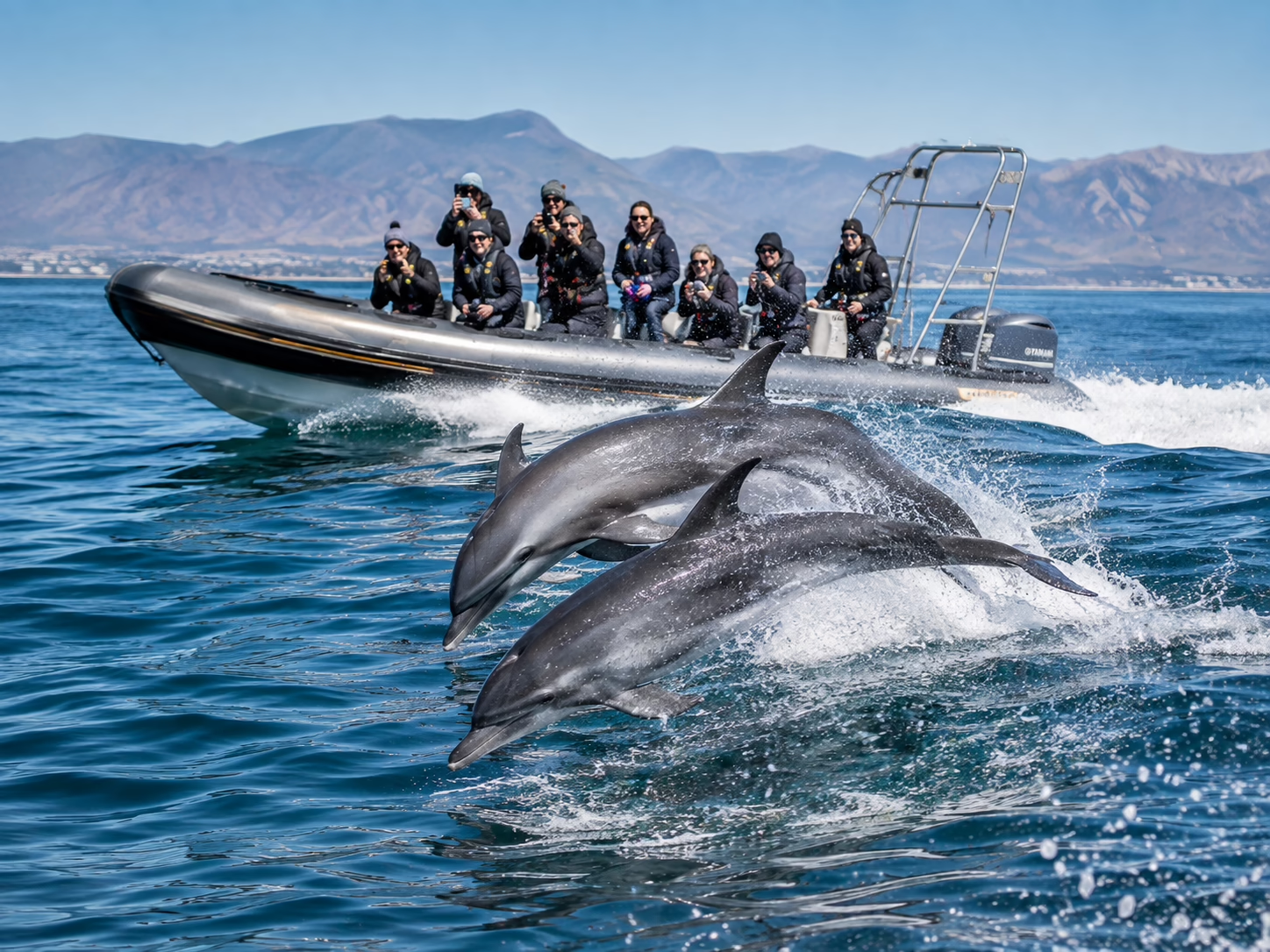
Think dolphins, southern right whales, Cape fur seals, great white sharks — if you’re lucky — and, of course, penguins.

After Dyer Island, meet them up close at the African Penguin & Seabird Sanctuary. On the way back to Cape Town, stop at Stony Point, home to one of the larger African penguin colonies.

But don’t rush home. As a day trip, it’s a long day. Hermanus? Lovely. Keep driving. 

Carry on to the little village of Stanford for lunch and, after a stroll around, check into one of our favourite hideaways: the Coot Club. It’s perfect for post-safari R&R (rest and rosé). 

And if you can drag yourself away, the Hemel-en-Aarde wine valley is on your doorstep.

Which quite literally means Heaven and Earth.

Meet the city slickers

If time is tight, head to the Two Oceans Aquarium at the V&A Waterfront. We can arrange a backstage visit to meet penguins, including rescued rockhopper penguins — instantly recognisable thanks to that jazzy blonde ’do — that somehow ended up thousands of kilometres from home.

Or visit SANCCOB’s Cape Town seabird hospital and see first-hand what it takes to keep these little characters waddling. (Don’t leave your wallet behind.)

The ultimate (seriously) penguin tour

If you want to be the protagonist of your own very unique story, if you’d rather be a character than a customer, if you are not averse to a little humblebrag, then the Ultimate Penguin tour is for you.

Cape Town and Antarctica. It’s a mere five-hour flight south.

Meet the emperor penguin. Stand at Cape Town’s famous southern tip of Africa. Lovely.

Then go to the actual South Pole.

Waddling out of time

Here’s the hard truth: African penguins are critically endangered and may be functionally extinct in the wild by 2035 if nothing changes.

One of the biggest challenges they face is a lack of food. Industrial fishing and climate change have reduced the sardines and anchovies they depend on, while pollution — noise pollution too — and oil spills continue to put pressure on already struggling populations.

The result? African penguin numbers have fallen by more than 70% since 2000.

And that’s not just bad news for penguins. They’re an important part of a much bigger marine ecosystem. When penguins struggle, it’s often a sign that something else is wrong too.

An early indicator species.

It’s entirely possible that future generations may never see African penguins on our shores or in the wild. We can’t let that happen.

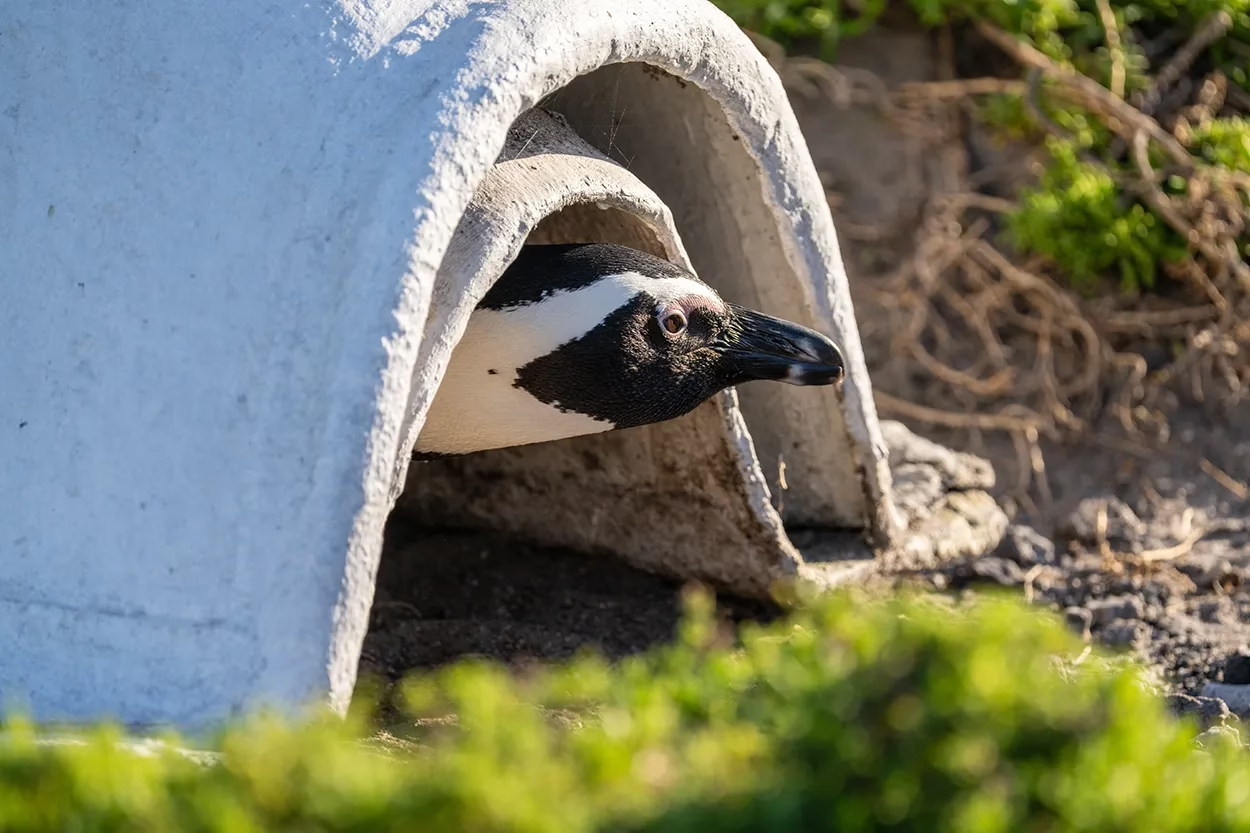
Fortunately, there are some wonderful people on the case. Fishing restrictions have been introduced around key breeding colonies. Artificial nests are helping to protect eggs and chicks. SANCCOB has released more than 9,000 young penguins into the wild through its Chick Rearing Unit. Considering the total wild population is estimated at around 20,000 birds, that’s a remarkable contribution.

How You Can Help (small things, big flippers)

Hidden Africa partners with SANCCOB and makes an annual donation of 1% of our annual profit. Guests who want to contribute further can lend a helping flipper by adopting a penguin (you get to name them — but not take them home), buying a box of fish (for the penguins, not Friday dinner), building a nest or simply making a donation.

The money supports SANCCOB’s work rescuing, rehabilitating and releasing injured, abandoned and oil-affected seabirds. Their Chick Rearing Unit is a vital part of that effort, taking in thousands of vulnerable chicks and preparing them for release back into the wild. Their release success rate is an impressive 82%.

Rangers on the ground also protect vulnerable breeding colonies, safeguarding nests and chicks from predators and human disturbance. When a nest is abandoned, eggs can be taken to the Chick Rearing Unit and incubated until they hatch.

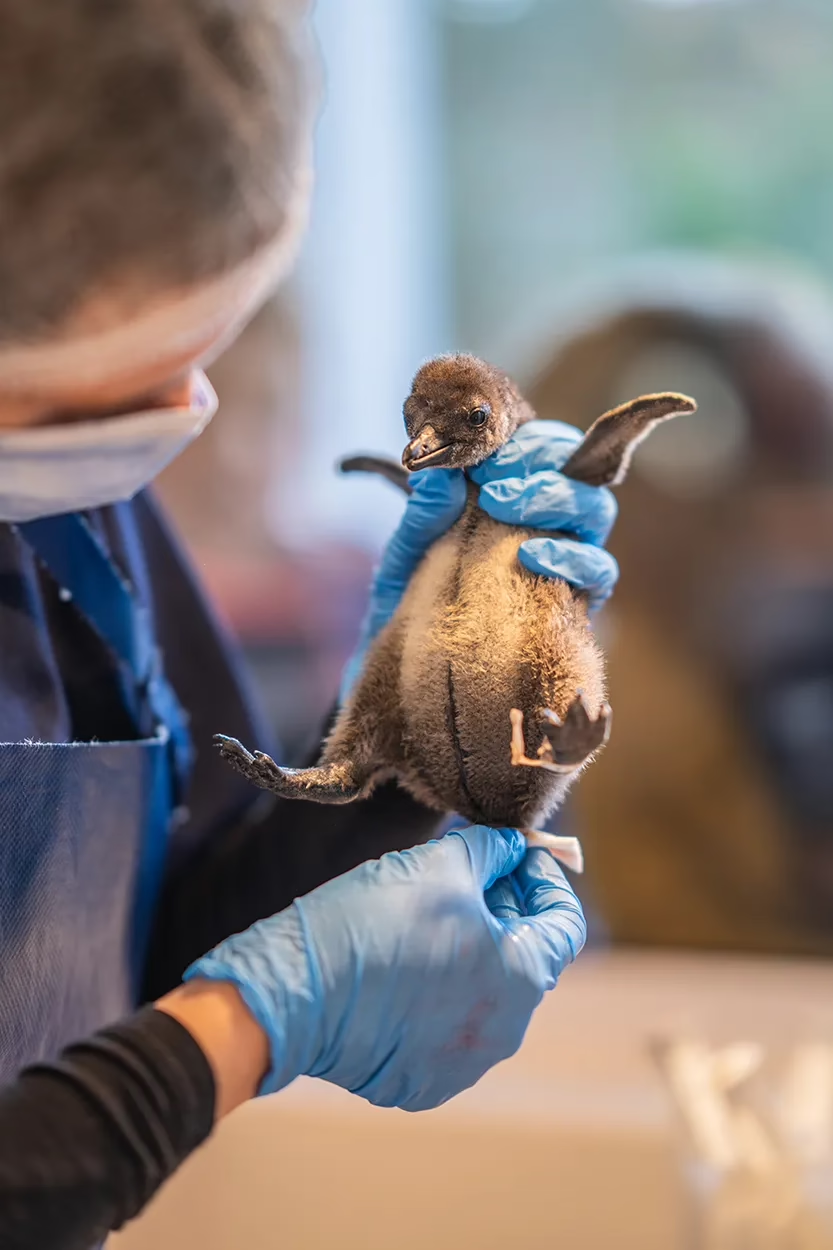
These floofy chicks are then hand-fed around the clock — these divas demand food every three hours. Honestly, the same. Once they’re big enough, they’re released back into the wild where they belong.

The penguins can’t fundraise for themselves. Visit the penguin page ↗ to see how you can help.

Sean Hough "The Ruler"

Chief Vision Officer

Sean’s our determined dreamer and wanna be conservationist. And he is passionate about penguins. "The more time we spend exploring, researching and writing about penguins, the more and more we love them. And we think you will too". says Sean.

Our Reviews

People are talking about us.

The most famous safari co. you've (probably) never heard of.

Hidden Africa
5.0 43 reviews
out of 5
Sonia Kolar
Sonia Kolar
6 months ago

Geraldine worked with my friend Cheryl to arrange the most amazing Southern Africa trip. Geraldine even worked around some of … read more

Sumana Moole
Sumana Moole
a year ago

I cannot recommend Hidden Africa and Chad highly enough! From the very first conversation, Chad was attentive, knowledgeable, and genuinely … read more

Owen Brenner
Owen Brenner
2 years ago

Chad at Hidden Africa was absolutely wonderful to work with. We worked together to fully customized our 2 week elopement … read more

Miroslav Levanic
Miroslav Levanic
a year ago

How do you write a review for a travel agency that is above perfect? It's not hard! Hidden Africa listened … read more

HOW IT WORKS

Take a look around for a bit of inspiration.

Tell us what your dream safari looks like. 

Next, your Personal Travel Planner will schedule a call to plan the perfect adventure.

Confirm your trip and get packing.

LET’S GET THIS SAFARI STARTED

Ready to go? Give us a shout and let’s start planning your next adventure. We’re almost as excited as you are.

Conservation partners