♥ 29 ✉ 0
We've always believed that safari is about the stars above you, not just the ones on the door. But when…


Find a mate. Pair for life. Waddle into the sunset.

I honk and, honestly, I'm not for everyone but that's okay.

Fussy eaters. Sardines are my love language.


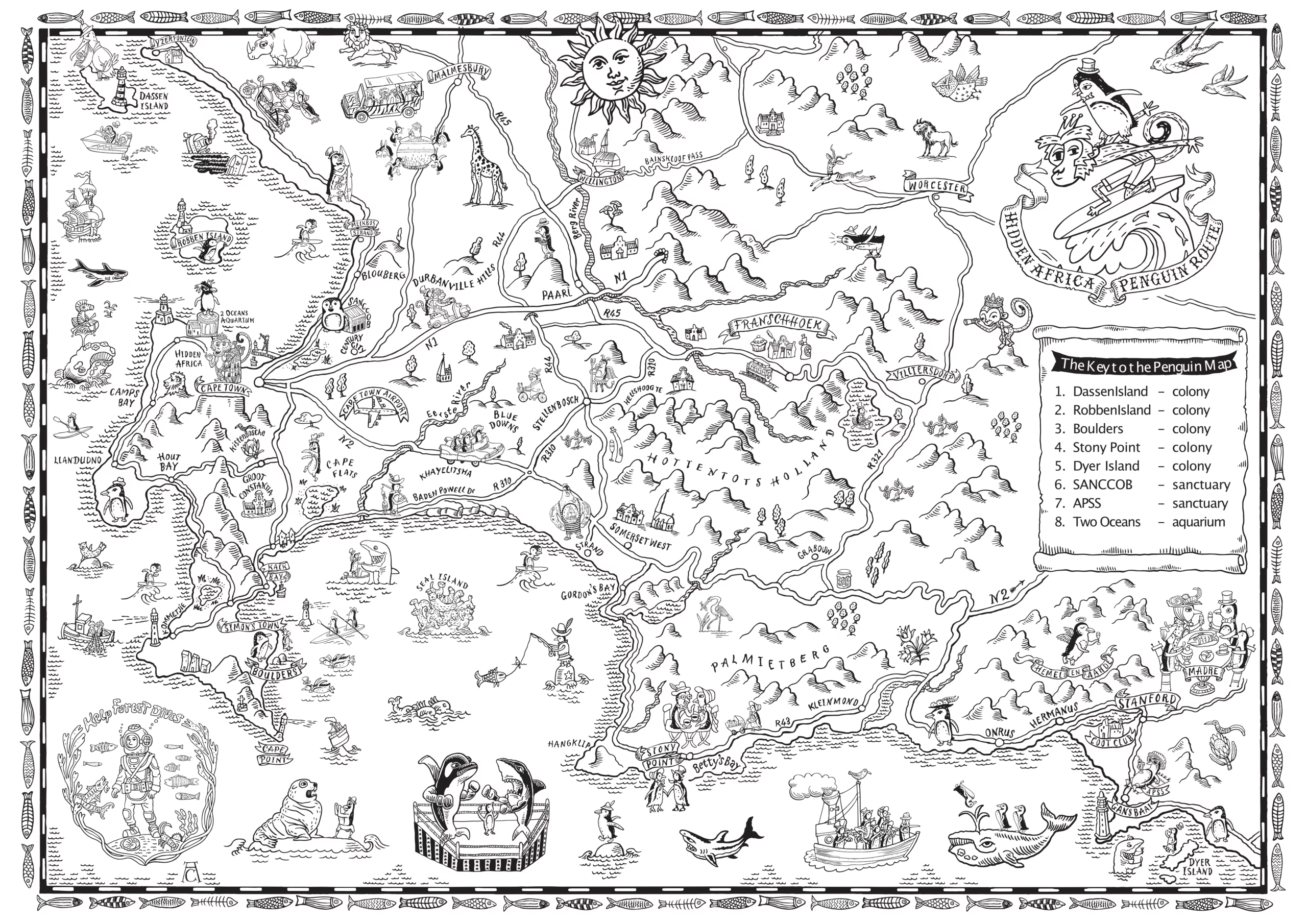
Cape Town’s ultimate safari in the city: penguins, baboons, eland and zebra, all the way to the wild tip of the peninsula.
More
Swim with the penguins. Spend the day at Boulders, swimming in sheltered coves and chilling on the beach.
More
Head to Dyer Island for a Marine Big Five safari, with penguins, whales, dolphins, seals and sharks all in the mix.
More Visit SANCCOB to meet rescued seabirds, see conservation in action and learn what it takes to keep African penguins wild.
MoreThe explorer
A century ago, a million penguins bred here. Imagine the noise: a million donkeys, all having an emotional breakdown.
Then came us. The guano was stripped for fertiliser — and, alas, guano was where they nested. More recently, over fishing and a warming climate have made food scarce.
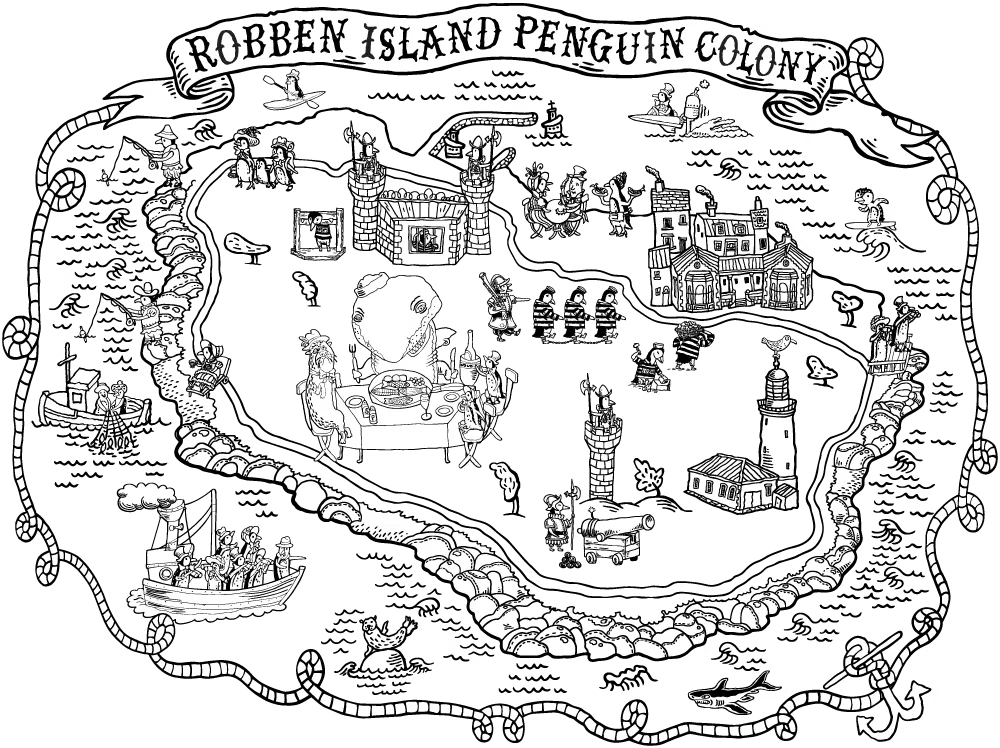
We circle the island by rubber duck: penguins, pelicans, seals, humpback whales. Avian flu keeps us offshore for now. But for now to be at sea for a few hours is a special experience.

The tourist
Let’s be honest: you’re not here for the penguins.
You’re here for one of South Africa’s greatest human stories. The penguins are a charming supporting act — see them under the boardwalk near the docks, plus 132 assorted feathered creatures, including robins.
So come for Mandela, the prison, the history. Then enjoy a penguin waddling past, apparently late for something important.
The sun-seeker
Not the largest. Certainly the most famous.
Cape Town’s star colony, where the suburbs meet the wild ocean. From raised boardwalks you can watch them belly-surf onto the sand and waddle about like tiny overdressed commuters. Sometimes they just stand there, staring into space. Dissociation? We’ve all been there.
Swim in the sheltered coves between the boulders and you might share the water with one on a fishing mission. Don’t get too close. That beak is basically a hunting knife.

The local's favourite
Boulders’ quieter, wilder cousin, over the mountain in Betty’s Bay.
Same black-and-white critters. Considerably fewer selfie sticks. A boardwalk winds through what CapeNature calls the third-largest African penguin colony on earth — watch them squabble with the neighbours and stand on rocks looking enormously pleased with themselves.
Net fishing is restricted here, leaving a little more fish on the menu. Come if you prefer your wildlife less polished, and less crowded.

The thrill seeker
This one’s for the thrill seekers.
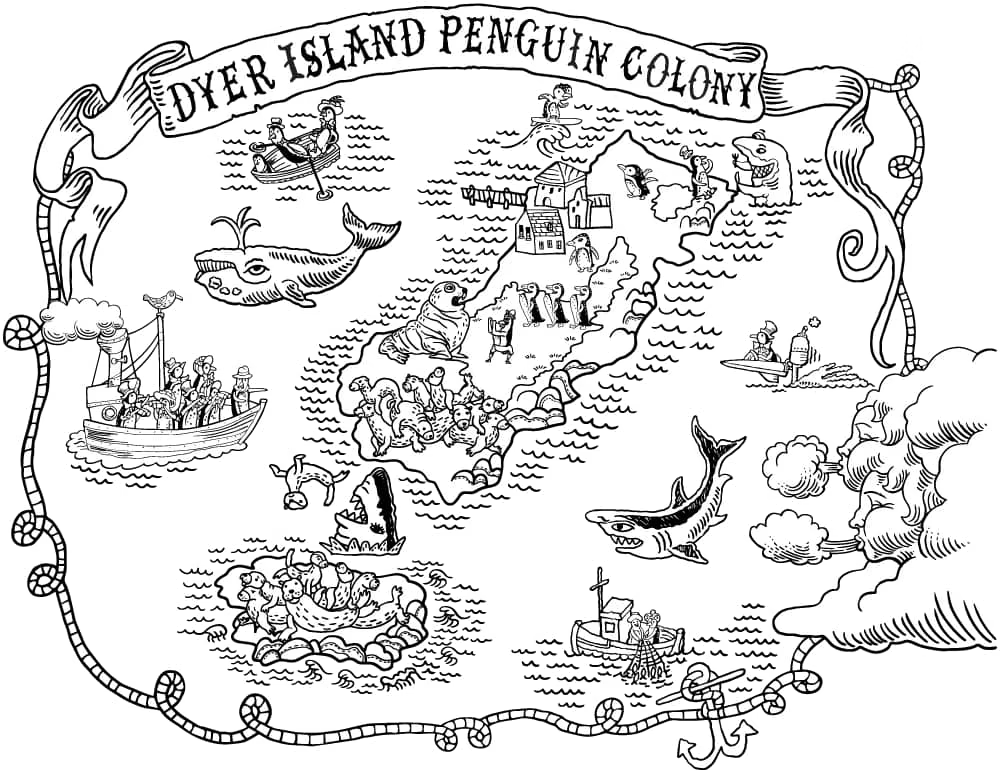
You hit the open sea from Gansbaai after the Marine Big Five: southern right whales, dolphins, great white sharks, Cape fur seals and — bringing up the rear on very short legs — our African penguin.
Wildlife rarely sticks to an itinerary, so nothing’s guaranteed. The sharks least of all. That’s rather the point.

We're about to make this a you problem!
Tragically, African Penguins are critically endangered and may even be functionally extinct in the wild by 2035 if nothing changes.
For the penguin-otaku's
Meet African Penguins on our shores then fly 5 hours South to Antarctica to see Emperor Penguins in their natural habitat. Two penguin worlds, one
MoreBoulders Penguin Colony in Simon’s Town is the easiest and most famous place to see African penguins near Cape Town. You can also visit the quieter Stony Point colony in Betty’s Bay, meet rescued seabirds at SANCCOB, or look for penguins on a big five marine boat safari around Dyer Island. Because these are wild birds, every encounter is different.
Choose Boulders for the classic Cape Town experience: sandy coves, excellent boardwalk viewing and the possibility of swimming where penguins occasionally pass through the water. Choose Stony Point for a quieter, wilder colony with fewer crowds. Boulders fits naturally into a Cape Peninsula day; Stony Point works beautifully on the way to Gansbaai for the marine big five boat safari.
Yes. African penguins live and breed at Boulders throughout the year; they are not seasonal visitors. The number visible on land changes during the day and across breeding and moulting cycles because many birds may be feeding at sea. You can visit in any month, although no particular sighting or behaviour can be guaranteed.
You can see African penguins throughout the year. Breeding, nesting, chick-rearing and moulting happen at different times, so the experience changes with the seasons. Cape Town’s summer months bring warmer beach weather but larger crowds. Winter is cooler and sometimes wet, but the colonies are generally quieter. There is no genuinely bad penguin month.
Early morning is usually best for lighter crowds, easier parking and active penguins heading towards the sea. Late afternoon can also be rewarding as birds return from feeding. The middle of the day is normally busiest, particularly in summer and during school holidays.
Boulders Beach is in Simon’s Town, roughly 40 kilometres from central Cape Town. Join us on guided Cape Peninsula safari – a full day which includes Chapmans peak and Cape Point. Or do it like a local would, catch a train from Cape Town and uber or walk. And don’t forget to stop in Kalk bay for some retail therapy and a lazy lunch.
Advance booking is sensible during busy travel periods, although entry remains subject to the site’s safe visitor capacity. Boulders is part of Table Mountain National Park, and a conservation fee is payable. This is included and done for you on our Peninsula safari.
Allow around one to two hours for the boardwalks, visitor centre and focused penguin viewing. Stay longer if you plan to swim, picnic or explore Simon’s Town. On our Peninsula Safari we combine Boulders with Cape Point, the Cape of Good Hope, Kalk Bay and the experience is a full day. Penguins should never be rushed. Neither should lunch.
Yes. Boulders Beach and Cape Point make an excellent full-day Cape Peninsula journey. A guide is recommend. Our safari route is well-planned and includes Chapman’s Peak, the Cape of Good Hope and coastal villages such as Kalk Bay or Simon’s Town. We start early, giving you more time with the wildlife and we help with all the tickets and ensure you avoid the busiest traffic, queues and parking periods.
Visit independently if you want maximum flexibility and feel comfortable managing the route, parking, tickets and changing conditions. Choose a guided tour if you want local interpretation, easier transport and a deeper understanding of the Peninsula’s wildlife and conservation story. A good guide turns a penguin photograph into a much bigger story about the survival of the species. And more importantly, our guides know the best spots for lunch and drinks.
You can swim at Boulders Beach, where a wild penguin may occasionally pass through the sheltered water. It is not a managed “swim-with-penguins” encounter, and you should never chase, surround or swim after one. Foxy Beach is the principal boardwalk viewing area, while Boulders is the recreational beach. Tides, weather and visitor capacity affect access and available beach space. And just so you know the water can be cold, especially in winter.
The boardwalks provide excellent close-up views without disturbing nesting or resting birds. Stay on the designated paths, never touch or feed a penguin, and do not block its route to the sea or nest. If a penguin approaches you, remain still and give it space. They are wild seabirds with razor-sharp beaks—not tiny waiters available for selfies.
The main viewing boardwalks make Boulders one of the more accessible wild penguin experiences and the sheltered coves are popular with families. However, the swimming beach includes sand, rocks and uneven terrain and is less accessible than the viewing area. There are no guarantees of calm water, so children still require close supervision. Confirm specific accessibility requirements with SANParks before visiting.
BirdLife South Africa’s current assessment cites approximately 19,800 African penguins globally, including about 8,750 breeding pairs in South Africa. Numbers depend on whether a source is counting individuals, mature birds or breeding pairs, so apparently different figures may describe the same population. Always look for the unit and assessment year—not just the biggest number on the page.
African penguins were globally classified as Critically Endangered in 2024. Their decline is driven particularly by shortages of sardines and anchovies near breeding colonies, along with historic nesting-habitat loss, pollution, oil spills, climate-related changes, predators, disease and human disturbance. If the decline continues, scientists warn that the species could become functionally extinct in the wild by 2035.
Responsible tourism can support protected areas, conservation employment, education and the local communities connected to penguin habitats. But visiting only helps when it respects the birds. Use official entrances and boardwalks, follow ranger instructions, keep your distance and choose guides with credible conservation practices. You can also support SANCCOB by donating, adopting a penguin or sponsoring food and rehabilitation.
No. Never touch or feed an African penguin, enter a restricted nesting area or position yourself between a bird and the sea. Selfies are fine from a respectful distance; forcing a close encounter is not. African penguins are protected wild animals under severe pressure. The most memorable encounter is one in which the penguin is free to ignore you completely.
Visit SANCCOB, just outside the city. Cape Town’s specialist seabird rehabilitation centre, to learn how injured, oiled and abandoned African penguins are treated and prepared for release. Or visit APSS Dyer Island conservation near Gansbaai. A sanctuary visit offers a different experience from seeing a wild colony: it reveals the conservation work happening behind the scenes.
Our Reviews

Simply amazing. We have had 2 trips of a lifetime with Hidden Africa now, and plan on many more. Their … read more
Chad at Hidden Africa was absolutely wonderful to work with. We worked together to fully customized our 2 week elopement … read more
How do you write a review for a travel agency that is above perfect? It's not hard! Hidden Africa listened … read more
Geraldine worked with my friend Cheryl to arrange the most amazing Southern Africa trip. Geraldine even worked around some of … read more
Take a look around for a bit of inspiration.
Tell us what your dream safari looks like.
Next, your Personal Travel Planner will schedule a call to plan the perfect adventure.
Confirm your trip and get packing.
Ready to go? Give us a shout and let’s start planning your next adventure. We’re almost as excited as you are.
Need a dose of safari inspiration?