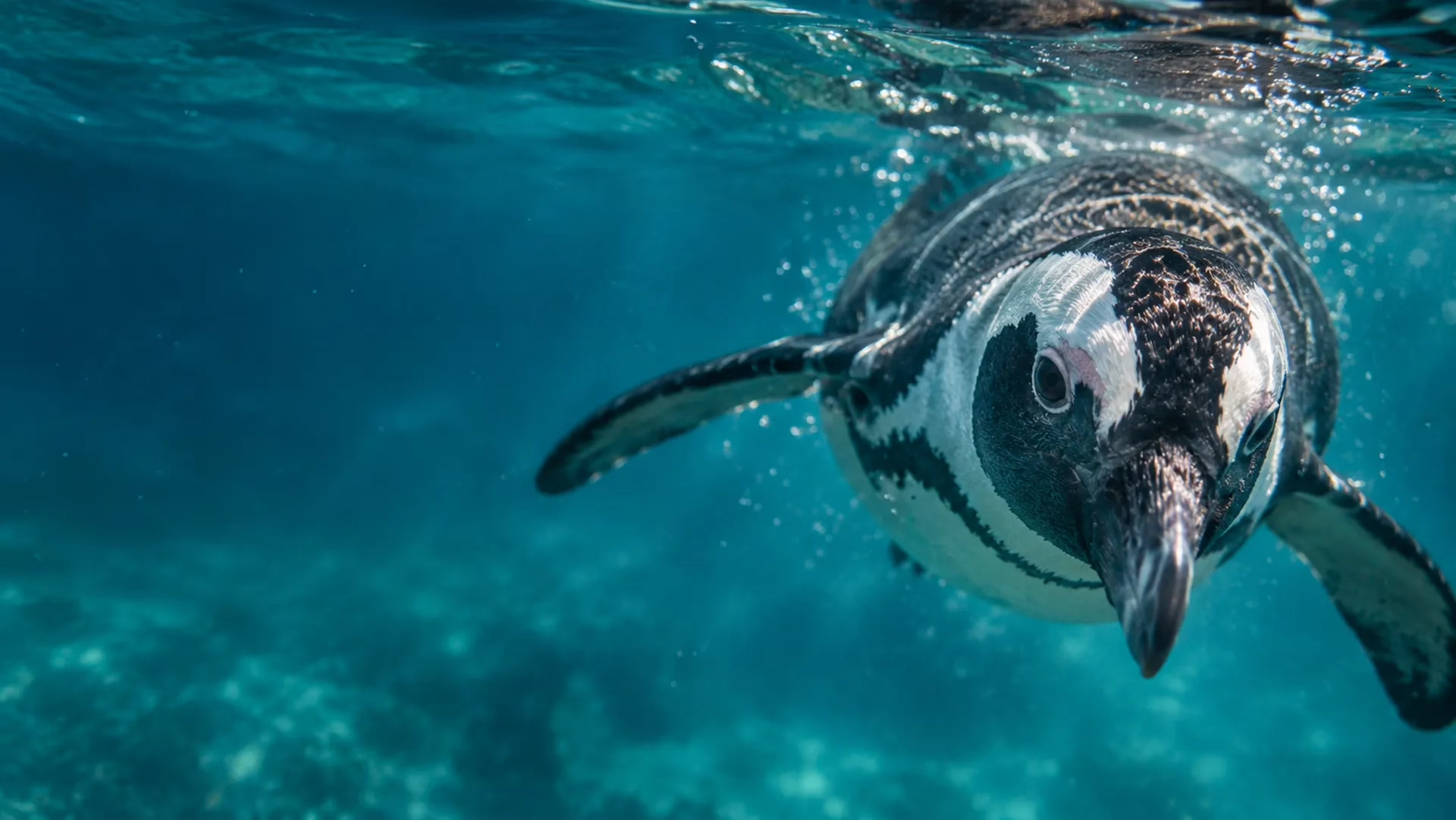
Von der Decken’s Sifaka
95% Chance

Fossa
20% Chance

Aye-aye
10% Chance



Somewhere on Madagascar’s northwestern bulge, you will find a national park that is home to one of the island’s strangest and least explored landscapes.

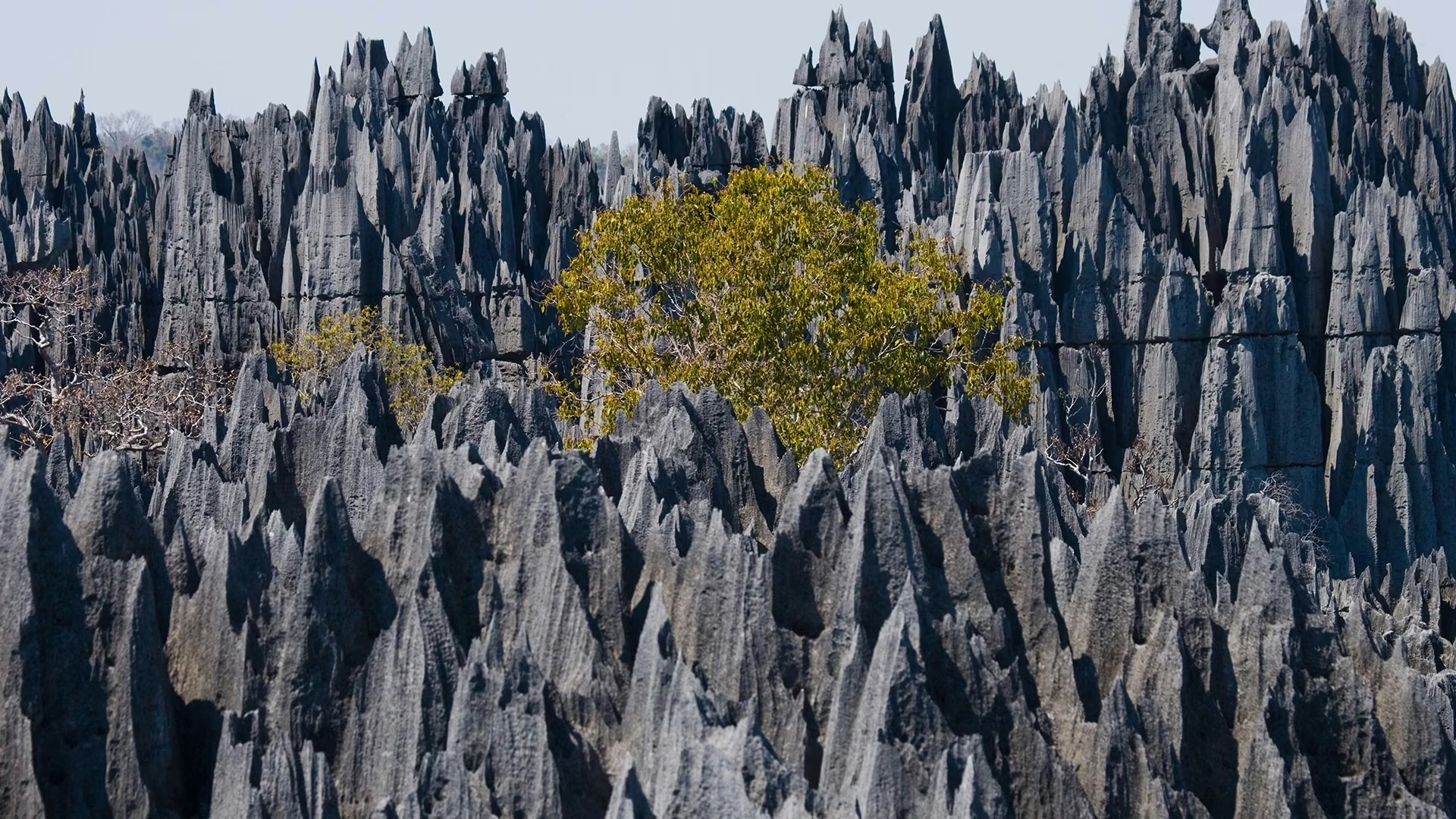
Somewhere on Madagascar’s northwestern bulge, you will find a national park that is home to one of the island’s most spectacular, strangest and least explored landscapes (which, in Madagascar, is saying something). Stepping into Tsingy de Namoroka National Park is like falling into the pages of Journey to the Centre of the Earth. It’s a place of extraordinary contradictions, and the further you venture, the more the landscape transforms.
Open savannahs stretch into rocky earth where limestone pinnacles break through the ground, forming Madagascar’s famous “Tsingy” rock formations. Gnarled baobabs sit improbably atop tsingy cathedrals. Tree roots and vines wind their way through every crack and crevice. Barren rock shape-shifts into caves and canyons that eventually spit you out to portal-like pools. Hallucinogenic blue-green, these natural swimming pools could very well hold the secret to eternal youth, or, at the very least, an ancient city beneath the surface.
And then there’s the wildlife. Much like the rest of Madagascar, the wildlife here is just as crazy as the landscapes. Around species of birds fill its canopy and cliffsides, reptiles lurk around every corner, and flying foxes and bats roost in the caves. Among the more recent celebrity sightings is Brookesia bonsai, a chameleon species so tiny and elusive it was only rediscovered here after being feared lost to science – proof there’s still plenty this park hasn’t given up. And how can we forget, the stars of the show – the lemurs! Namoroka is home to ten species of lemur, including the elusive and highly endangered aye-aye. And how could we forget, hiding in the wings is the fossa! Madagascar’s largest carnivorous mammal (a lemur’s worst nightmare).
A note on timing: You have a six-month window to make this happen — use it wisely. Namoroka Tsingy Camp, where you’ll be staying at the park, opens on 15 May and closes on 14 November! From mid-November through to mid-May, the northwest of Madagascar enters its wet season with considerable enthusiasm, and it becomes largely inaccessible.
Green Season
It’s the wet season! The northwest of Madagascar is doing its level best to become a river. Heavy tropical downpours turn the already remote tracks into something not even a 4×4 would negotiate with confidence. Tsingy de Namoroka is firmly closed, and the tsingy formations are best admired from a dream board.
Green Season
The wettest month in the region. Rainfall peaks, humidity is punishing, and the roads to Namoroka have essentially ceased to exist. The park is closed, the limestone pinnacles are getting a thorough wash, and this is very much not your month.
Green Season
Rain eases slightly but remains significant, and the northwest stays hot and muggy. The tracks remain impassable, and the park stays closed. Still firmly a month for making plans rather than making tracks.
Green Season
The rains retreat, and the landscape begins to dry out. Tracks become firmer by the end of the month, though the camp doesn’t reopen until 15 May. Think of April as the warm-up act — impressive in its own right, but the main event is still coming.
Secret Season
The camp opens on 15 May and not a moment too soon. Skies are clear, humidity drops dramatically, and the tsingy formations glow in the dry-season light. Wildlife is active, the air feels clean, and you’ll have one of Madagascar’s most remote wilderness areas virtually to yourself. Worth every bit of the wait.
Peak Season
Bone dry, brilliantly sunny, and pleasantly breezy. The dry season is fully established, and the park is at its most navigable. Wildlife is easy to spot as the forest thins and animals move more predictably. Evenings are warm but comfortable — a genuine pleasure after the punishing wet season heat.
Peak Season
The coolest month of the year, which in northwest Madagascar means warm, dry, and glorious rather than cold. Days are sunny and bright, the forest is stripped back, and the tsingy formations are at their most dramatic. One of the best months to visit, full stop.
Peak Season
Another outstanding month. Still dry, still sunny, and wildlife reliably active through the cooler mornings. The Brookesia chameleon is finding its’ territory — tiny, ancient-looking, and improbably well-camouflaged against the limestone. The bat caves are worth every step of the hike.
Peak Season
Still excellent. Warm, dry, and supremely photogenic — the dry-season landscape is at its most dramatic just before the first rains soften it. Wildlife viewing remains superb, and the tsingy formations cast long shadows across a landscape that looks almost lunar.
Peak Season
The last full month before the camp closes — and a very good one. Temperatures begin climbing toward the wet season, but skies are still clear, wildlife doesn’t care about the heat, and the park is wonderfully navigable. If you’re coming, October is your final guaranteed window with the full experience.
Secret Season
The camp closes on 14 November — which means you have precisely two weeks to make it count. Early November can be excellent, with dry days lingering and wildlife still active, but the window is tight, and the logistics are unforgiving. Book early, arrive early, and don’t linger.
Green Season
The wet season arrives in earnest. Heavy rain, rising humidity, and tracks that deteriorate quickly. Tsingy de Namoroka is closed until 15 May, and this extraordinarily remote corner of Madagascar returns to its preferred state: wild, wet, and entirely its own.
The terrain in Tsingy de Namoroka National Park escalates around every corner. Razor-sharp tsingy walls rise in limestone cathedrals, riddled with caves that plunge into cool, dark unknowns. Wind and water have spent millennia carving canyons through the rock, each one a corridor to something stranger than the last. And scattered throughout, filled only in the wet season, are temporary natural basins – fleeting pools that vanish as quickly as they appear.


Tsingy de Namoroka National Park is crawling with weird and wonderful creatures. Birdlife runs riot through the canopy and cliff-sides. Down below, dwarf chameleons cling to branches, while bats and flying foxes stream out of the tsingy caves at dusk. But the real showstoppers are the lemurs. Ten species call Namoroka home, from the elegant, leaping Von der Decken’s sifaka to the sleepy-eyed Milne-Edwards sportive lemur and the striking red lemur. Keep your eyes peeled (and your expectations low – they’re masters of hide and seek) for the incredibly secretive aye-aye, and watch your back for the fossa, Madagascar’s largest carnivore and every lemur’s least favourite neighbour.
95% Chance
20% Chance
10% Chance


Nothing beats the magic of the Delta. Wild waterways, unbelievable wildlife, and that feeling that you’ve completely disappeared into nature.
Contact
For me, safari is all about the small things. The quiet sunrise drives, the stories around the fire, and the feeling that Africa gets under your skin.
Contact“Tsingy” is the Malagasy word for “where one cannot walk barefoot” — which should give you some idea of what you’re in for. These razor-sharp limestone karst formations were created over millions of years as rainwater dissolved the rock from above, leaving behind a forest of pointed pinnacles, canyons, caves, and underground rivers. The result is one of the most alien landscapes on the planet!
Both parks protect tsingy formations, but they’re very different experiences. Bemaraha is larger, more famous, has better infrastructure, and is significantly easier to reach. Namoroka is smaller, far more remote, rarely visited, and is quite the adventure to get to, which is precisely why those who make it feel rather smug about it.
Your camp at Tsingy de Namoroka is accessed from Antananarivo by a 1hr 30 minute scheduled charter flight to Soalala followed by a 2hr 30 minute drive in a 4×4 vehicle. The scheduled charter flights operate on Tuesdays and Saturdays throughout the season.
The camp and park are open from 15 May to 14 November — the dry season window when the tracks are passable, and conditions are the best. Outside of these dates, the roads become inaccessible, and the park closes entirely. The sweet spot for visiting is June through October, when the weather is reliably dry, the wildlife is active, and you’ll have extraordinary tsingy scenery all to yourself. November is possible but tight — the camp closes on the 14th, so plan accordingly.
The park is home to 10 lemur species, including the striking Decken’s sifaka — a white-and-russet lemur that navigates the limestone spires with crazy agility. There are around 102 bird species (many endemic), 31 reptile species, including the extraordinary endemic Brookesia bonsi chameleon, and 21 bat species occupying the cave systems.
Namoroka Tsingy Camp will be your home base whilst exploring the incredible Tsingy de Namoroka National Park. It consists of just nine safari-style tents, and you will be completely taken care of by the camp team, so you don’t have to think about a thing!
A reasonable level of fitness will serve you well — this is not a stroll in the park, in either the literal or figurative sense. The limestone is razor-sharp, uneven, and entirely indifferent to your footwear. Trails involve scrambling, ducking, and occasionally convincing your body to do things it wasn’t expecting. You don’t need to be an athlete — but you do need to be honest with yourself about your limits, and your guide will help you calibrate accordingly.
It depends very much on the children. Namoroka is not a destination for young ones who need entertaining between wildlife sightings — the remoteness, the heat, and the physical demands of the tsingy circuits require a certain level of resilience and genuine curiosity. That said, for older children and teenagers who are adventurous, outdoorsy, and interested in the natural world, this is the kind of trip that leaves a mark.
Our Reviews

How do you write a review for a travel agency that is above perfect? It's not hard! Hidden Africa listened … read more

Simply amazing. We have had 2 trips of a lifetime with Hidden Africa now, and plan on many more. Their … read more

Geraldine worked with my friend Cheryl to arrange the most amazing Southern Africa trip. Geraldine even worked around some of … read more

I cannot recommend Hidden Africa and Chad highly enough! From the very first conversation, Chad was attentive, knowledgeable, and genuinely … read more
Take a look around for a bit of inspiration.
Tell us what your dream safari looks like.
Next, your Personal Travel Planner will schedule a call to plan the perfect adventure.
Confirm your trip and get packing.
Ready to go? Give us a shout and let’s start planning your next adventure. We’re almost as excited as you are.