Indri
95% Chance

Fossa
5% Chance

Parson’s Chameleon
50% Chance

Black-and-White Ruffed Lemur
30% Chance



So long as your eyes are peeled, you will see something that will make you giggle, lose your breath or blow your mind.

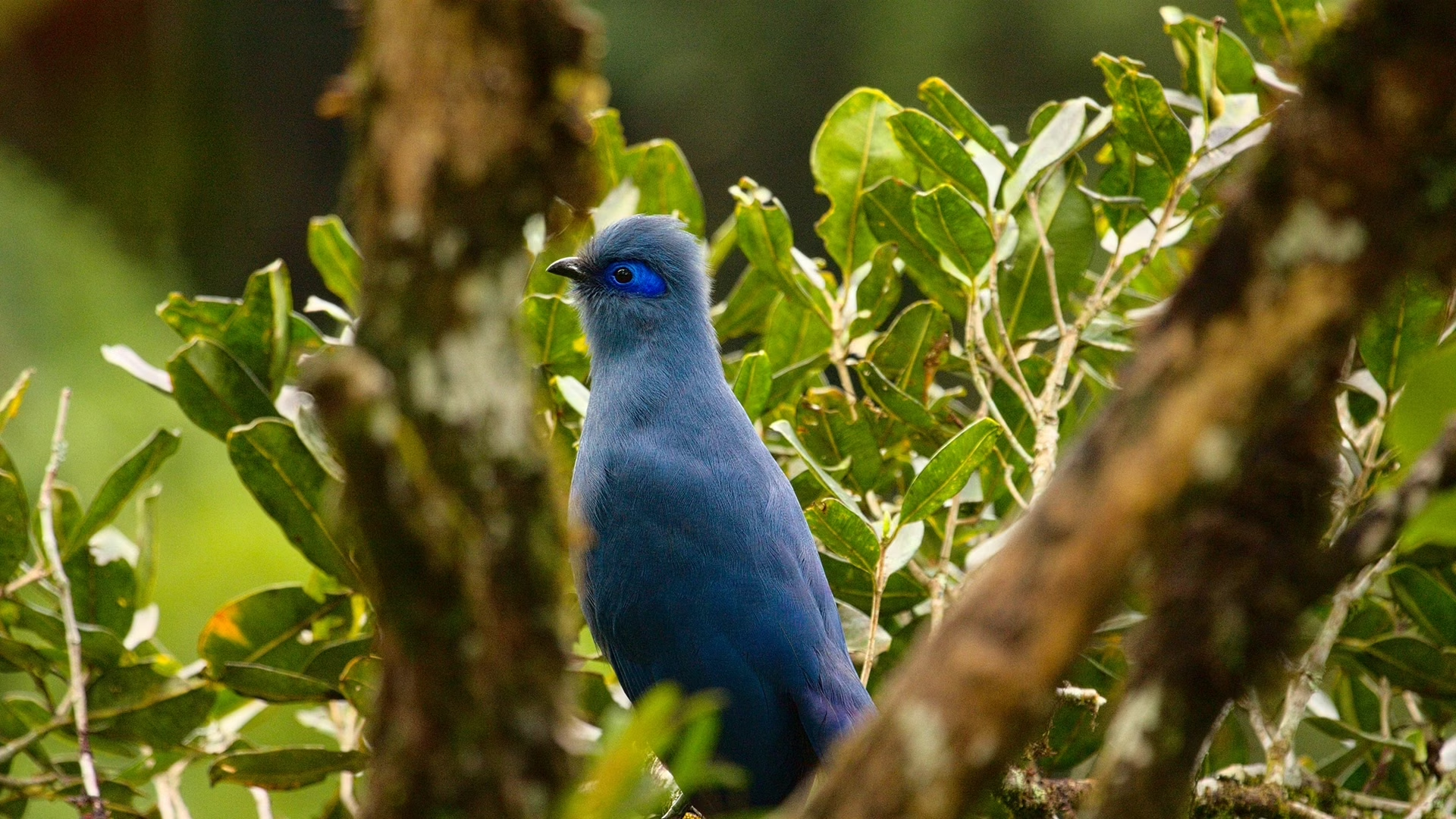
Take a squizz at a map of Madagascar, and you’ll notice the eastern shoulder is basically one long, green blur. That’s rainforest. The dense, dripping, misty, “Are we lost?” kind. Andasibe–Mantadia National Park lives right in the middle of that chaos, and it quietly hoards some of the most eyebrow-raising wildlife on the island.
Just 150km from Antananarivo, Madagascar’s most iconic rainforest safari is pretty accessible (so long as you don’t mind a few bumps in the road). You’ll know you’ve arrived at Andasibe-Mantadia long before you’ve seen a thing. A call that could only be mistaken for a helium foghorn rattles through the canopies like whale song. If you weren’t awake, you are now. The iconic Indri Indri (Madagascar’s largest lemur) rules the canopies here.
And how to describe the rest of the wildlife you’ll find here? Unfamiliar. Miss-assembled? Hard to believe. “What on earth is that?”. These rainforests are heaving with creatures that even the most creative of minds would struggle to conjure up (but nothing that wants to eat you). 14 lemur species, birdlife galore, chameleons in every size, golden frogs that gleam from the undergrowth, vanishing leaf-tailed geckos, giant butterflies, and the particularly ridiculous giraffe weevil.
Andasibe-Mantadia is split into two different sections. Analamazoatra and Mantadia. Analamazoatra eases you in with familiar paths and habituated indri families (that aren’t as quick to judge). Head deeper into Mantadia, and things quickly change. Trails get steeper. Trees lean in. Ferns take over. At this point, you just nod and keep going – something good is bound to be around the corner. We think you’ll be quick to agree that this is one of the strangest, richest corners of the natural world.
Unlike many parks, Andasibe-Mantadia stays open year-round! Which is either very generous or a gentle test of character, depending on which month you show up.
Green Season
The rainforest is doing what rainforests do best: being dramatically, gloriously wet. Trails turn to soup, mist clings to everything, and the Mantadia section becomes a muddy adventure nobody asked for. The park stays open, but we’d gently suggest saving yourself for better months.
Green Season
Cyclone season is at full tilt. Heavy rain, high humidity, and trails that require more optimism than sense. The Indri still calls, magnificently indifferent to the weather, but reaching them is another matter.
Green Season
The rains ease their grip. Humidity remains high and the trails are still slippery, but there’s a sense the forest is catching its breath. A moody, atmospheric month for those who like their adventures with a side of mud.
Secret Season
And just like that — everything changes. The rains retreat, the skies clear, and Andasibe emerges looking extraordinarily pleased with itself. Baby lemurs begin appearing, the trails are firm underfoot, and you’ll have the place nearly to yourself. One of the best months, full stop.
Secret Season
Possibly the best-kept secret in Madagascar. Clear skies, lush forests, cool air, and barely another tourist in sight. The trails are superb, wildlife is active, and everything has that just-washed glow the wet season left behind.
Peak Season
The dry season is firmly in charge — cool, crisp, and gorgeous. The Indri families are easy to locate, the forest smells wonderful, and nights are perfect for finding chameleons by torchlight!
Peak Season
Peak season, and it’s not hard to see why. Perfect hiking weather, reliable Indri sightings, and firm, clear trails. The more popular paths can get busy — arrive early, linger late, and you’ll still feel like you own the place.
Peak Season
Still dry, still beautiful. Birding reaches exceptional levels as September approaches, and the forest is alive with sound and movement. Comfortable days, cool nights, and the kind of light that makes everything look better than it already does.
Peak Season
Baby lemurs. That’s the headline, and it’s a very good one. September delivers some of the best birding of the year alongside tiny, wide-eyed lemurs clinging to their mothers’ backs and orchids beginning to appear along the trails. Genuinely exceptional.
Peak Season
One of the very best months. Warm enough for reptiles to emerge in force, baby lemurs still in abundance, orchids blooming along the trails, and birding at its colourful peak. The forest feels alive in every direction.
Secret Season
The last hurrah before the rains return, and what a send-off. Birding is superb, reptiles are everywhere, orchids are still blooming, and night walks deliver some of the most extraordinary wildlife encounters in the forest. The first showers arrive late in the month, but they’re refreshing rather than relentless.
Green Season
Early December can be genuinely lovely — warm, birdy, and brimming with life. But the rains build fast, humidity climbs, and the trails begin their slow return to the wet season. Come early in the month if you can; by Christmas, the forest is firmly back in its element.
Andasibe is a tropical rainforest, and not the polite kind. This is proper, dripping, cathedral-ceilinged jungle, where the canopy closes overhead, and every surface is coated by something green, wet, and wildly alive. Mosses cling to ancient trees, ferns elbow each other for space, and mist rolls through the understorey. It’s the kind of environment that makes you feel simultaneously very small and very lucky.
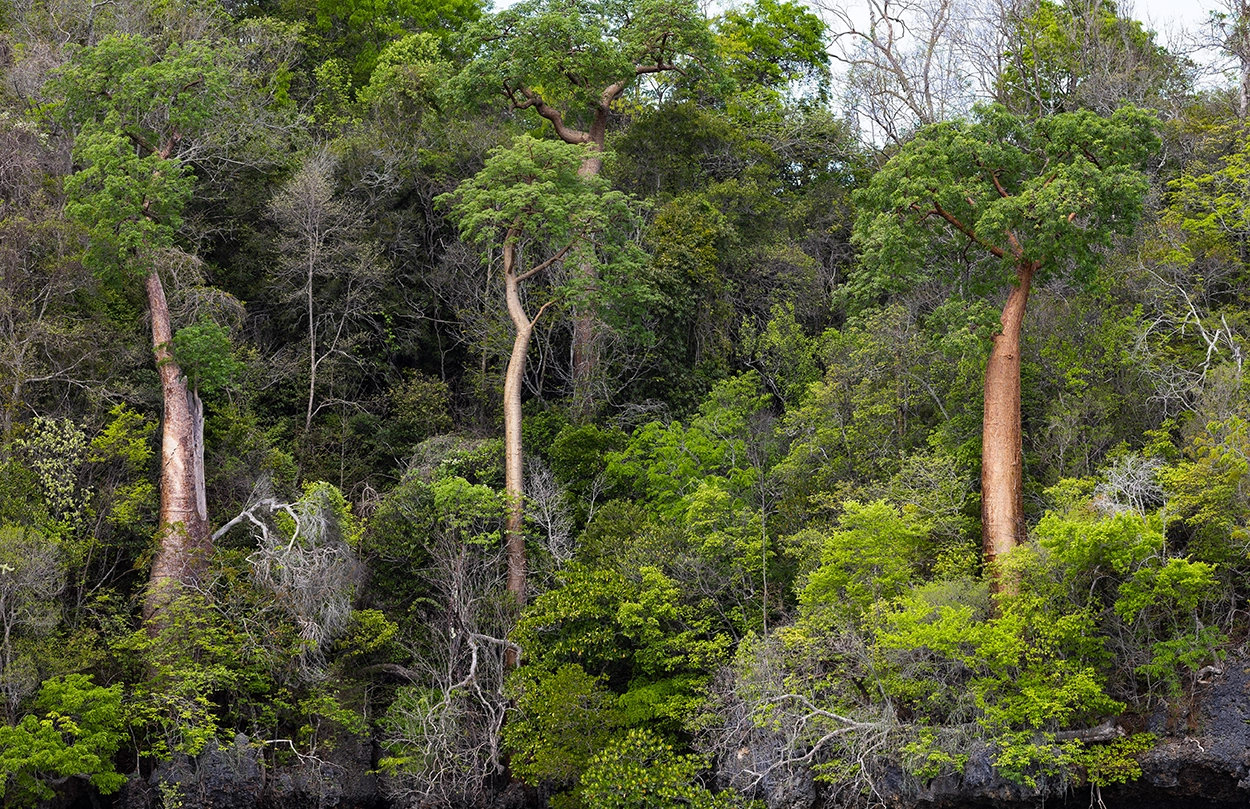
This is where you come to see the Indri. Madagascar’s largest (and loudest) lemur, and the undisputed king (or queen) of this treetop kingdom. As for everything else lurking in these forests, words start to fail. Strange-looking. Slightly implausible. The kind of creatures that make you say “what on earth is that?” out loud. Fourteen lemur species, a bird list that never seems to end, chameleons in every size imaginable, golden frogs, leaf-tailed geckos, oversized butterflies, and the frankly absurd giraffe weevil.
95% Chance
5% Chance
50% Chance
30% Chance

Nothing beats the magic of the Delta. Wild waterways, unbelievable wildlife, and that feeling that you’ve completely disappeared into nature.
Contact
For me, safari is all about the small things. The quiet sunrise drives, the stories around the fire, and the feeling that Africa gets under your skin.
ContactGuides are mandatory in the park, but more importantly, they’re the difference between a walk in the woods and an experience that properly blows your mind. A good guide will spot a leaf-tailed gecko you’d have stepped on, identify a chameleon the colour of bark at twenty paces, and know exactly where the Indri families are roosting.
About 150km east of the capital, roughly three hours by road. But Madagascar’s roads are no walk in the park, so times will vary. It’s one of Madagascar’s most accessible wilderness destinations, which makes it a brilliant first stop on any itinerary.
The Indri is Madagascar’s largest lemur — black-and-white, teddy-bear-faced, and has a call so extraordinary it stops you dead in your tracks. Think whale song crossed with a foghorn, echoing through the canopy at dawn. Sightings aren’t guaranteed (this is wildlife, not a zoo), but Andasibe has habituated family groups, and your chances are excellent with a knowledgeable guide.
Quite a lot, and most of it will make you question what you thought you knew about nature. Andasibe-Mantadia is home to 14 lemur species, over 100 bird species, chameleons in sizes from pencil-thin to surprisingly enormous, golden mantella frogs, vanishing leaf-tailed geckos, and the gloriously ridiculous giraffe weevil.
Absolutely. Night walks are one of the most underrated wildlife experiences in Madagascar. After dark, the forest transforms entirely — chameleons emerge along the branches, mouse lemurs dart through the undergrowth, tree frogs cling to every leaf, and sleeping lemurs glow in the torchlight. It’s eerie, magical, and completely unlike anything you’ll do in daylight. Book one. Or two.
Think of them as the same park in two very different moods. Analamazoatra is the more accessible section — well-maintained trails, habituated wildlife, and a gentler introduction to the rainforest. Mantadia is wilder, steeper, and significantly more rewarding for those willing to earn their sightings. Trails are more rugged, crowds thinner, and the feeling of genuine wilderness more pronounced. If you have time, do both.
Yes, but Mantadia is better suited to older children and confident walkers. Night walks are a particular hit with curious young minds — there’s something about spotting chameleons by torchlight that converts even committed non-nature-lovers.
Madagascar does require some health preparation. Malaria is present in many parts of the country, though Andasibe’s highland altitude (around 900–1,300m) puts it in a low-risk zone. That said, it’s always worth consulting a travel health clinic well before departure — they’ll advise on malaria prophylactics, vaccinations (including yellow fever if you’re travelling via certain countries), and any other considerations.
Our Reviews

Geraldine worked with my friend Cheryl to arrange the most amazing Southern Africa trip. Geraldine even worked around some of … read more

Simply amazing. We have had 2 trips of a lifetime with Hidden Africa now, and plan on many more. Their … read more

Chad at Hidden Africa was absolutely wonderful to work with. We worked together to fully customized our 2 week elopement … read more

I cannot recommend Hidden Africa and Chad highly enough! From the very first conversation, Chad was attentive, knowledgeable, and genuinely … read more
Take a look around for a bit of inspiration.
Tell us what your dream safari looks like.
Next, your Personal Travel Planner will schedule a call to plan the perfect adventure.
Confirm your trip and get packing.
Ready to go? Give us a shout and let’s start planning your next adventure. We’re almost as excited as you are.