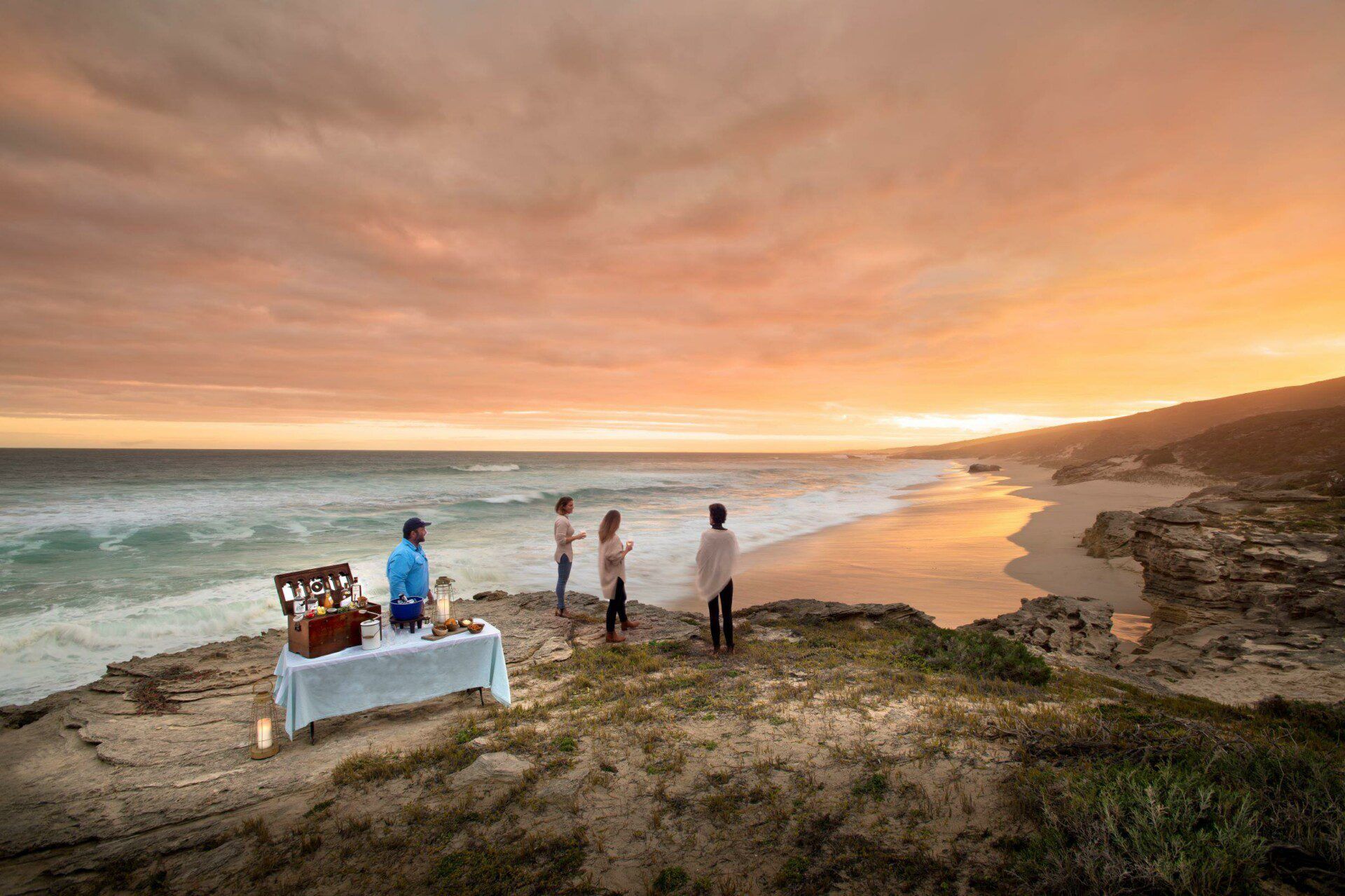
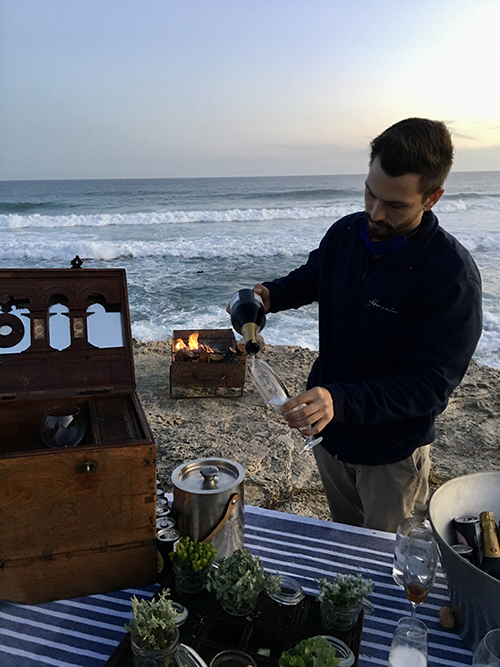
The chef prepares home-cooked meals, including freshly baked bread for breakfast, lunch and supper. It’s difficult to pop to the shops as the nearest is half a day away, so everything is made from scratch. The highlight was the lekker braai (barbecue), served in potjie pots and cast-iron pans. Surprisingly, no fresh fish — you can’t cast a line in a Marine Protected Area. What would Bill say, not so lekker now?
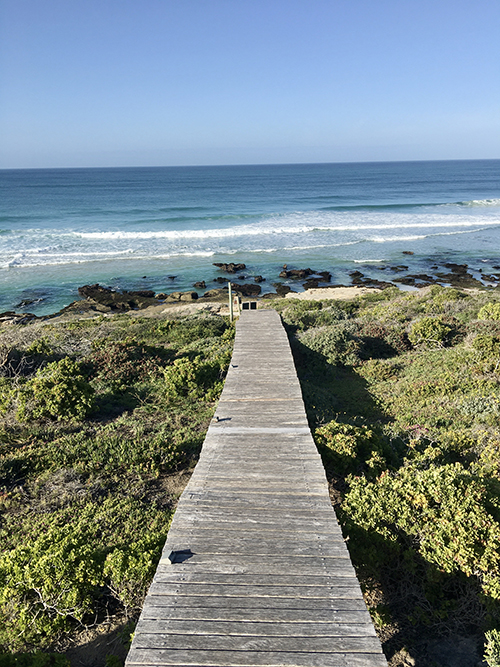
Lekkerwater is part of the Natural Selection, who are all about experience: thrills versus frills. So, city-slicker, you won’t find a telephone, a TV or air-con in your room. Nor do they waste electricity on minibars and hairdryers – to be honest, that stuff is not important when there is a view from your bed of whales and sunsets and endless seas. We slept with the patio door open, enjoying the sea breeze, and woke to the sound of crashing waves with the sun as our alarm clock. Oh yes and the entire reserve and marine park all to ourselves.
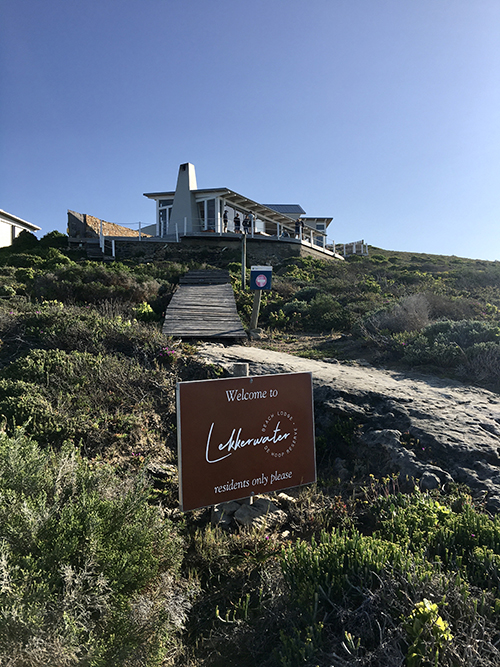
The lodge is off the grid: 99 solar panels, with gas generators for when the sun doesn’t shine. The water, it turns out, is very lekker indeed — drawn from a borehole 150 metres deep and so fresh you can drink it from the tap.
Protecting the environment clearly matters here: the lodge had to be built on the footprint of the original home, which means just six rooms and one family unit. It’s simply and tastefully decorated — lots of natural wood and cool ocean blues.
The team that hosted us are all safari professionals who have worked all over Africa. We first met managers Liana and Jan at Tubu Tree Lodge in the Okavango Delta, so it was like seeing old friends again. They make you feel right at home, kicking off with the ‘welcome home’ greeting you receive as you arrive. The ‘home’ reference, it turns out, stems from the idea that this was the cradle of humankind — and that, like the geraniums, all Homo sapiens originated here too.
Home /Lekker–water