Setting the Scene
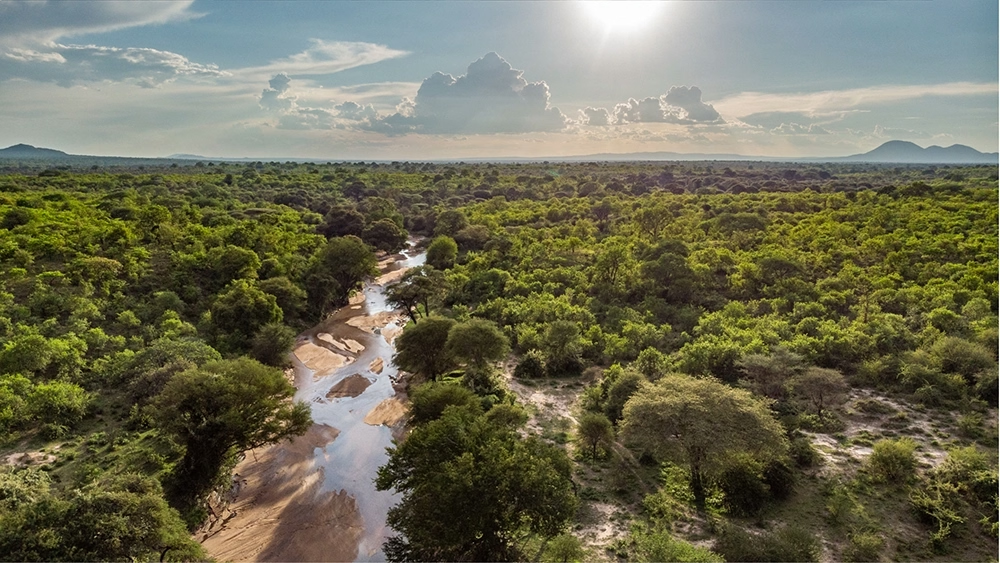
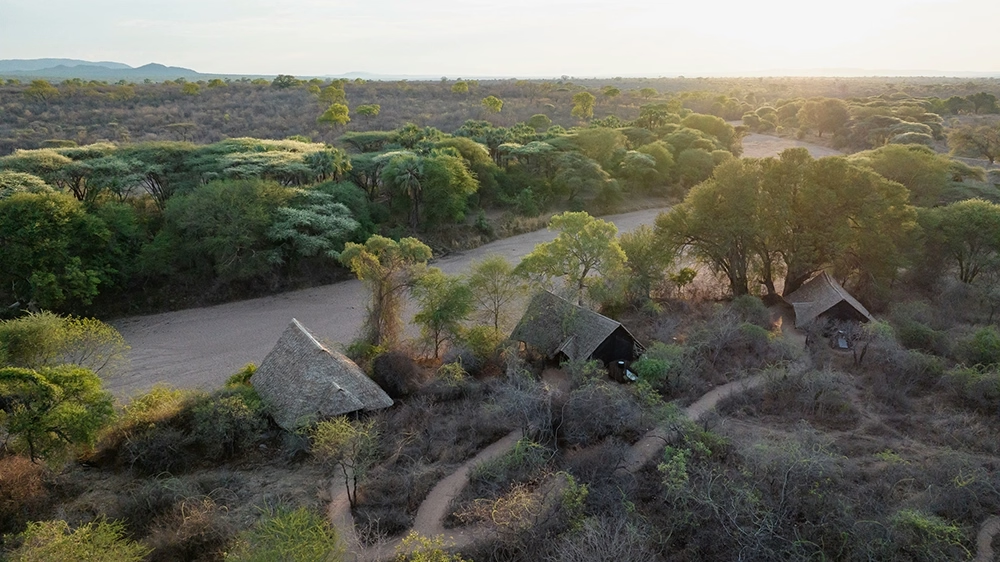
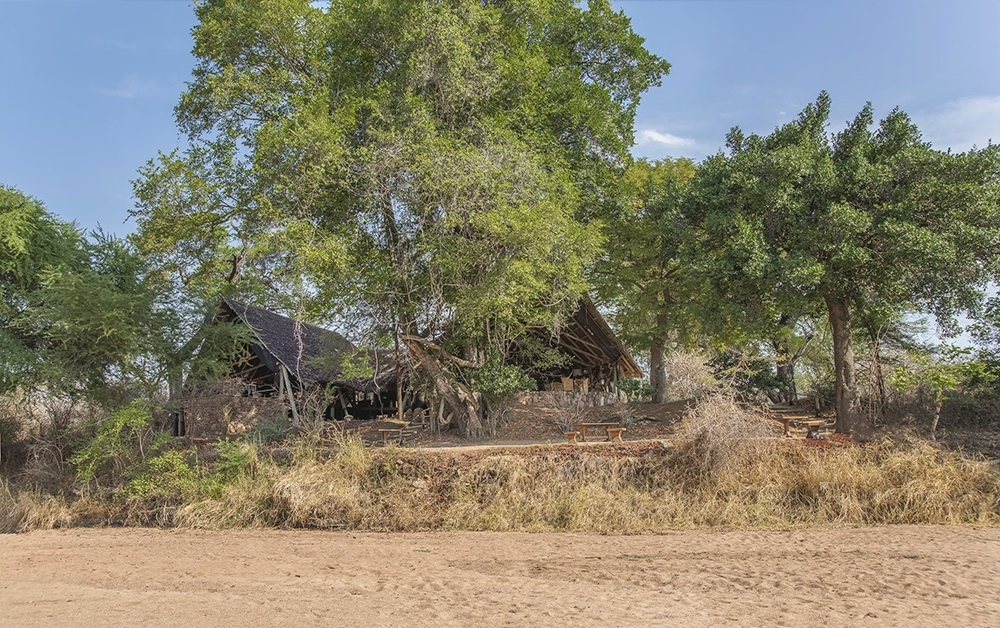
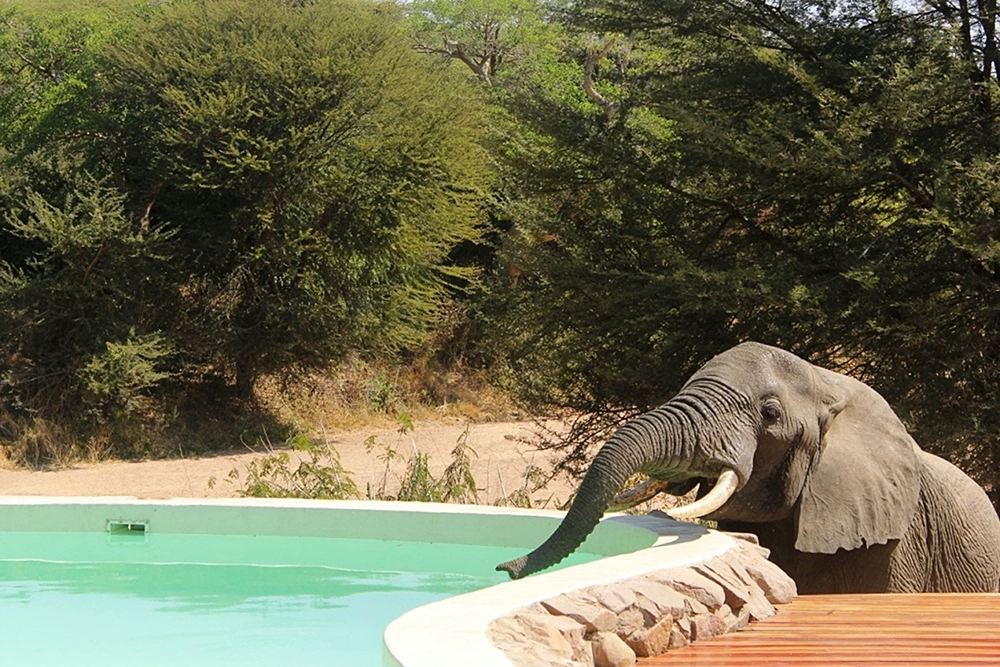
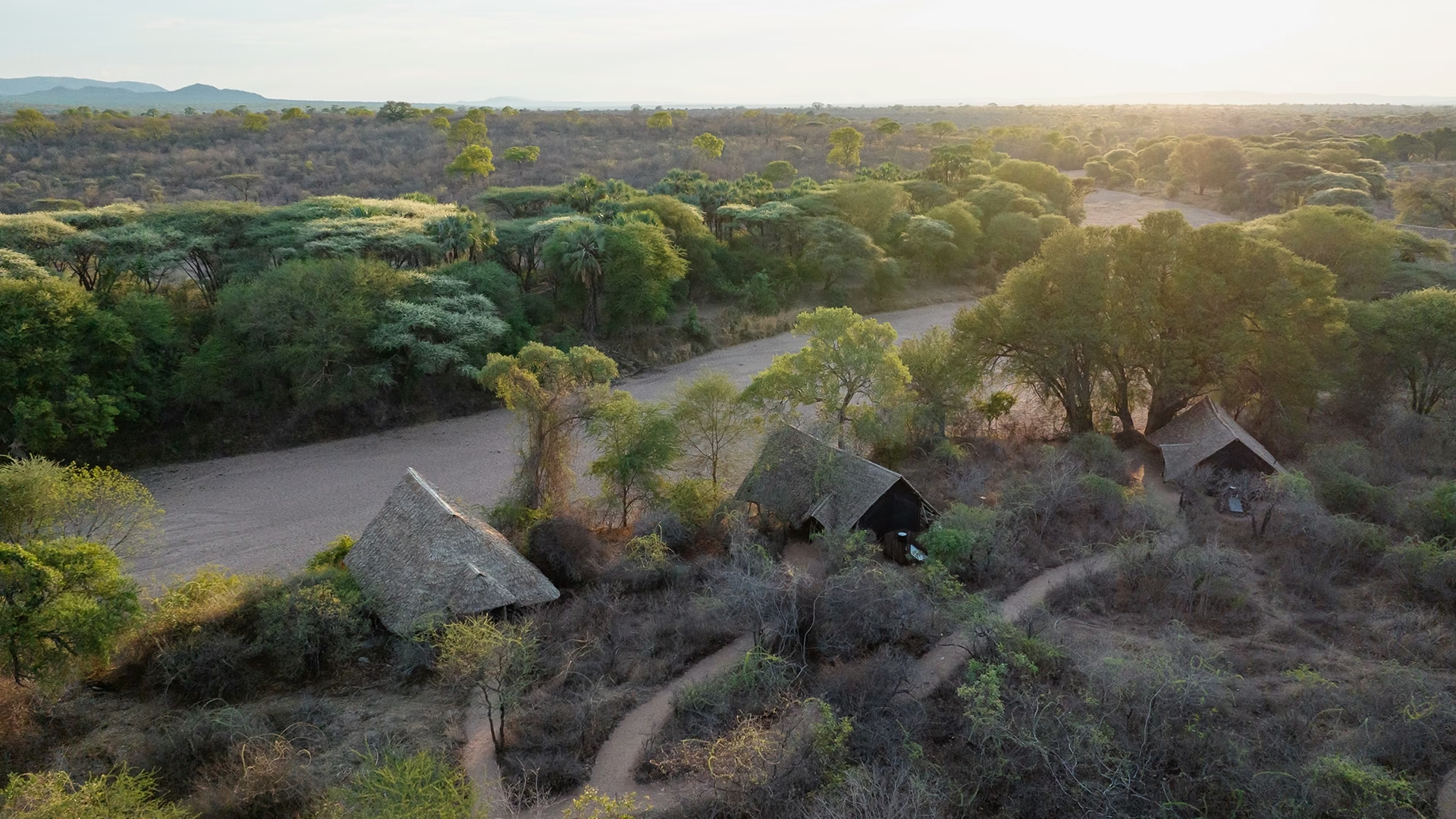
Ruaha National Park is gloriously short on people; one of its greatest attributes. Laba Jongomero takes that and runs with it. Hidden in the park’s far southwest on the banks of the seasonal Jongomero Sand River, it’s one of Ruaha’s most secluded permanent camps. Your only neighbours are at the rangers’ post next door, and they’re not the type to pop round for a cup of sugar. Beyond that, it’s acacia woodland, rocky hills, winding riverbeds and baobabs the size of small cathedrals. You can go hours without seeing another vehicle, which is exactly how a safari is meant to feel. If your idea of paradise involves fewer people and more elephants, you’ll love Jongomero.
Wildly Stylish Sleeping Arrangements
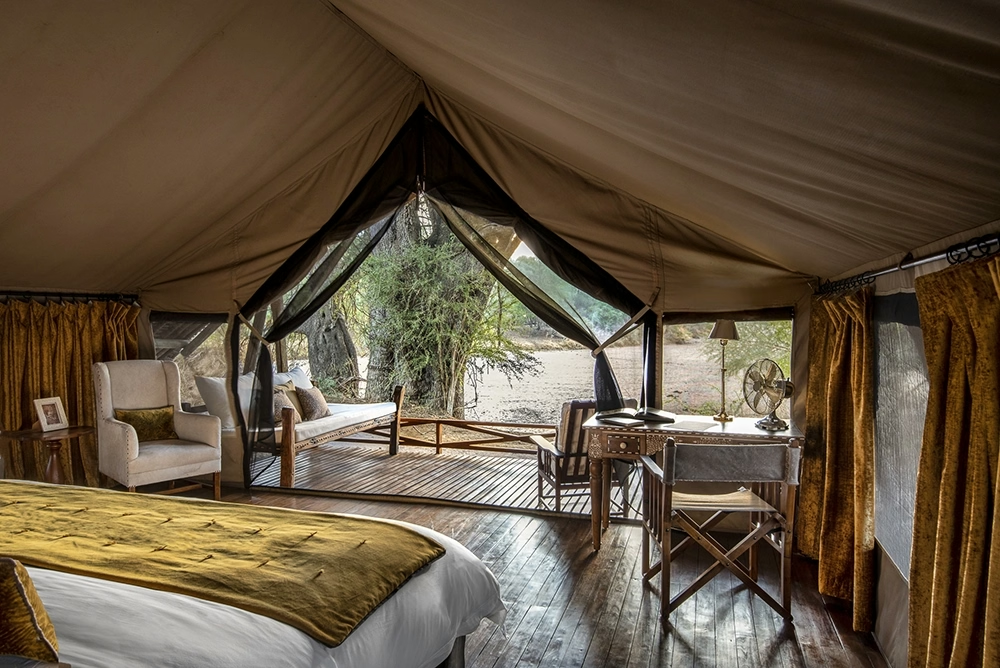
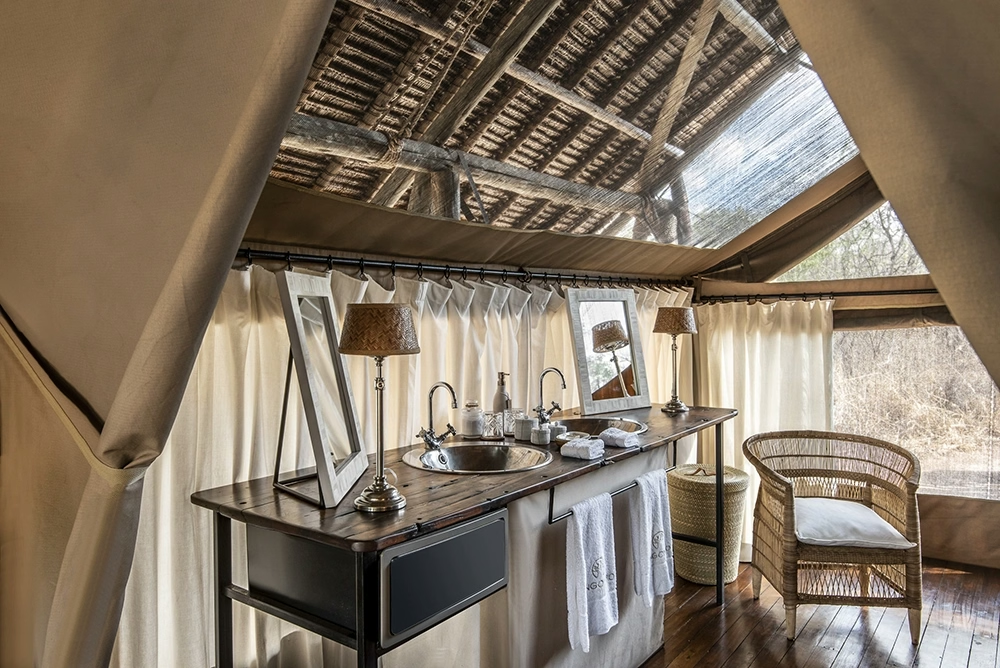
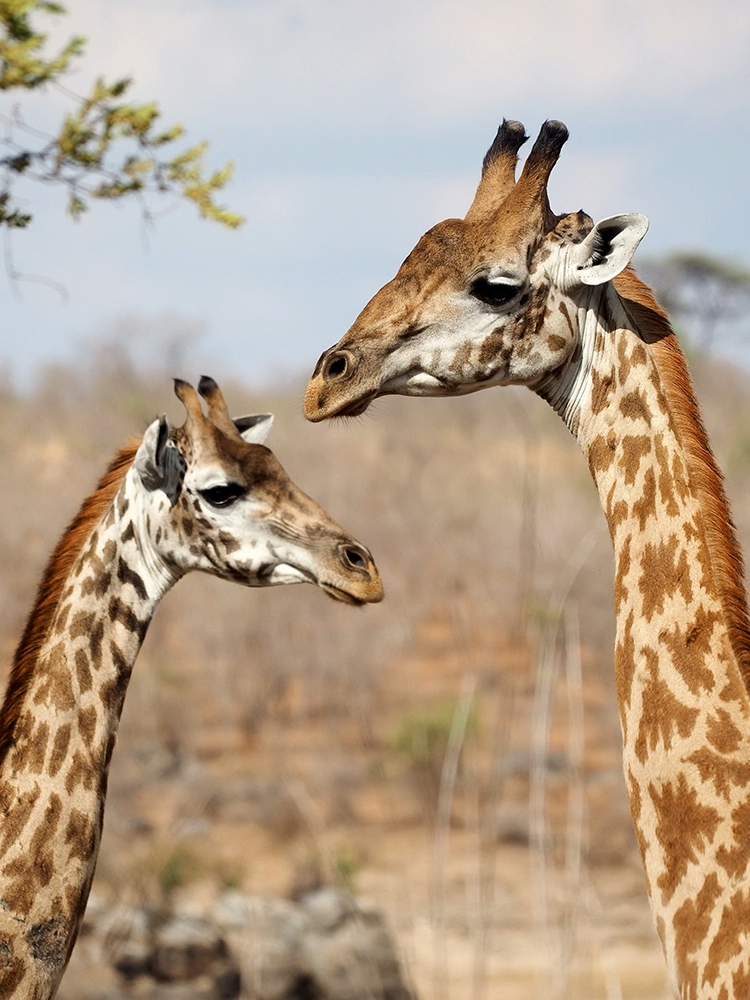
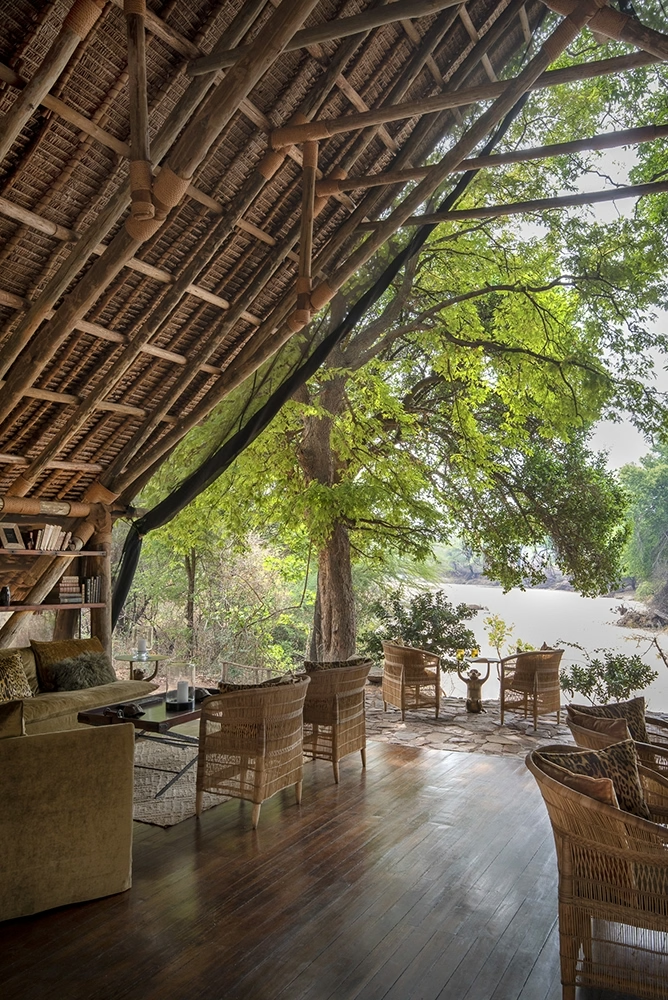
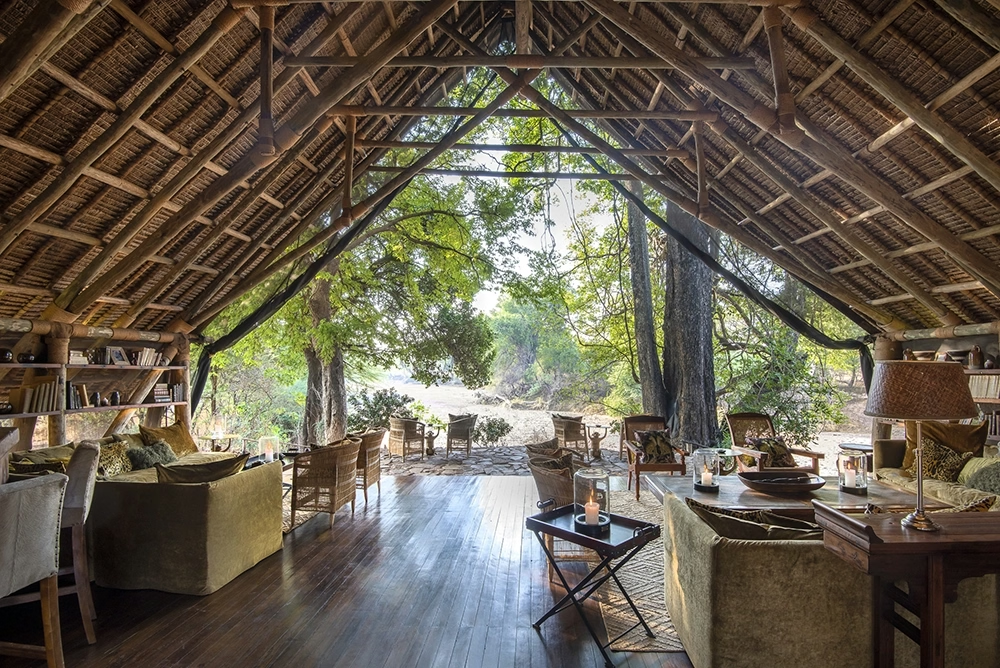
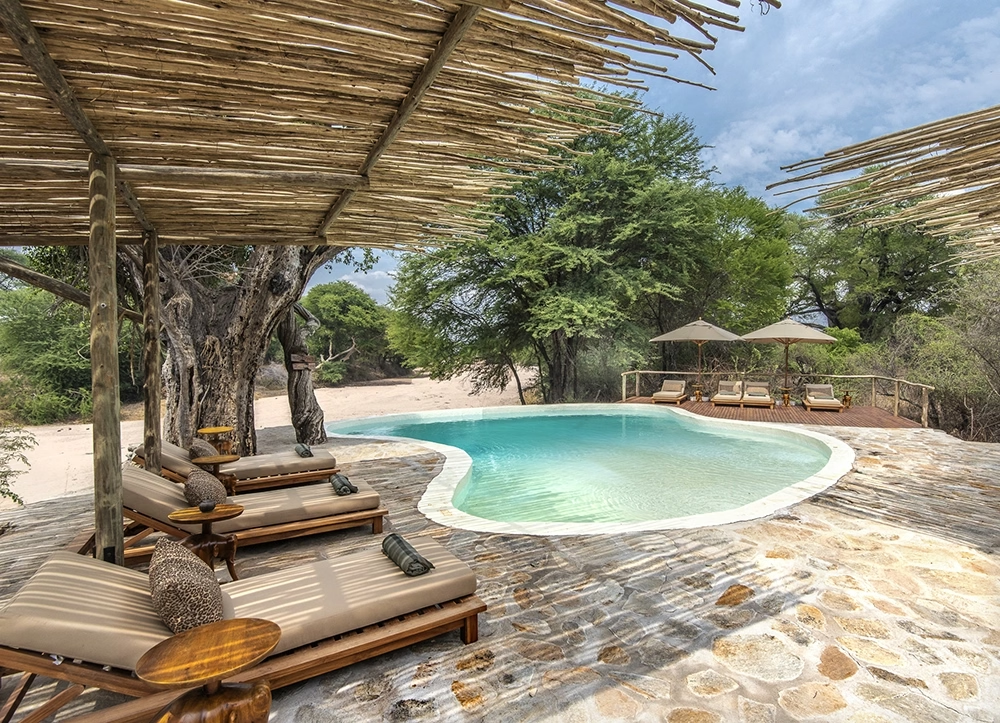
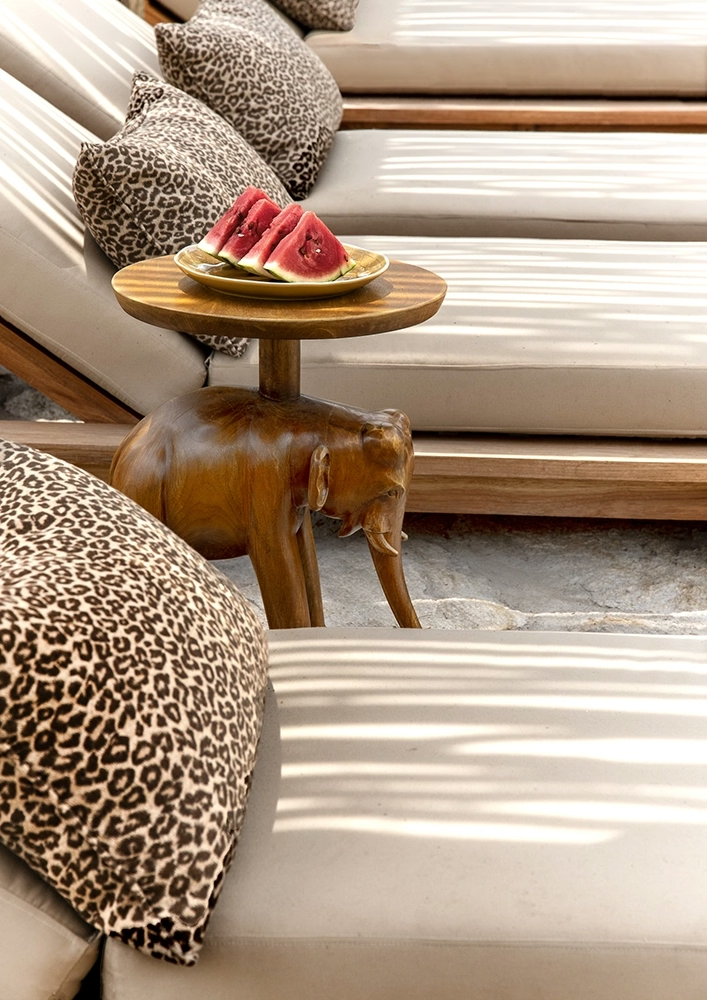
Ten tented suites sit on wooden decks above the Jongomero River, each under an enormous thatched makuti roof – that nostalgic safari smell alone is enough to get us weak at the knees. There’s nearly always a show out front: elephants slurping from the river, kudu picking their way through the thickets, baboons doing baboon things. It’s best watched from the daybed, ideally in a robe with a drink in hand.
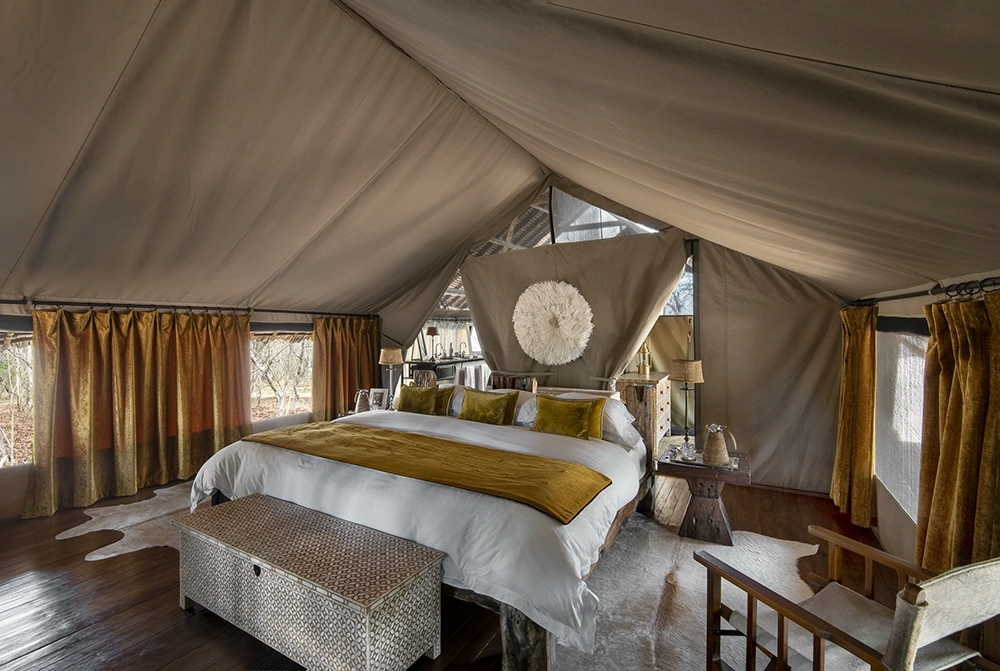
The rooms are gorgeous and comfortable without becoming precious. All the right ingredients for the sort of sleep you’ll brag about at breakfast. Wi-Fi for sending the obligatory “look where I am” message home, and a walkie-talkie for everything else. You may intend to read. You may even open the book. But there is a fair chance you’ll spend most afternoons here staring into the bush instead – just try not to nod off.
Into the Wild
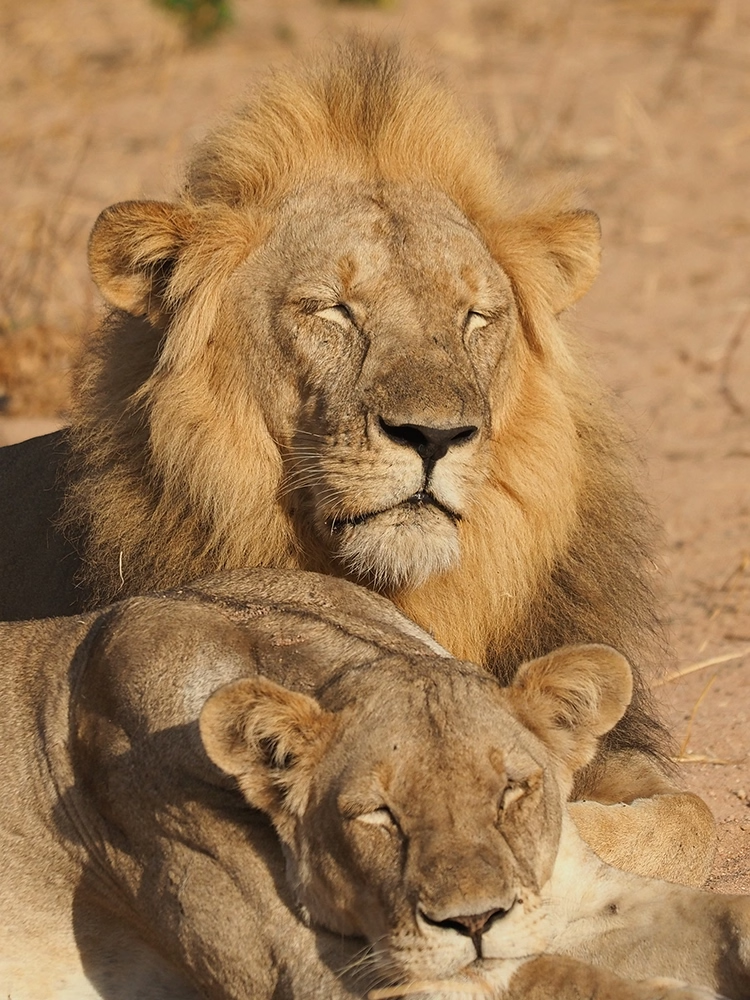
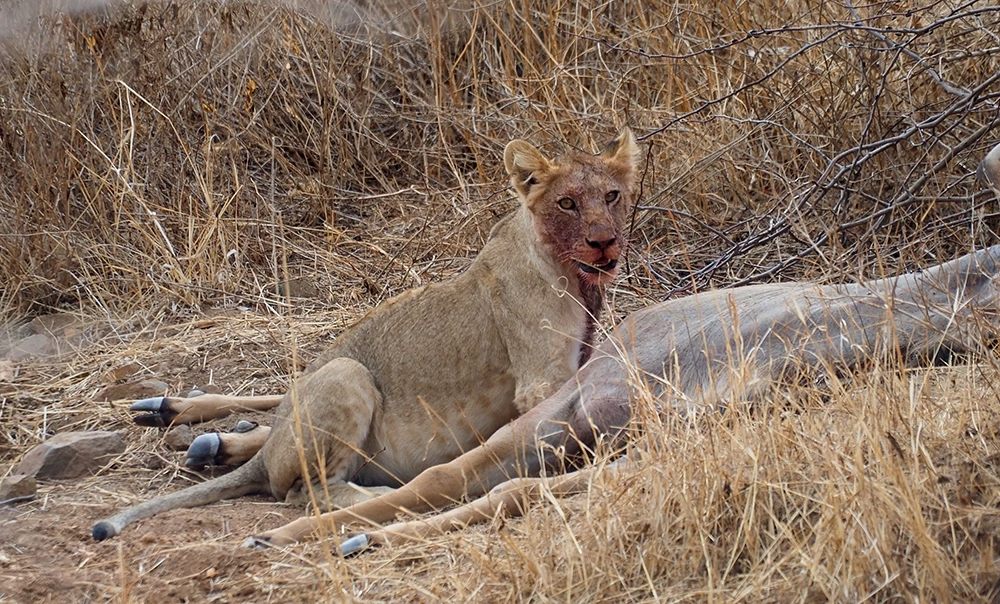
Jongomero’s luxury isn’t in what it has; it’s in what it doesn’t: other vehicles and paparazzi frenzies. No queues at sightings and no frantic negotiations over who gets the best angle. You stop when you want to stop. You stay as long as you like. That might mean a pride of twenty lions stirring before a night’s hunting, or wild dog pups tumbling about outside their den. Or it might mean tiptoeing on foot past a mega herd of elephants while desperately trying to suppress a sneeze. Night drives can happen before or after dinner, depending on whether you’d rather meet your nocturnal neighbours first or eat pudding beforehand. Both are perfectly respectable choices.
Food Philosophy
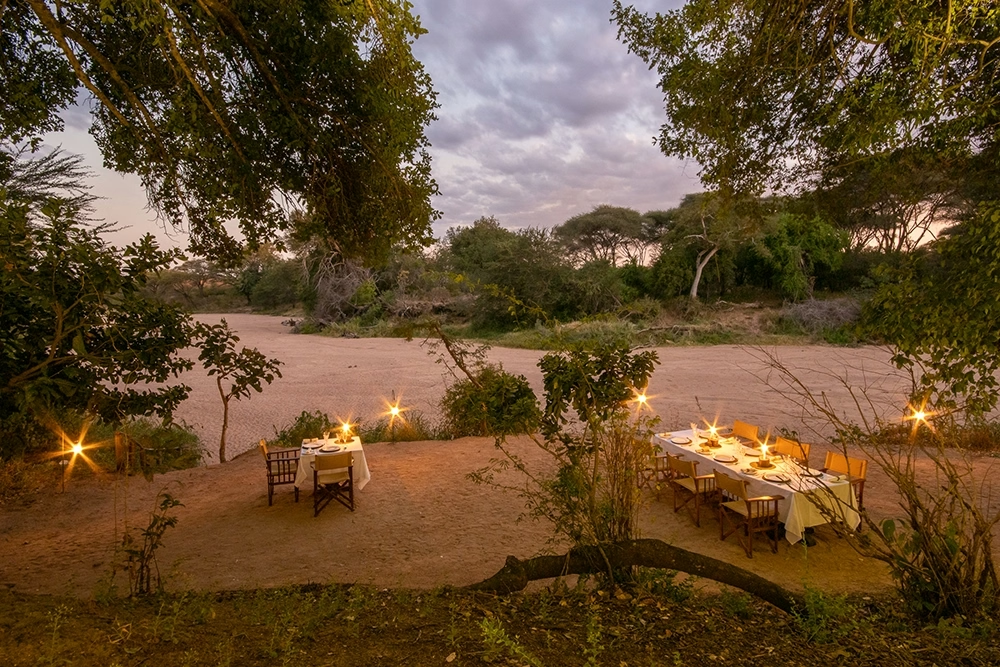
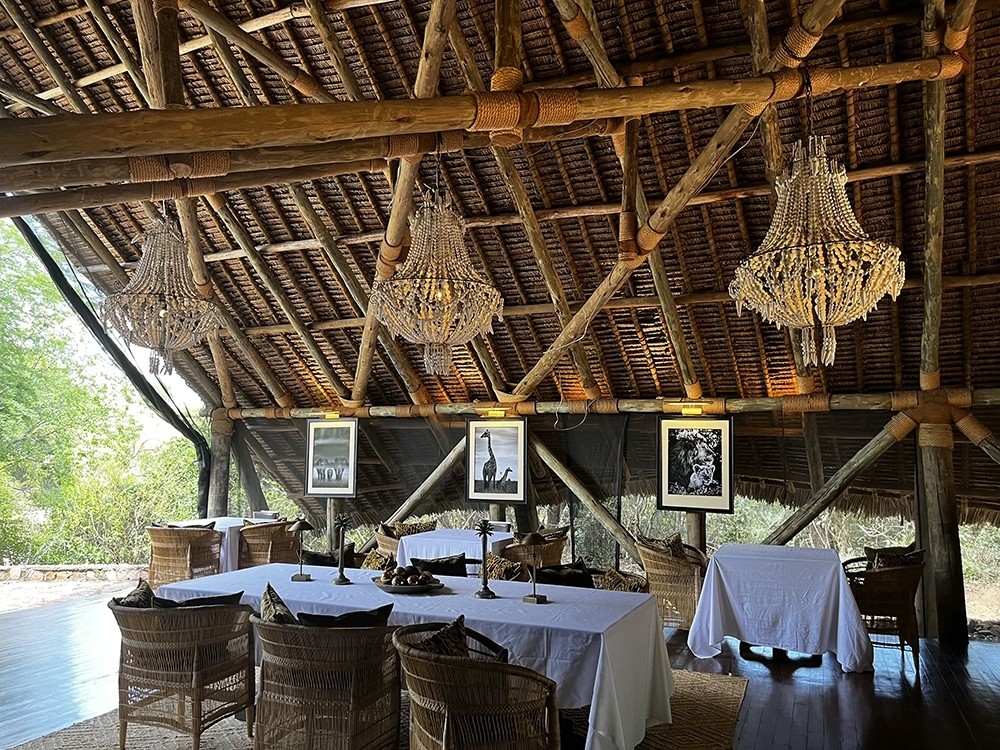
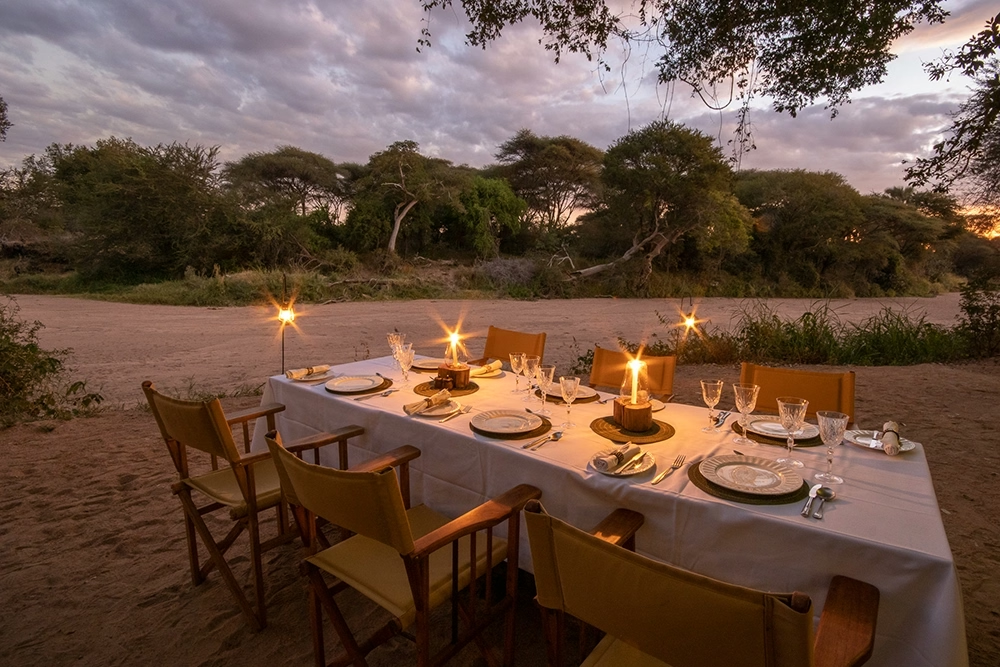
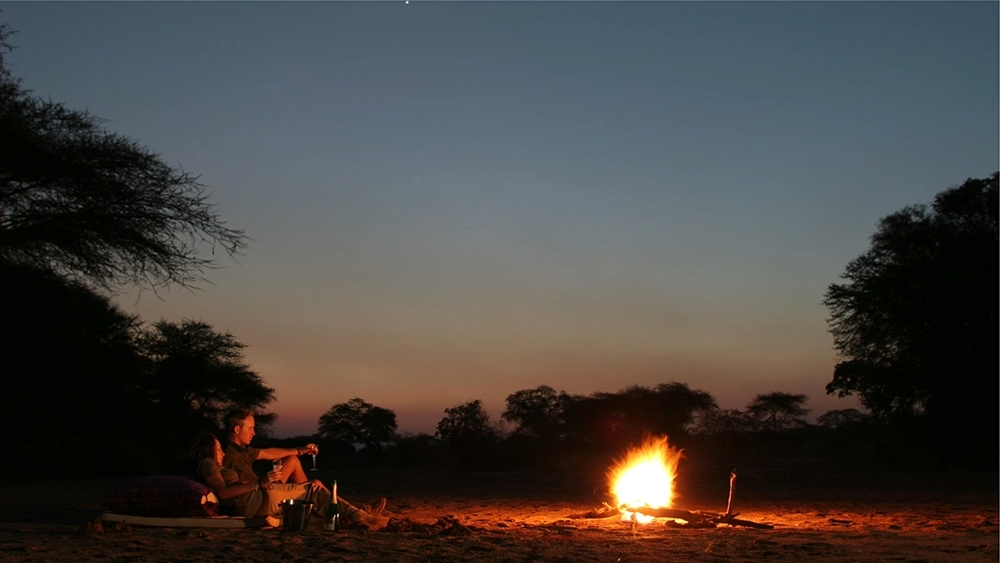
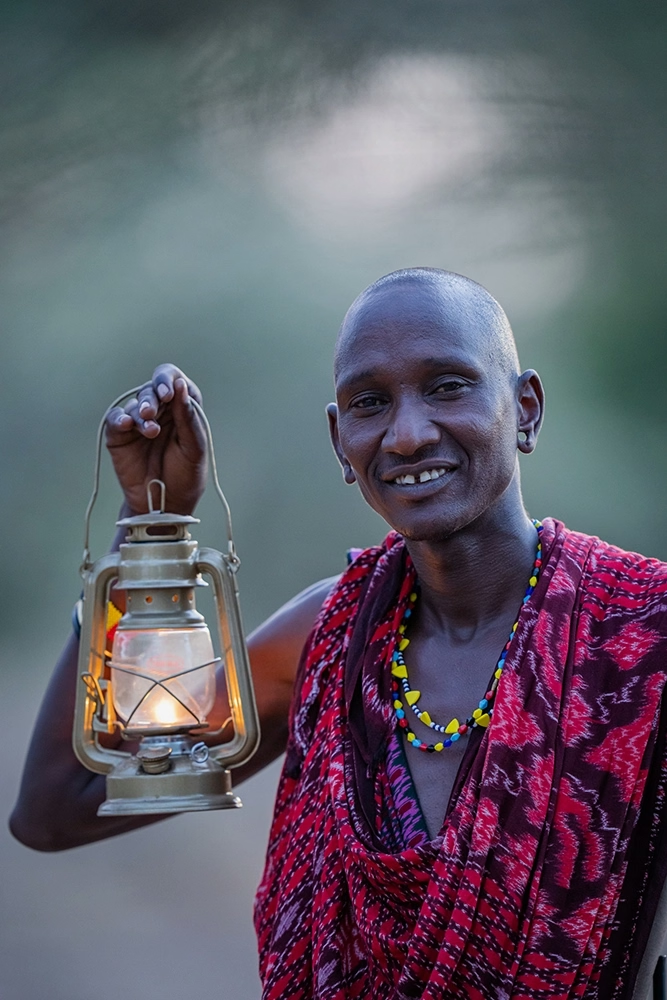
Breakfast arrives in stages, starting with coffee and biscuits at your tent before the early drive, followed by a bush picnic somewhere scenic. The baked eggs alone are worth getting up for. Lunch goes wherever the day takes you, whether that’s in the shade of century-old trees in the riverbed or out in the bush. Expect a happy mix of Italian and East African dishes made from fresh local produce, with bread baked every morning. Dinner moves around each night, from the dining room to a lantern-lit table on the dry riverbed. Wherever it lands, the chance of a passing elephant does wonders for the conversation.
Also…
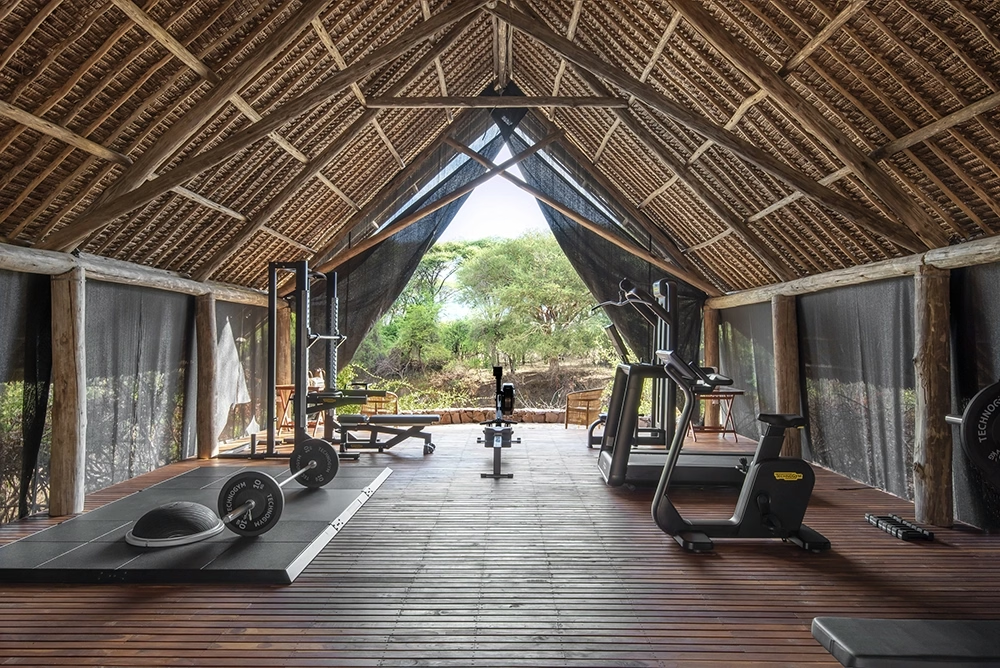
For reasons unbeknownst to us, Jongomero has a proper professional gym. The only one in a Tanzanian reserve, equipped with Technogym and Eleiko kit (if you know what that means) and completely open to the bush. So, if you’ve always wanted to do deadlifts while an impala watches, honey, it’s your time to shine. Alternatively, leave the exercise to someone else and drive 35 minutes to Laba Bush Thermal Spa on the banks of the Jongomero River. Natural volcanic hot springs await a soak, followed by Healing Earth treatments if you feel the need to be thoroughly pampered.