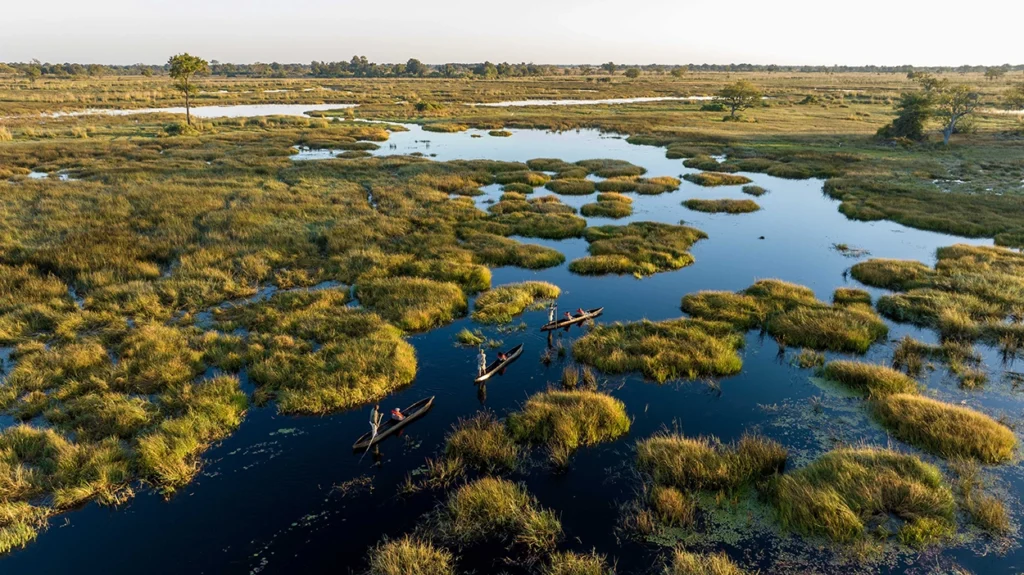
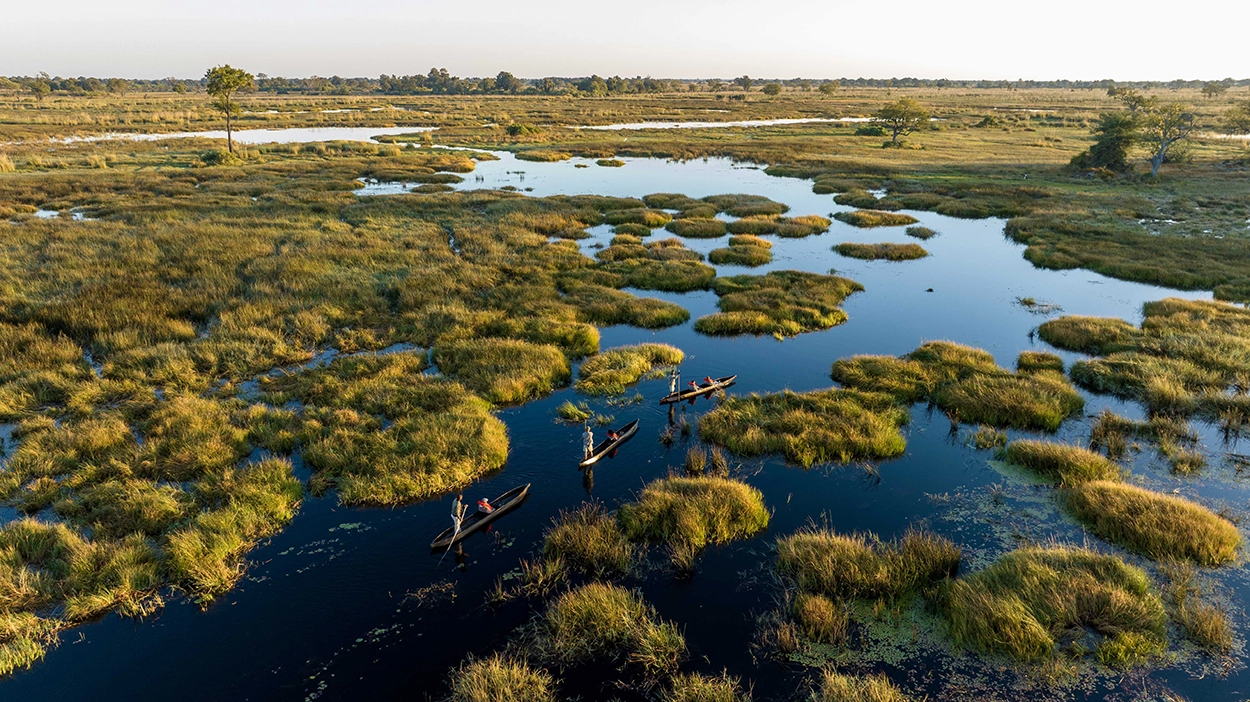
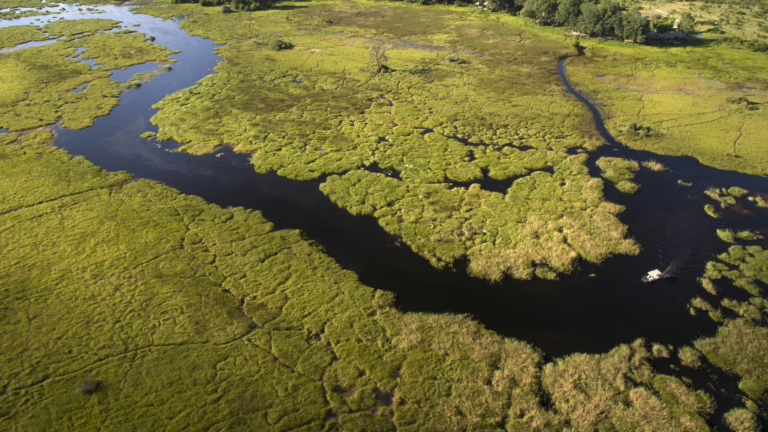
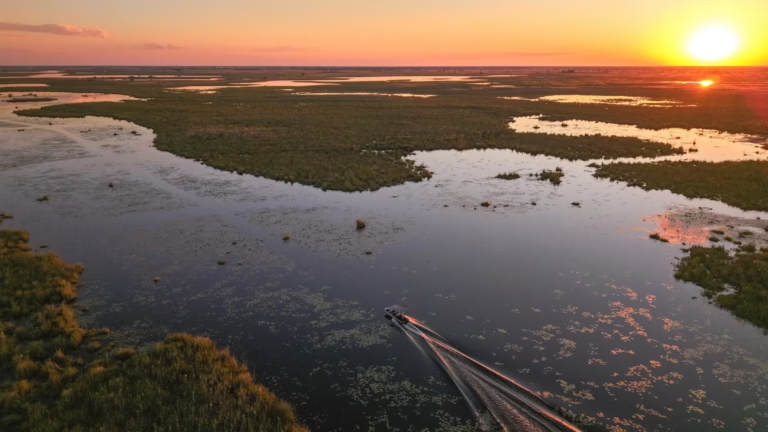
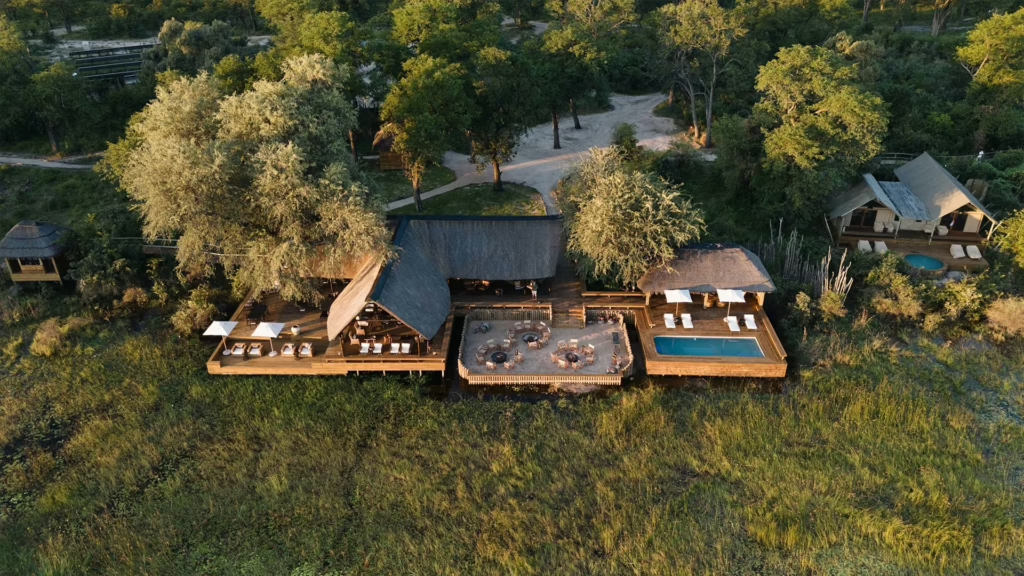
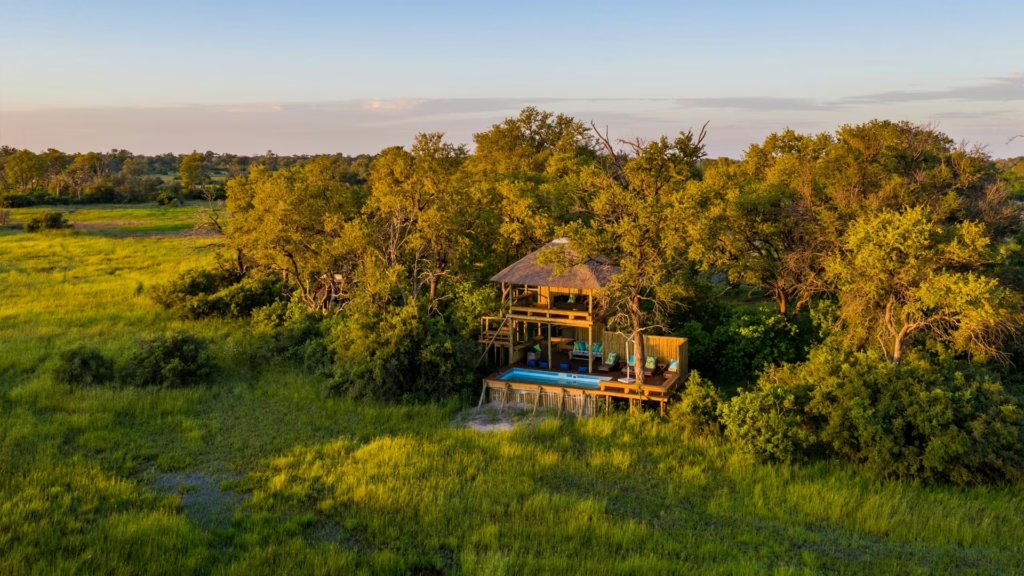
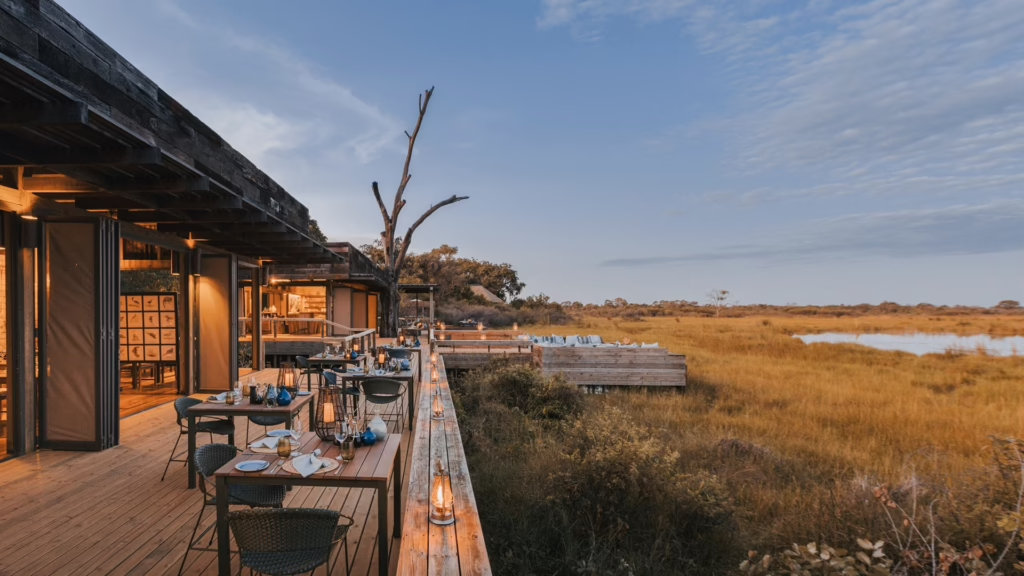
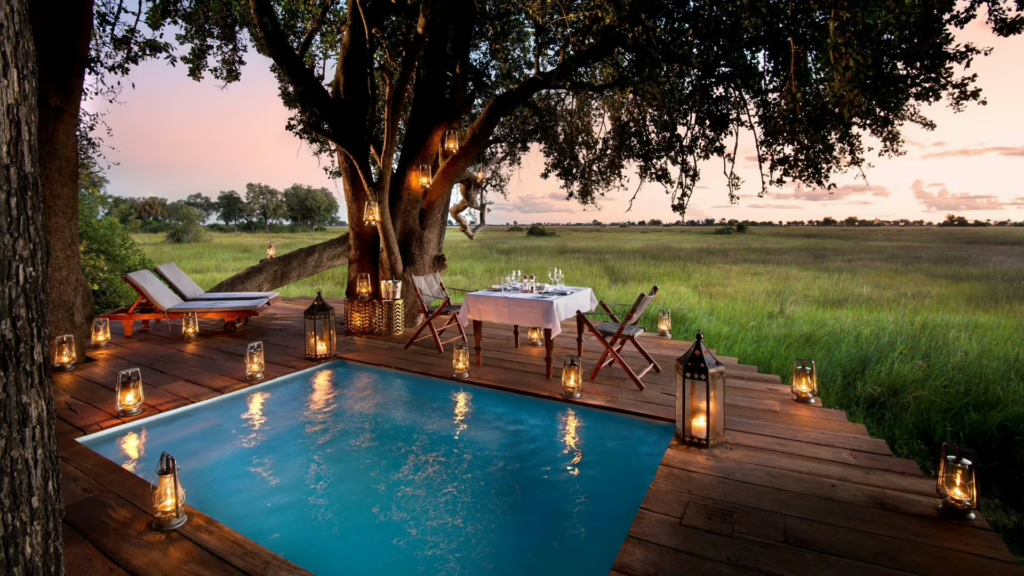
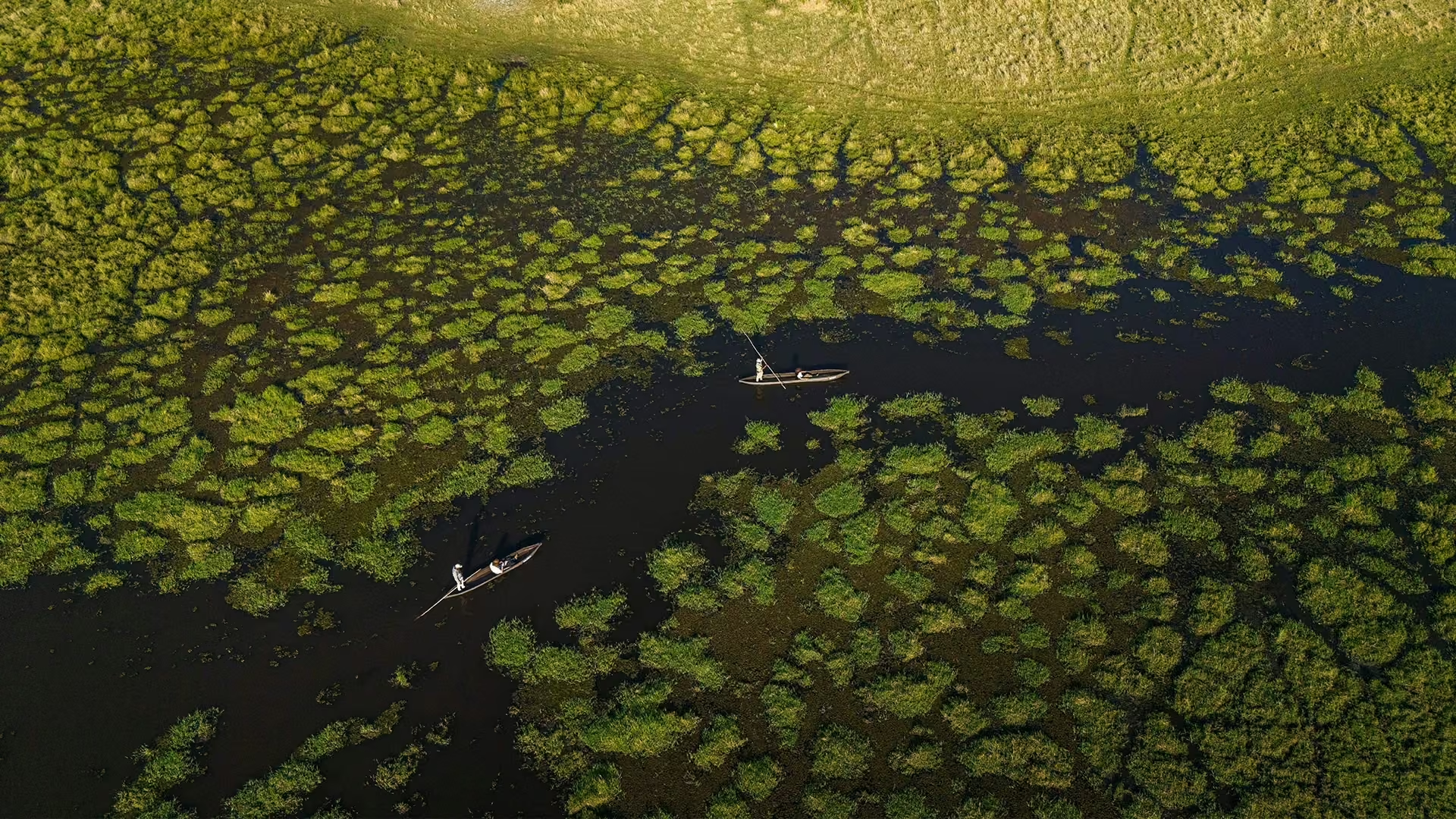
Aerial view of Mokoros drifting through the Okavango Delta.

The Okavango Delta Wetland Wilderness & Wildlife Encounters

Start Dreaming

Fanned out like a silvery hand, the Okavango Delta spreads its fingers across some of the last true wilderness left on Earth.

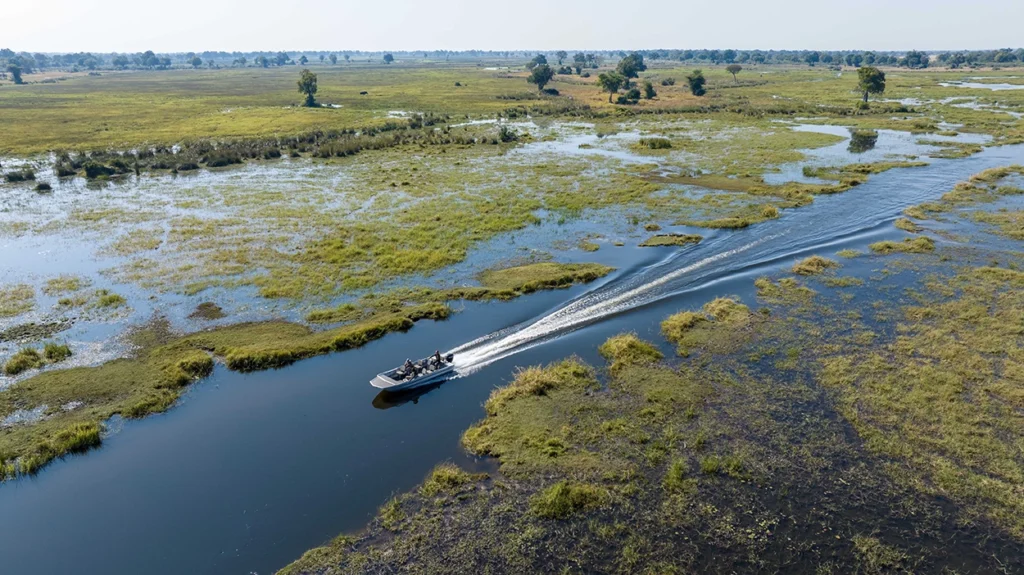
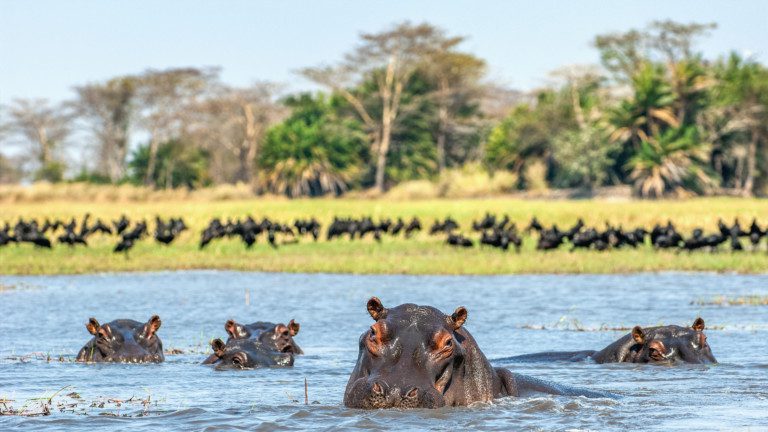
The beginnings of the Okavango Delta’s complex system of waterways are as bizarre as they are fascinating. Instigated by some sizeable tectonic plate drama around 60,000 years ago, the once fast-flowing river went wildly off course. All plateaued with no place to go, the waters settled into what is now the world’s largest inland delta, measuring 50,000 square kilometres at high water. And in its midst, life flourished. The Okavango Delta’s signature palm-fringed islands grew from seed deposits left on termite mounds by passing birds and baboons. Droves of hippos, drawn by this new prime real estate, carved out the winding channels you can see from the air. And its gin-clear waters, filtered by the Kalahari sand, began to ebb and flow with the annual rains.

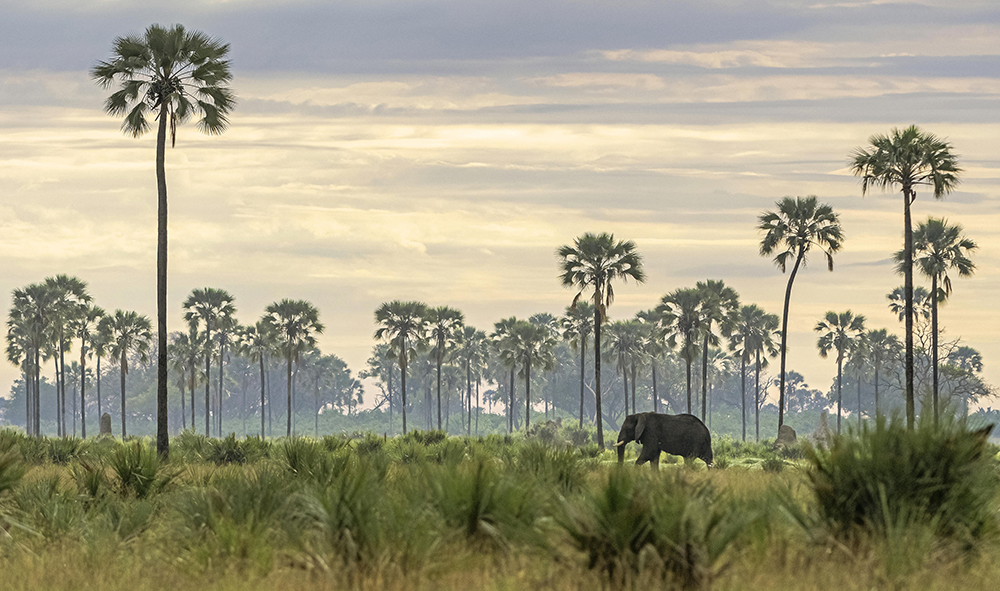
At the height of Botswana’s dry winter, when the rest of the country is parched brown, the Okavango Delta does something it isn’t supposed to: it floods. Fed by rains that fell in Angola months earlier, the Delta swells to three times its size, and as the water creeps in, inch by inch, the wildlife pours in right behind it. From birds to elephants, and just about anything that wants to eat you.

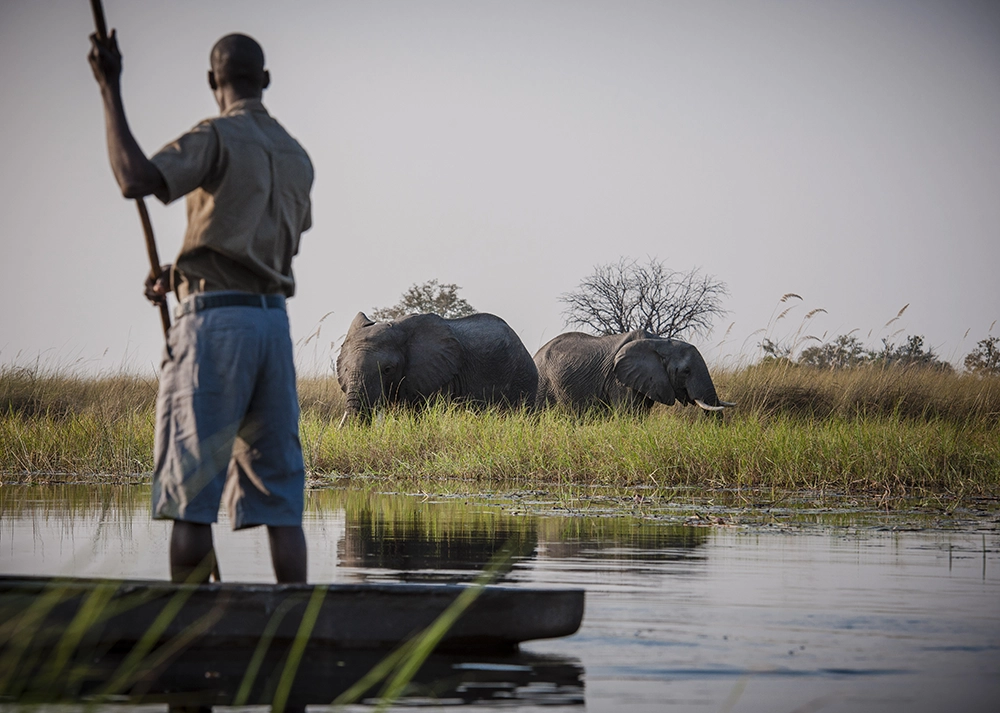
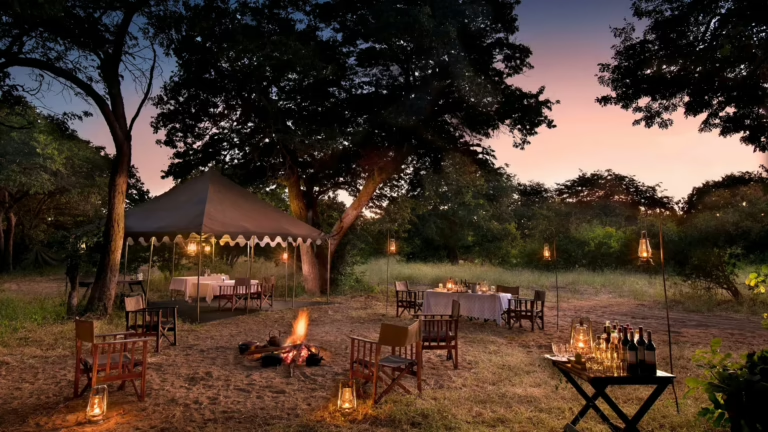
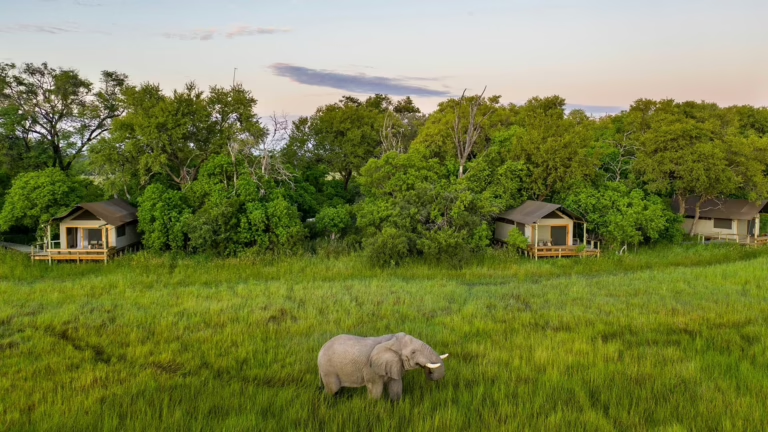
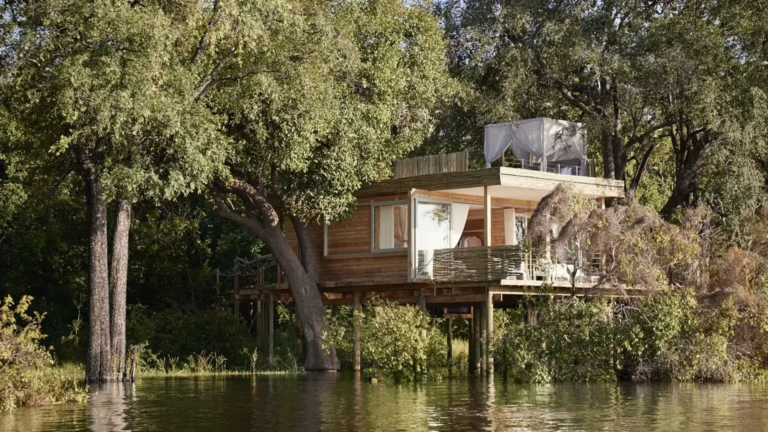
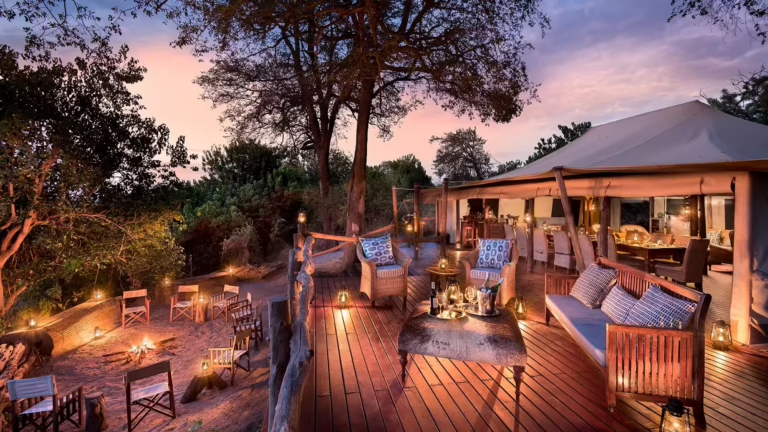
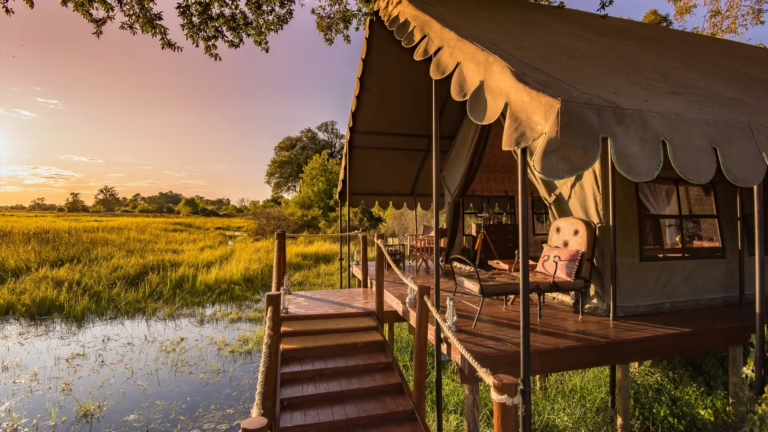
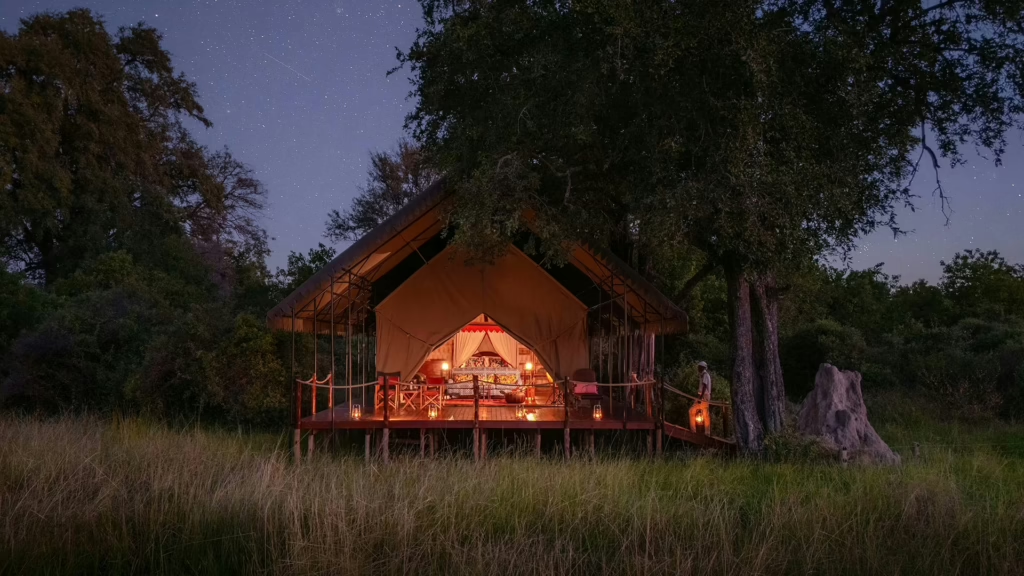
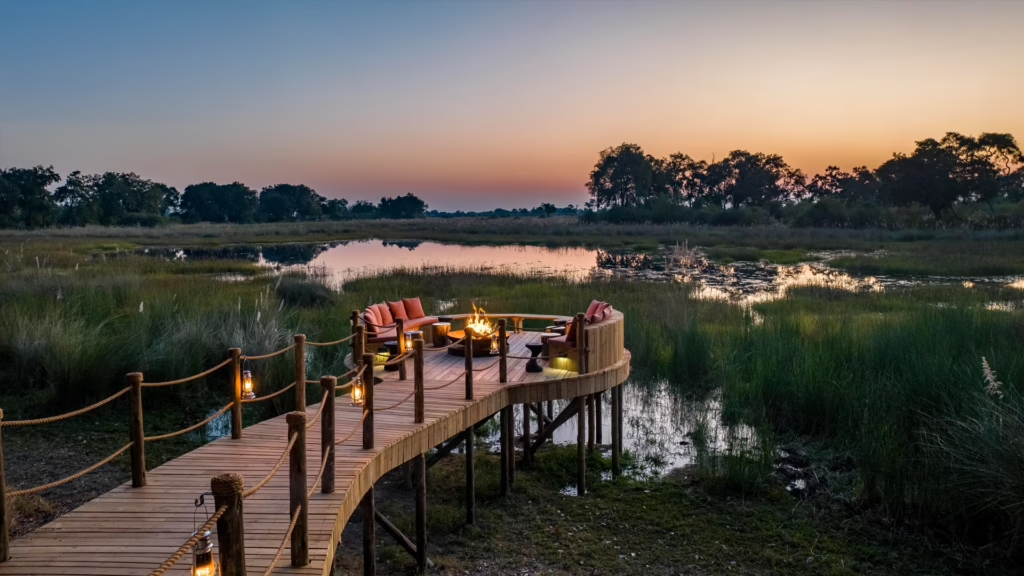
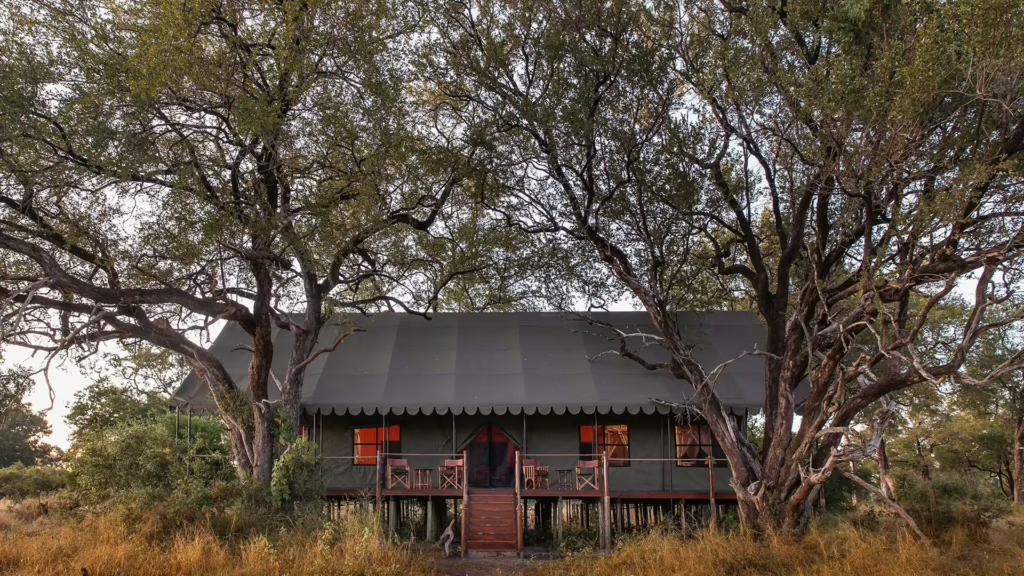
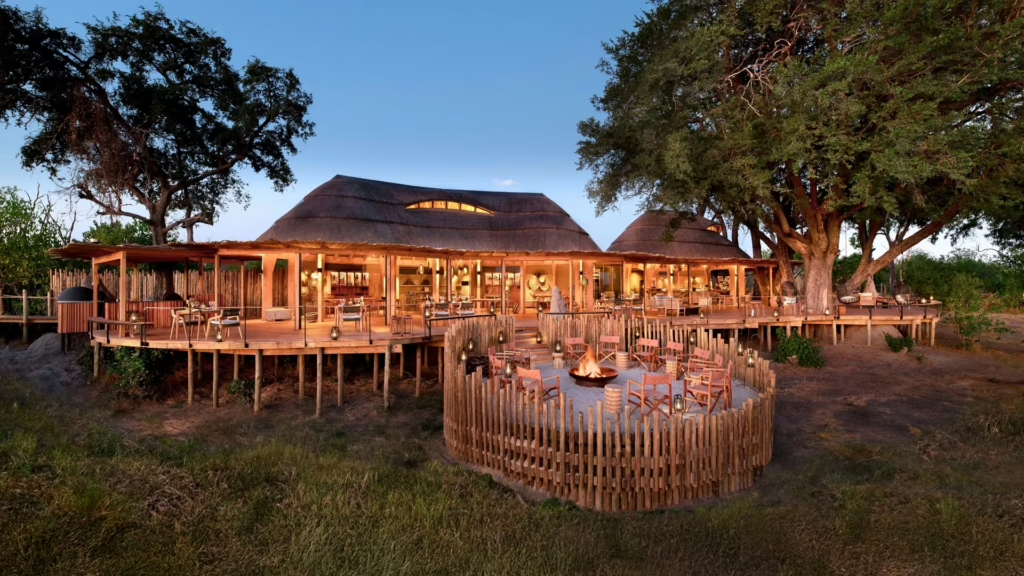
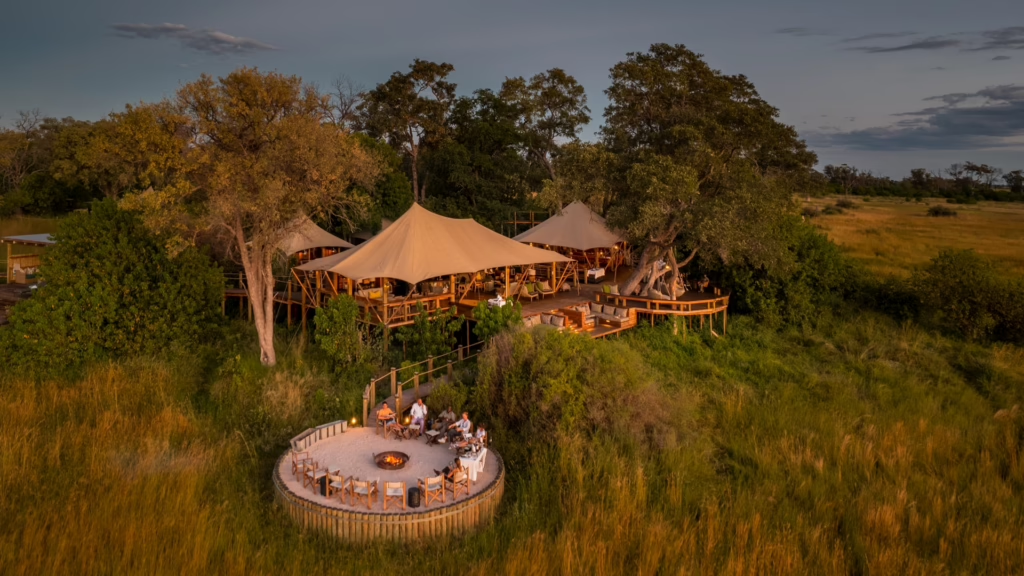
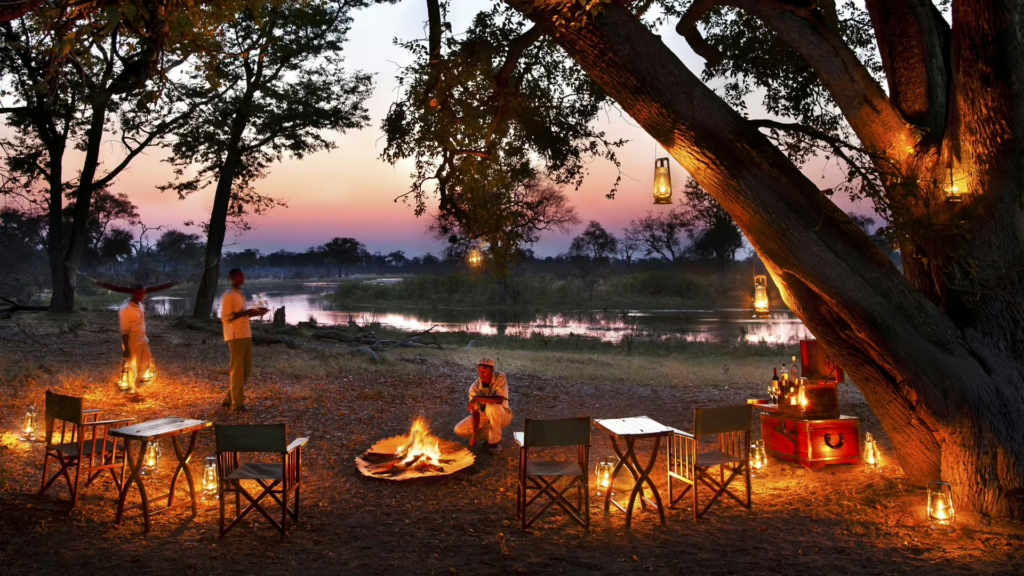
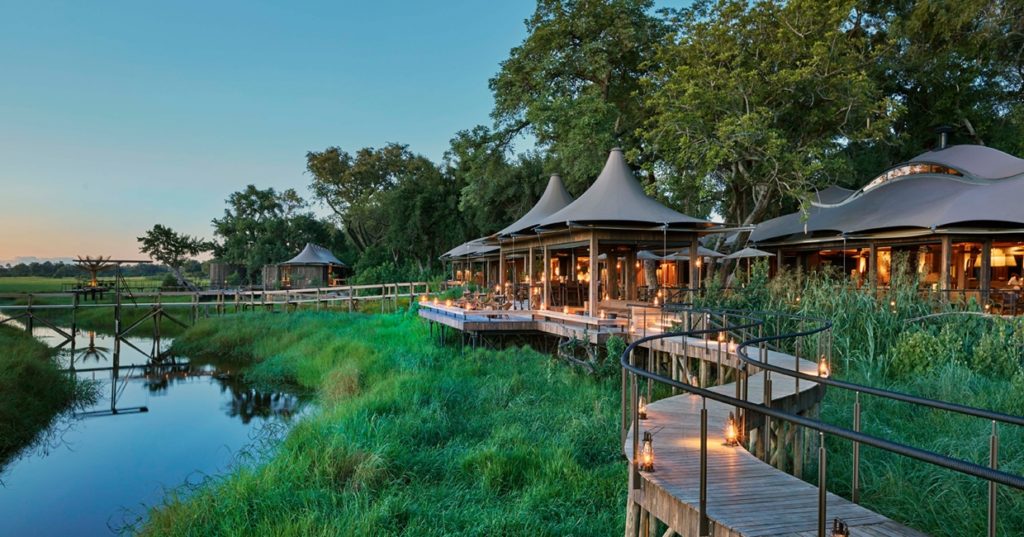
The Delta is adorned with an array of perfectly polished camps and priceless experiences. Where a camp sits determines what you’ll spend your days doing. Water-based camps, deep in permanent-water territory, draw crowds of hippos and elephants and some of the best birdlife on the continent. Gliding along the channels by mokoro is the real draw here. Land-based camps hug the floodplains on the Delta’s fringes: game-drive country, thick with predators, walking safaris and the odd night drive. Can’t decide? Don’t.

Getting there means flying; most of the Delta’s best concessions have no other option. Maun is the official gateway (Kasane, occasionally, the alternative), and it isn’t much to look at: an airport, a handful of sun-kissed bush pilots, and several thousand donkeys, give or take. Don’t be fooled, it runs like a Swiss watch. From here, a fleet of tiny aircraft, tails bearing gloriously specific registrations like OWL, LEO and GNU, island-hop you across the Delta. Game-viewing starts the moment you lift off, with elephants and hippos reduced to specks below.

WHEN YOU'LL GO

When to Go to the Okavango Delta

The Best Time to Visit the Okavango Delta for a Luxury Safari

The Delta’s seasons shape everything — from where the wildlife gathers to how far the flood reaches (and what it’ll cost you to be there). Choosing the right time to visit can make all the difference to the safari experience you’re after.

Green season illustration

January

Green Season

The Delta is deep in its green season — hot, humid, and prone to dramatic afternoon storms that roll in fast and clear even faster. The bush is a wall of green, and long grass makes predators harder to spot, but the channels are alive with frog song and freshly hatched insects (a feast for migratory birds). It’s calving season for lechwe and impala.

Why it’s special: The Delta at its most lush and alive
Best for: Birding and landscape photography.
Ave. daytime temperatures 19°C – 32°C (66°F – 90°F)

WHAT YOU'LL SEE

Main Habitats

A magnet for life.

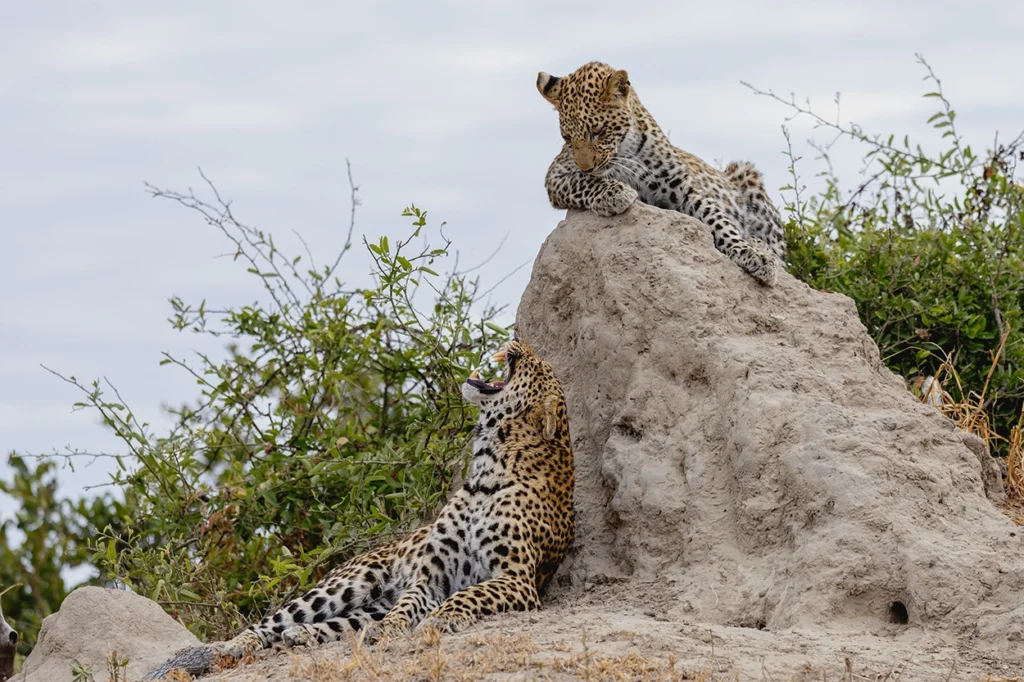
When it comes to the Delta, there is never a dull moment. One minute you’re gliding through twisting, lily-laced channels that echo with hippo grunts. The next, you’re swallowed by dappled shade, towered by woodland canopies alive with leopards and unsuspecting antelope browsing below. Then the trees fall away entirely to long grass, longer sight-lines, and predators using every inch of it.

Flood Plains & Rivers – Botswana

Flood Plains & Rivers

Grasslands – Botswana

Grasslands

Woodlands – Botswana

Woodlands

WHAT YOU'LL SEE

Meet the Locals

What You'll See and How Likely You Are to See Them

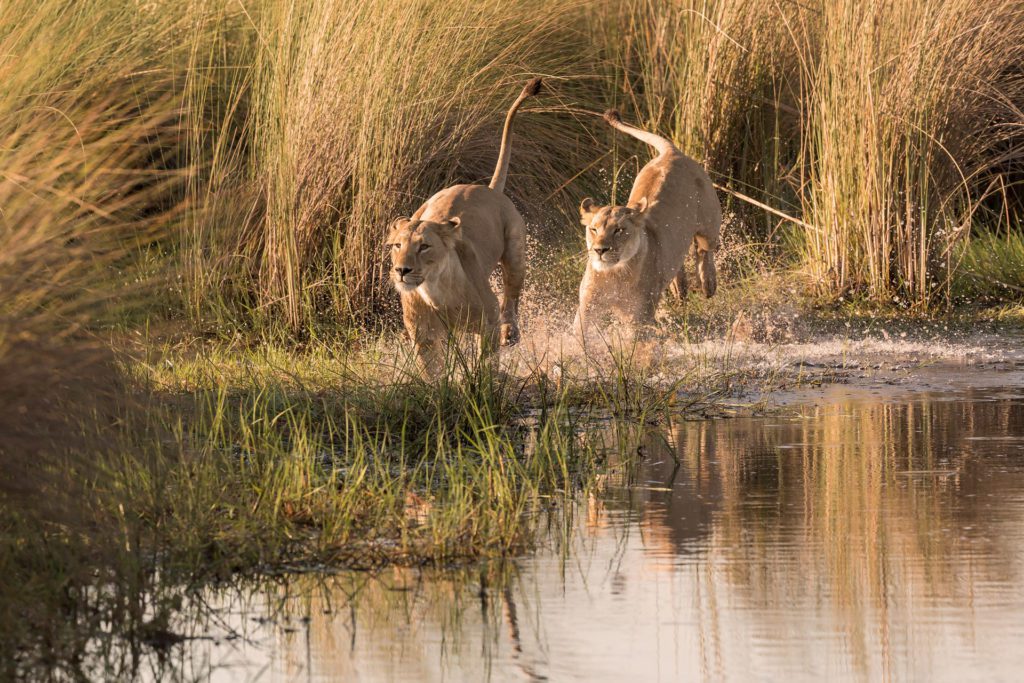
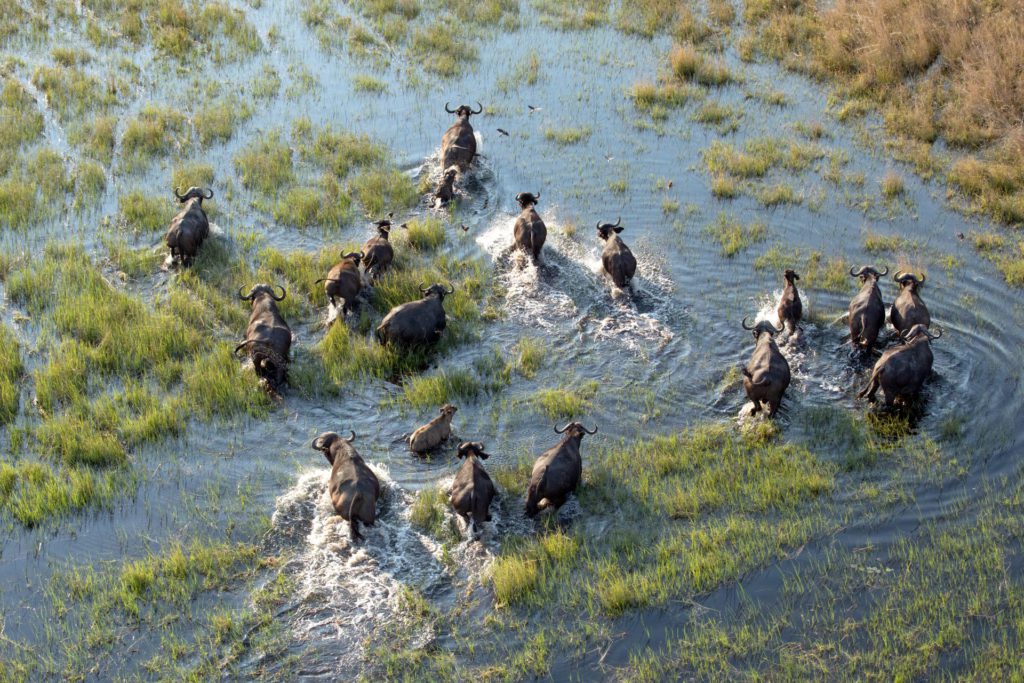
Whether you’re taking it in from the air, a 4×4, or the bow of a mokoro, the Okavango Delta delivers some of the best wildlife viewing on Earth. Thirsty elephants migrate in from across the continent, thousands strong, while water-adapted lions wade through lilies on the heels of buffalo and giraffe herds. Permanent water keeps a parade of red lechwe and sitatunga leaping across the floodplains year-round, alongside some of the highest densities of wild dog left anywhere in Africa, watched closely by lion, leopard, cheetah and packs of ballsy hyena. Throw in over 400 species of birdlife, and it’s edge-of-your-seat stuff, no matter when you go.

Cape Buffalo

Cape Buffalo

80% Chance

Cheetah

Cheetah

55% Chance

Vervet Monkey

Vervet Monkey

95% Chance

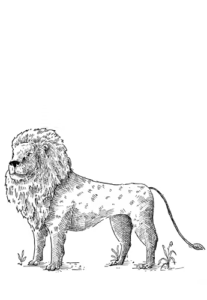
Lion

Lion

90% Chance

Hippo

Hippo

100% Chance

Meerkat

Meerkat

50% Chance

Spotted Hyena

Spotted Hyena

70% Chance

Zebra

Zebra

95% Chance

Aardvark

Aardvark

5% Chance

Giraffe

Giraffe

95% Chance

African Wild Dog

African Wild Dog

60% Chance

Eland

Eland

20% Chance

Leopard

Leopard

70% Chance

Black Rhino

Black Rhino

1% Chance

Pangolin

Pangolin

1% Chance

Sable

Sable

30% Chance

Elephant

Elephant

100% Chance

White Rhino

White Rhino

10% Chance

Wildebeest

Wildebeest

90% Chance

Our Safari Experts

Chat to an Expert

Get advice and suggestions to make this your perfect trip. We’re just a bunch of Africa-obsessed travellers ourselves, so you can rest assured that we’re trying to give you the best experience possible.

Start your journey
Chad Le Helloco

Nothing beats the magic of the Delta. Wild waterways, unbelievable wildlife, and that feeling that you’ve completely disappeared into nature.

Contact

For me, safari is all about the small things. The quiet sunrise drives, the stories around the fire, and the feeling that Africa gets under your skin.

Contact

WHERE YOU'LL STAY

The Okavango Delta's Luxury Safari Camps & Lodges

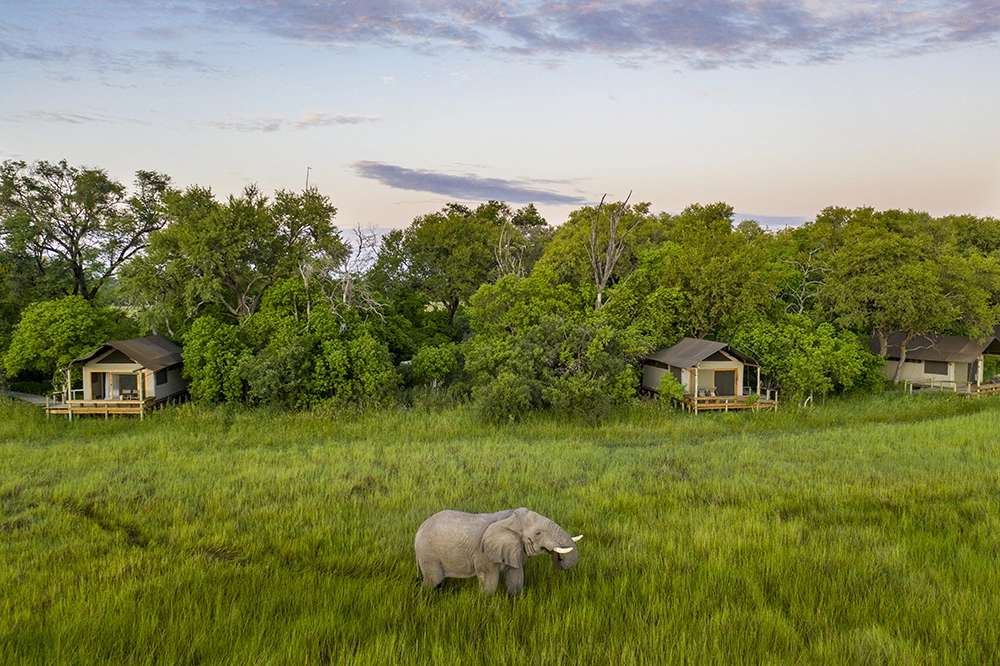
Private Concessions & Island Hideaways

The Okavango Delta | Botswana

Duke’s Camp

View
Duke’s Camp

The Okavango Delta | Botswana

North Island Okavango

View
North Island Okavango

The Okavango Delta | Botswana

Mbamba

View
Mbamba

Frequently Asked Questions

From June to October (winter), floodwaters from Angola spill across the Delta, transforming it into a lush inland sea. Wildlife crowds onto the islands and floodplains, and predators are everywhere. From November to April, summer rains turn the landscape emerald, birds arrive in technicolour clouds, and it’s calving season. One’s dramatic and game-heavy; the other is green, quiet and utterly beautiful.

The Delta is a fly-in destination. You’ll land in Maun or Kasane, then hop onto a light aircraft bound for your camp. These tiny planes double as game-viewing vehicles — elephants, hippos, and giraffes can be seen from the skies.

Mokoros are the Delta’s signature safari. A local poler stands at the back of a long, dugout canoe and gently pushes you through lily-filled channels using a nkashi (long pole). It’s slow, silent, and surreal. You’ll glide past reed frogs, kingfishers, and elephants drinking at the water’s edge, with dragonflies zipping past you. It feels more like meditation than transport.

Pretty much everything. Expect to see elephants, buffalo, giraffes, lions, leopards, cheetahs, wild dogs, and hyena packs. Aquatic specialists, such as the red lechwe and sitatunga, thrive in the floodplains, while hippos and crocs rule the waterways. Birders? Over 400 species, from dazzling bee-eaters to the mighty African fish eagle.

Yes! But only in private concessions, not in Moremi Game Reserve. Walking lets you step into the wilderness on foot, learning tracks, smells, and the little details you miss from a vehicle. And night drives are theatre: eyes flashing in the spotlight, lions on the move, and sometimes even a leopard mid-hunt.

Moremi is breathtaking, but it operates under national park rules: no night drives, no off-roading, and more vehicles at sightings. Private concessions are like VIP backstage passes — you can off-road to track predators, walk, do night drives, and enjoy a more exclusive safari. No fences separate the areas, so it’s all one large, wild space.

Absolutely! We’d hope so. One of our favourite combos is the Delta and the Makgadikgadi Salt Pans because you get to see two entirely different worlds in one country.

The Okavango Delta is a UNESCO World Heritage site, and can be seen from space! Most rivers run to the sea. The Okavango empties itself into the Kalahari Desert instead, creating the world’s largest inland delta. Seasonal floods transform the dry savanna into a living, breathing wetland, where lions swim, elephants snorkel (with their trunks up!), and mokoros glide past hippos. It’s a safari setting you literally won’t find anywhere else on earth.

Our Reviews

A Few of our Raving Fans

You love us, you really love us!

Hidden Africa
5.0 43 reviews
out of 5
Owen Brenner
Owen Brenner
2 years ago

Chad at Hidden Africa was absolutely wonderful to work with. We worked together to fully customized our 2 week elopement … read more

Sonia Kolar
Sonia Kolar
4 months ago

Geraldine worked with my friend Cheryl to arrange the most amazing Southern Africa trip. Geraldine even worked around some of … read more

Debbie Hottman
Debbie Hottman
5 months ago

Our group of 6 adults starting planning our South African experience 18 months before our actual travel date with Geraldine, … read more

Miroslav Levanic
Miroslav Levanic
a year ago

How do you write a review for a travel agency that is above perfect? It's not hard! Hidden Africa listened … read more

HOW IT WORKS

Take a look around for a bit of inspiration.

Tell us what your dream safari looks like. 

Next, your Personal Travel Planner will schedule a call to plan the perfect adventure.

Confirm your trip and get packing.

LET’S GET THIS SAFARI STARTED

Ready to go? Give us a shout and let’s start planning your next adventure. We’re almost as excited as you are.